
It’s a shock when a deer crashes into your car—or if you hit one yourself. Take a breath, pull over as soon as you can do so safely, hit your hazard lights, and check if you or your passengers are hurt.
If anyone’s injured, call 999 right away.
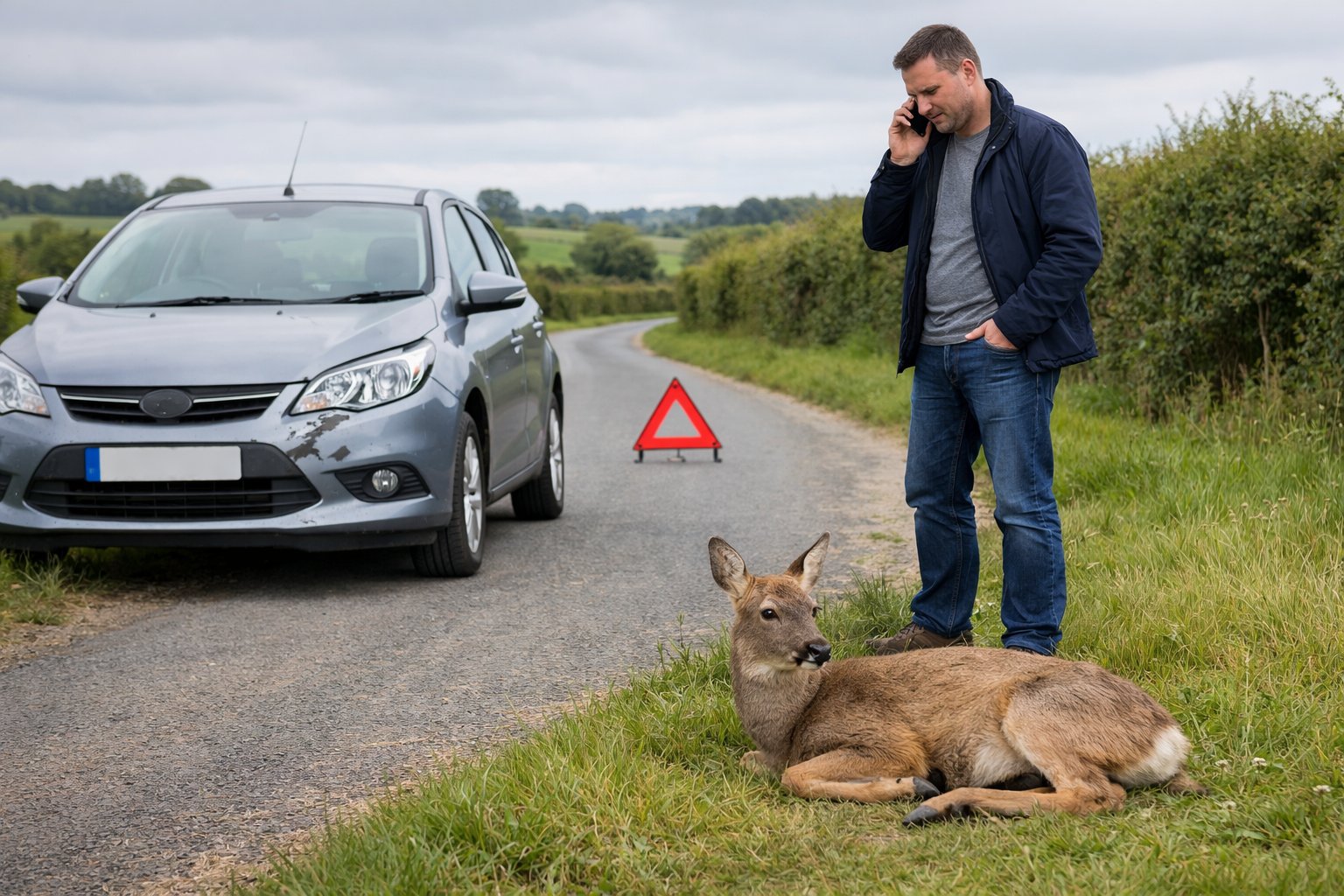
Don’t walk up to or try moving an injured deer. They can panic and lash out, and that’s the last thing you need.
Call the police if the deer’s on or near the road. Let the experts handle the animal and keep the road safe.
Snap some photos of the scene and your car, then get in touch with your insurer as soon as you’re able. Your coverage will depend on your policy, so the sooner you let them know, the better.
Immediate Steps If You Hit a Deer

Stop your car, check everyone, and make sure other drivers can see your vehicle. If you can move the car to a safer spot, do it. When someone’s hurt, call for help right away and steer clear of the deer.
Take a few photos and jot down your location for insurance and the police.
Ensure Personal and Passenger Safety
First, get yourself and your passengers away from the road. If the car can move, pull onto the hard shoulder or into a layby.
If it won’t budge, just turn on your hazards and help everyone get out on the side away from traffic.
Ask everyone to stay behind a barrier or far off the verge if you can. Don’t try to carry anyone across traffic; guide them slowly and carefully to safety.
Watch for cars before opening any doors.
If you smell fuel, see fluids leaking, or notice steam, move everyone at least 30 metres away and call 999. Wait for the emergency crew to say it’s safe before going back.
Safely Park and Use Hazard Lights
Find a spot that keeps you out of danger. Hit those hazard lights right away—other drivers need the warning.
If you’ve got a high-vis jacket, put it on before you step out.
If you’ve got a warning triangle and it’s safe, set it up at least 45 metres behind your car, especially on fast roads.
If you suspect damage to the radiator, battery, or fuel system, keep the engine off. Lock up if you have to leave the car.
When a deer blocks the road, get the police involved so trained folks can remove it. Don’t try moving a big deer yourself—they can kick or bite, even if they look down and out.
Check for Human Injuries and Call Ambulance If Needed
Look for cuts, bruises, dizziness, or chest pain in yourself and the others. Even small injuries can get worse, so ask everyone about neck or back pain before moving them.
If someone’s badly hurt, call 999 and ask for an ambulance.
Be clear about your location—road name, mile marker, or junction. Tell them how many are injured and give a quick rundown of the injuries.
While you wait, follow any first-aid tips the operator gives you.
If you’re unsure about minor injuries, still call emergency services or your GP. Keep anyone hurt warm and still. Don’t give them food or drink if there’s a chance they’ll need surgery.
Assess the Situation and Remain Calm
Check your car for damage—broken lights, leaking fluids, bent wheels, airbags going off. Take photos of everything: the scene, your car, and any evidence like blood or fur.
This helps if the deer runs off and you need to make an insurance claim.
Stay away from an injured deer. They might bolt or kick. If the deer leaves the road but is hurt, let the police know where it went.
Note the time, direction, and any details about the animal.
If your car isn’t safe to drive, call for recovery and let your insurer know. Even if the deer ran away, still report it and take photos—insurers usually want proof, deer or no deer.
Reporting the Incident and Wildlife Considerations
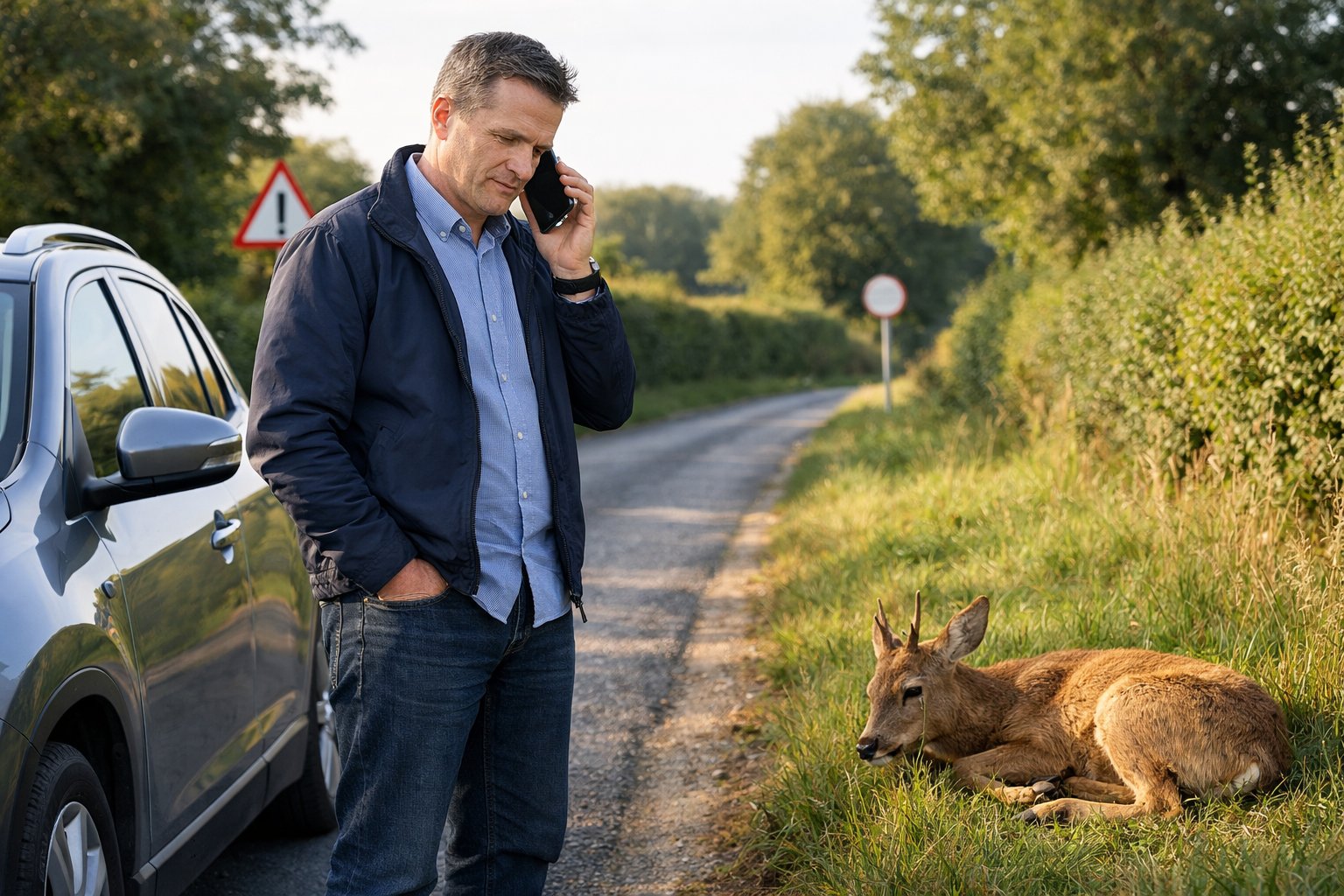
Pull over somewhere safe, check everyone’s okay, and note exactly where you are and what condition the deer’s in.
You’ll need to tell the right people where the deer is, if it’s hurt or blocking the road, and whether you need recovery.
How to Inform Authorities and Use what3words
Call 999 if there are injuries or a hazard on the road. For less urgent stuff, call the local police or 101.
If the deer’s blocking traffic, give the operator the road name, nearest junction, and a clear landmark.
Use the what3words app for a super-precise location—just drop a pin where the deer is and read out the three words to the call handler. It’s surprisingly handy, especially on remote roads.
Write down your what3words location, the time, and what you notice about the deer’s injuries. Pass all this to the police or, if needed, the British Deer Society or a local wildlife officer.
What to Do If the Deer Is Injured or On the Road
Don’t go near a live deer. They can kick or bolt without warning.
Stay in your car with hazards on unless it’s safe to get out.
If a live deer’s blocking the road, call the police or your local council’s animal control. Give them your what3words, road name, and the nearest marker.
If the deer’s clearly dead and off the road, let the local council know so they can remove it.
If the deer’s badly injured and stuck, the police might send a vet or wildlife officer. If you think the animal’s suffering and no one’s coming soon, ring the British Deer Society or a wildlife rescue for advice on what to do.
Legal Considerations and the Deer Act 1991
The Deer Act 1991 says you can’t take or keep wild deer without the right permission. So, don’t remove a carcass or keep any meat unless you’ve cleared it with the police or wildlife authorities.
You’ll need to report collisions when the police ask. Take photos, note your location (what3words helps), and get witness details if you can.
Don’t try to move big deer like roe or fallow deer alone—they’re heavy, and you could get in trouble for messing with possible evidence.
If the deer’s a protected species or there’s a hint of poaching, the police and wildlife agencies will want all the info you can give. Hang onto any clothing or items that connect you to the incident and offer them if officers ask.
Contacting Insurance and Additional Reporting (Deer Aware)
Call your insurer as soon as you can if a deer damaged your vehicle. Let them know it was a deer collision, give them the exact spot (what3words is handy for this), and send over photos of the damage and the scene.
Ask your insurer if your policy covers the deductible for wildlife collisions. Sometimes, the details can get confusing, so it’s worth double-checking.
If local groups like Deer Aware or the British Deer Society ask, report the incident to them. They use this info to spot collision hotspots and give councils advice about signs or other safety steps.
When you share the date, time, road name, and what3words location, you help them track patterns and improve safety for everyone.
Keep a quick record for yourself—jot down the insurer reference, any police or council incident number, your what3words location, and a few photos. This makes claims easier and helps if wildlife or highway authorities follow up later.


