
Ever find a banana peel in your yard and wonder if deer might munch on it? Yep — deer will eat bananas if they come across them, but honestly, bananas aren’t a natural or ideal part of their diet.
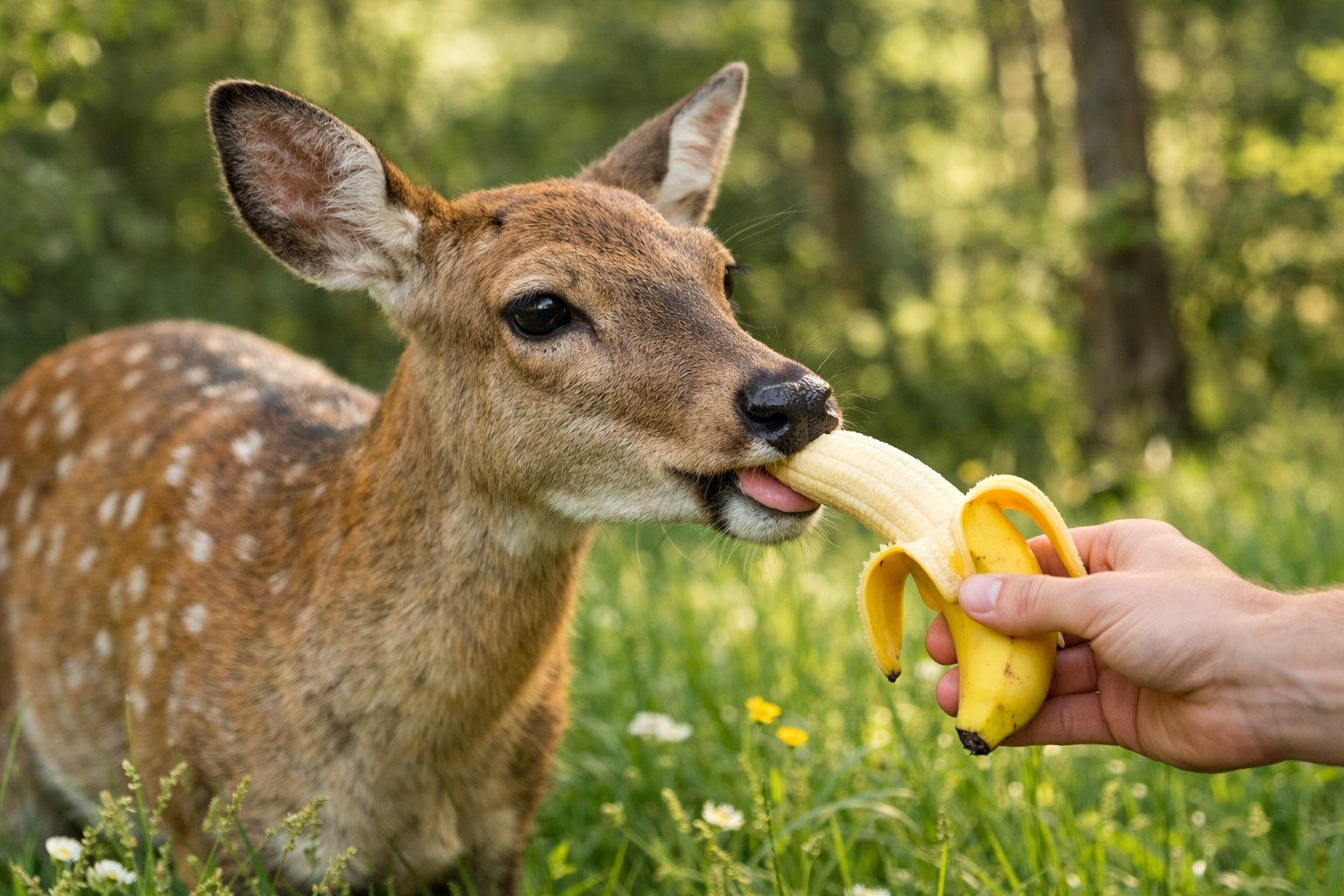
If you feed deer or notice dropped fruit near your garden, you probably want to know why they go for bananas, what can happen after they eat them, and how this fits into their usual feeding habits.
This article digs into how bananas attract deer, the health risks of sugary foods, and when—if ever—a banana might be okay.
Stick around for practical tips to protect both your plants and wild deer. We’ll cover easy deterrents and why letting deer stick to natural forage matters for their health.
Do Deer Eat Bananas?

You can give a deer a banana now and then, but you should do it carefully and only in small amounts.
Bananas offer quick energy and a few vitamins, but they’re loaded with sugar and can upset a deer’s digestion if you feed them too often.
Natural Deer Dietary Habits
Deer are herbivores. They eat leaves, twigs, grasses, nuts, and fruits called soft mast.
Their four-chambered stomach digests plant fiber slowly. This system works best with fibrous, low-sugar foods—not sugary snacks.
Fawns drink milk at first, then move on to tender shoots and grasses. Adult deer change up their diet with the seasons.
Spring and summer bring more leafy foods, while fall and winter push them toward woody plants and nuts.
Deer need a mix of plants for vitamins, protein, and roughage. If they rely on human foods, that balance can get thrown off.
Why Deer Are Attracted to Bananas
Deer have a powerful sense of smell and, honestly, a sweet tooth. Ripe bananas smell strong and sweet, so deer can sniff them out from pretty far away.
The soft texture and sugars make bananas easy for them to eat, especially compared to tough twigs or hard nuts.
Bananas give quick calories and some potassium, which might help when food is scarce. But the high sugar can mess with their gut bacteria and make them spend less time foraging for natural foods.
If you decide to feed bananas, cut them into small pieces so deer can eat them safely. You also avoid leaving big chunks that might attract raccoons or other critters.
Can Deer Eat Bananas Safely?
Yes, but only in moderation. Limit it to about half a banana per deer at a time to avoid stomach issues.
Offer bananas just occasionally, not every day, so they don’t get dependent or miss out on important nutrients.
Don’t leave banana peels in piles—they’ll just draw raccoons and rodents. Always check local laws before feeding wild deer; some places ban it to help prevent disease and car accidents.
Use ripe, mold-free bananas and keep an eye on the deer after feeding. If you notice diarrhea or lethargy, stop right away.
Observations of Deer Eating Bananas
People have seen deer eat bananas when they find them, especially if natural food is running low. You might spot deer nibbling whole bananas, eating slices, or even peeling them to get to the fruit.
They don’t usually eat a lot at once unless they’re really hungry.
Wildlife managers warn that feeding deer too often can change their habits. Deer that expect handouts might hang around roads or people, which is risky.
If you want to help deer, plant native browse or use approved deer supplements instead of making bananas a regular thing.
Are Bananas Good for Deer? Pros, Cons, and Dietary Impact
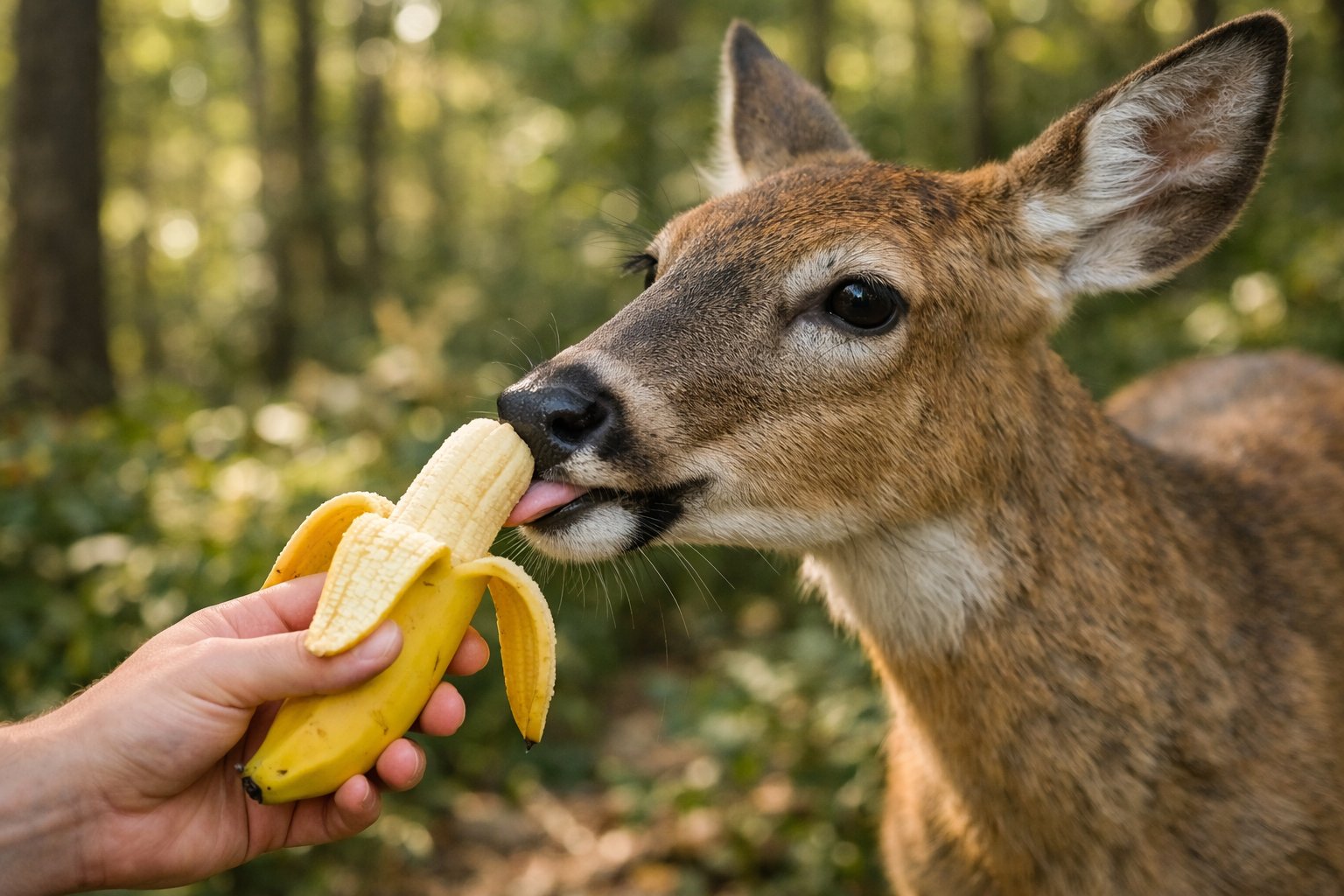
Bananas give deer a quick energy boost, but there are risks if they eat them too often.
They add sugar and a bit of vitamins, but bananas don’t have the fiber and minerals deer get from acorns and wild plants.
Nutritional Benefits of Bananas for Deer
Bananas provide fast calories from simple sugars. One banana has carbs and a bit of potassium and vitamin C, which can help a deer get energy during cold snaps or when food is short.
Deer will eat the soft fruit and sometimes even the peel. The soft texture is easy for them to chew, especially if they’re older or have trouble with tough foods.
That can be handy for injured or aging deer who can’t handle hard mast like acorns.
But bananas aren’t balanced feed. They have little protein and not much fiber compared to things like alfalfa, soybeans, or wild browse.
If you’re trying to support deer near your place, use bananas only as a rare treat—not as a main food.
Potential Health Risks and Digestive Issues
Feeding deer sugary foods like bananas can mess up their rumen microbes. If they suddenly eat a lot of carbs, it can cause rumen acidosis, which blocks nutrient absorption and can make deer seriously sick in just a few days.
Giving deer treats too often makes them expect food from humans. That increases the risk of car accidents and disease spread, since deer gather where people feed them.
It also changes their natural foraging, so they might skip healthier foods like acorns and wild plants.
Banana peels are tough and harder to digest than the fruit. If deer eat too many peels or bananas, they might get stomach problems.
If you want to help deer, focus on planting native browse instead of handing out fruit.
Bananas Compared to Other Deer Foods
Bananas really stand out from what deer usually eat. Hard mast—like acorns and nuts—gives deer fats and minerals, which they need to pack on winter fat.
Leaves, forbs, and twigs give them protein and fiber, which keeps their rumen healthy. Apples, pears, persimmons, and plums are a bit closer to what deer might find in the wild, since they’re natural soft mast.
These fruits offer some vitamins and fiber, but honestly, they still don’t measure up to things like forage or crops such as corn and soybeans. Those crops deliver calories, but if you feed them the wrong way, they can actually cause problems.
Alfalfa and other legumes provide more protein than fruit does, and they fit a deer’s digestive system way better than bananas ever could.
If you’re hoping to support deer, it’s best to improve native browse or plant forbs and nut trees. That approach keeps their nutrition in check and avoids the problems that come with sugary snacks.


