
You might spot a deer suddenly pause, stamp its hoof, and just stare right at you. That stomp? It’s a warning—this deer’s noticed something odd and wants to figure out if it’s safe or not.
When a deer stomps, it’s usually signaling alarm or curiosity, and it’s warning other deer about possible danger.
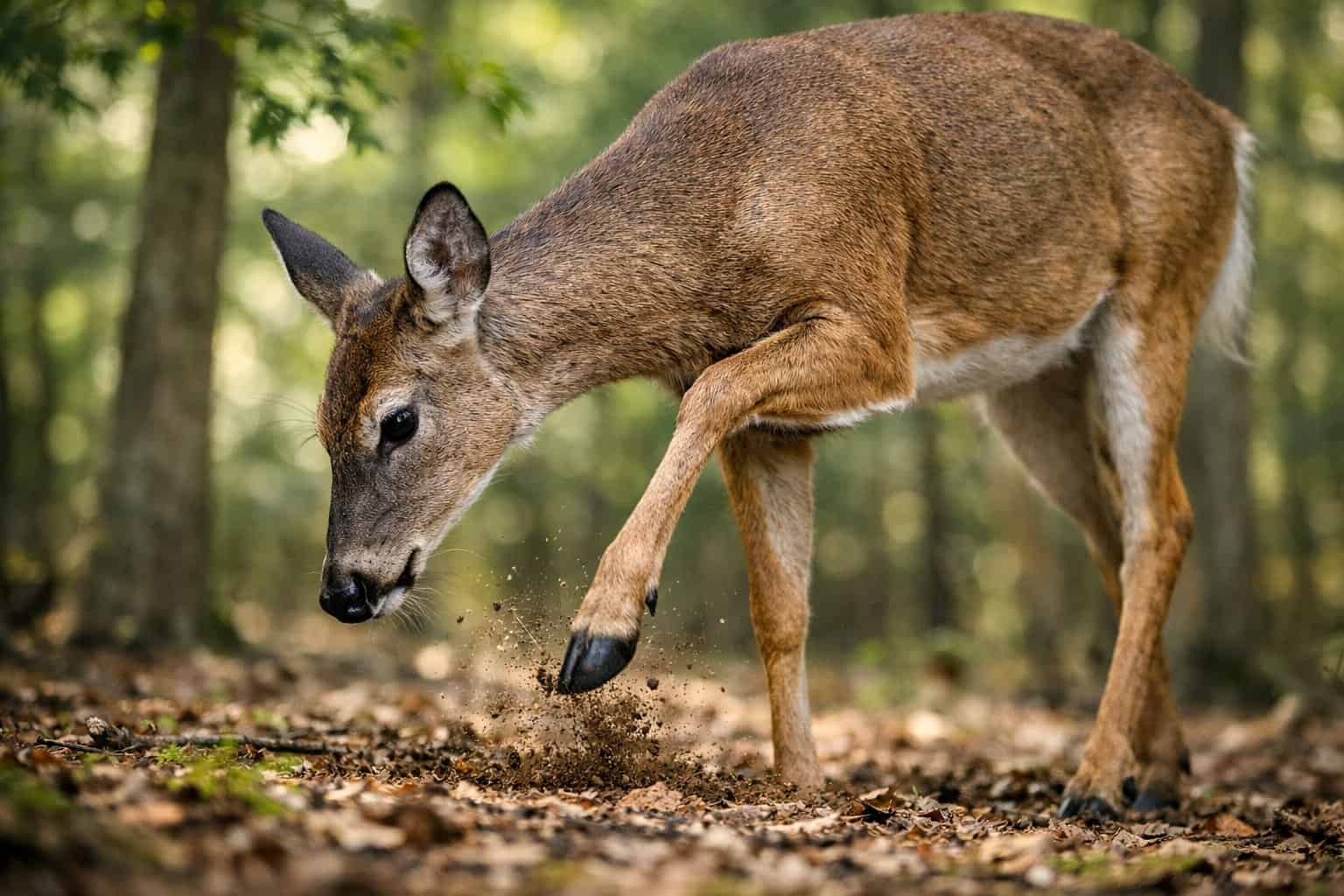
If you stay still, you can watch for other signals—like ear position, tail flagging, or even a sharp snort. All of these clues help you read the deer’s mood.
Let’s look at how stomping fits into deer communication, why they use scent and sound, and what their behavior means for your next move.
Why Do Deer Stomp Their Feet?
Deer stomp for pretty straightforward reasons. You’ll see them do it as an alarm, to test what’s around, to flush out hidden animals, and the way they stomp can depend on sex and season.
Warning Signal to the Herd
When a deer stomps, it’s telling other deer something’s up. That hard hoof strike makes a sharp sound that cuts through leaves or snow.
Nearby deer hear it and snap to attention, watching for trouble.
Stomping often comes with tail-flagging or a loud snort. That combo gives a much clearer warning than just a stomp.
If you see a deer stomping, it’s definitely on alert. Best to back away slowly.
Stomps also leave a scent from the interdigital glands in the hoof. Other deer pick up on that scent and know exactly where the warning came from.
That way, the herd can coordinate a quick escape if things get dicey.
Assessing and Identifying Threats
A deer might stomp to test out a possible threat’s location or type. If you freeze after a stomp, the deer will watch and sniff, waiting to see if you move or stay put.
That helps it decide whether to bolt, stand its ground, or just relax.
After a stomp, you’ll notice the deer’s body language. Are its ears forward, head up, and muscles tense? That means it’s still not sure.
If it starts bobbing its head or repeats the stomps, it’s getting more worried.
Stomping helps with predator detection too. Deer mix the noise with scent-checking and scanning the area.
That layered approach cuts down on false alarms and saves them from running for nothing.
Provoking a Reaction from Predators or Intruders
Sometimes, a deer stomps to make a hidden animal move. That stomp might flush out small predators or rodents, letting the deer see what’s hiding.
This way, it reduces the chance of getting ambushed.
Predators sometimes move when startled, revealing their spot. You might notice deer stomping near thick brush or hollow logs where it’s hard to see.
The deer uses sound and scent to provoke a reaction, staying safe without exposing itself.
Humans or dogs can trigger this too. If a deer thinks a dog is hiding in tall grass, it might stomp until the dog moves or it feels safe again.
Differences in Stomping Behavior Among Bucks and Does
Bucks and does stomp for similar reasons, but the context changes things.
Does usually stomp to protect fawns or warn the group. You’ll see more stomping from does with young close by.
Sometimes, does stomp just to show irritation or keep their fawns near.
Bucks stomp during the rut to show dominance or challenge other bucks. A buck’s stomp can be part of a bigger display—think antler clashing, grunts, and some chasing.
Outside the rut, bucks still stomp for alerts, but you might not see it as often as with does and fawns.
Species make a difference too. Both white-tailed and mule deer stomp, but where they live affects how often.
In open spaces, stomps carry farther. In thick woods, deer rely more on snorts and scent, so you might not catch them stomping as much.
Deer Communication Methods and Signals
Deer use a bunch of clear, repeatable actions to show alarm, mark territory, and talk to each other. You’ll spot body postures, scent marks, and vocal sounds that give real clues about danger or breeding.
Body Language and Visual Cues
First, watch a deer’s posture and tail. A raised white tail usually means the deer senses danger and plans to bolt.
If a deer holds its head high with ears forward, it’s locked onto a specific threat.
Stomping stands out as a strong visual and sound cue. One slow stomp checks for danger.
Rapid, repeated stomps crank up the alarm and warn others to get ready to run.
Look for mixed signals too. Tail flicks, head bobs, and ear rotations often show up with stomping or snorting.
Fawns usually freeze and crouch, while does use close body language to guide their young.
These visual cues help you gauge how nervous the deer are and if you should keep your distance.
Scent Marking with Interdigital Glands
Deer have interdigital glands between their hooves that leave scent as they walk. You might notice a faint musky smell on trails or at scrape spots.
This scent tells other deer about recent activity, breeding status, or social rank.
Scrapes and rubs pack in more scent. Bucks scrape with their hooves and rub antlers or necks on trees to mix gland secretions with plant oils.
That marks territory and signals they’re ready for the rut.
If you’re tracking deer, scent marks can point you to hot spots for movement.
Fresh interdigital scent or lots of scrapes usually mean deer pass through often, especially in fall and early winter.
Deer Sounds: Snorting and Bleats
Snorts are short, sharp breaths you can hear from pretty far away. Usually, a snort means alarm and tells nearby deer to pay attention.
If you hear several snorts in a row, that’s a higher level of urgency.
Bleats mostly come from fawns and does. A fawn bleats when it’s lost to call its mom.
Adult does might bleat softly to keep fawns close or during social moments.
Sometimes you’ll hear wheezes or grunts, especially from bucks during rut. Those sounds show off or challenge rivals.
Watch the context: snorts with stomps mean danger, while quiet bleats near bedding areas usually mean things are calm.
Observing Deer in the Wild
When you watch deer, try to move slowly. Don’t stare straight at them—it makes them nervous.
Grab some binoculars and stay downwind so they won’t catch your scent. I’ve found early mornings and late afternoons work best, since that’s when deer wander near edges and trails.
Take notes on what you see. Which trails show interdigital scent? Where do you spot scrapes? Notice which deer keep using the same spots.
Write down what they do. If you see a stomp, then a snort, and suddenly the deer bolts—that’s a clear sign they’re alarmed. After a while, you’ll start to recognize their signals and figure out how to watch without spooking them.
If your hike takes you near bedding or fawning areas, give them a wide berth. Does with fawns often stomp, snort, or stick close to their young.
Paying attention to those signs helps keep both you and the deer safe.


