
You probably spot deer all the time—wandering through woods, grazing in open fields, or even darting near busy roads. But have you ever wondered what actually puts them at risk? Deer face their biggest threats from habitat loss, diseases like chronic wasting disease, vehicle collisions, and, honestly, a lot of human-driven pressures such as hunting and pollution.
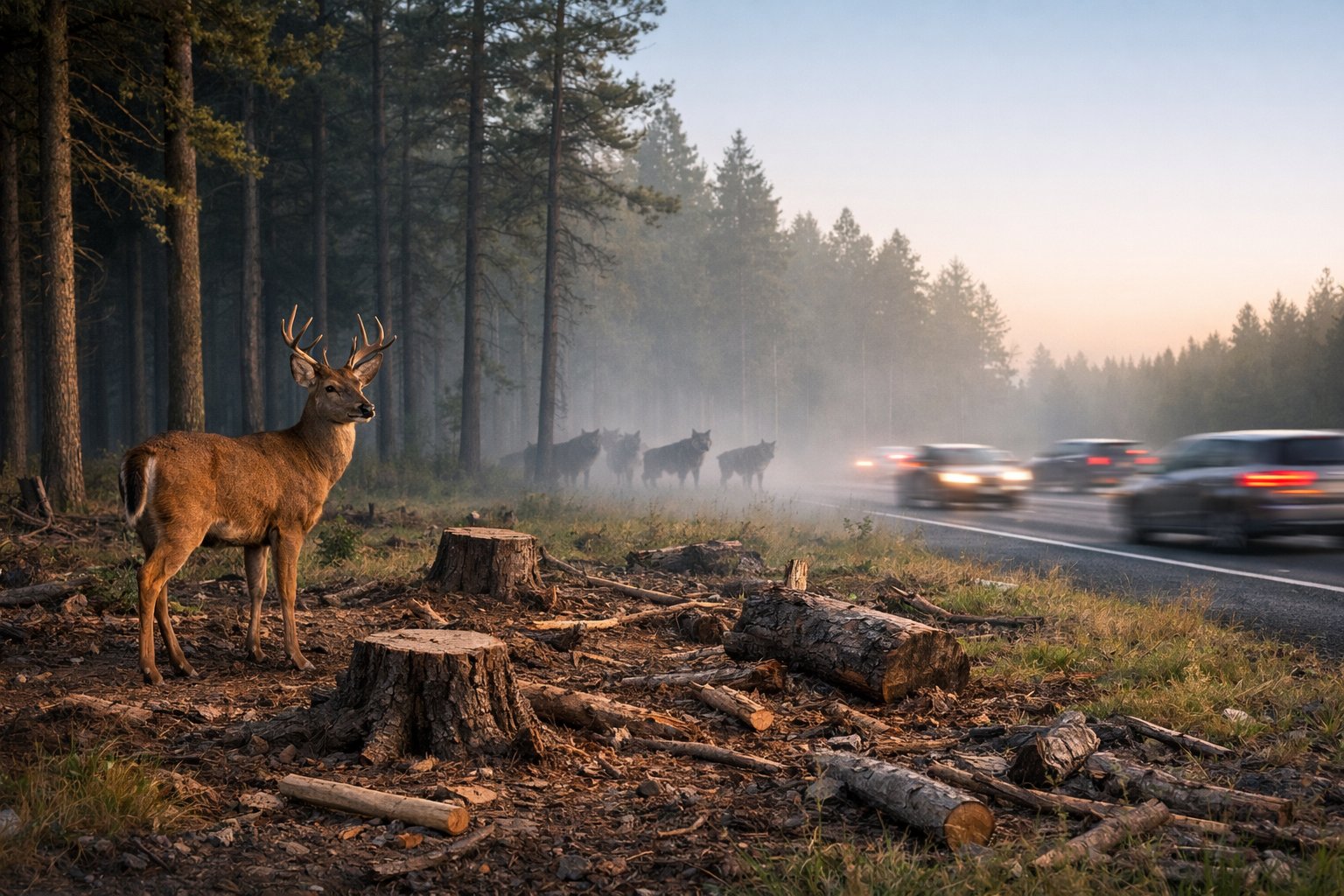
Let’s dig into how these issues chip away at deer populations. It’s not just about the deer, either—these risks shape the places they live and even touch people who care about wildlife.
You’ll also get a sense of how our choices matter, for better or worse, and what we can actually do to help deer stick around.
Primary Threats to Deer Populations

Predators, human activity, and disease all hit deer populations from different angles. These pressures affect their survival, how many fawns make it, and even how they move around the landscape.
Each threat pushes deer to change how they use their habitat. Sometimes, it even changes how people and wildlife can share the same space.
Predators and Natural Predation
Predators have a big influence on deer numbers and behavior. Wolves and mountain lions often go after healthy adults, which helps control populations in big, wild forests.
Coyotes and bobcats tend to focus on fawns, especially in places where the cover’s thin. Bears sometimes prey on newborns and weaker deer, mostly in spring.
Different regions and deer species deal with different predator pressures. In the eastern forests, white-tailed deer run into more coyotes, while mule deer and elk near mountains face more cougars.
It’s not all bad—predators can actually improve herd health by taking out sick animals. But if you pile on other stresses, heavy predation can make it hard for deer to bounce back and keep populations growing.
If you care about deer, supporting habitat corridors can help them escape predators. It’s also worth backing balanced predator management plans that consider both conservation and local needs.
Habitat Loss and Urban Development
Cities and farms keep eating away at deer habitat. When people build roads, neighborhoods, and clear fields, deer lose feeding spots and safe places to hide.
Fragmented habitat pushes deer into smaller spaces. That means more competition, higher stress, and, honestly, fewer fawns surviving and adults staying healthy.
Climate change doesn’t help either—it shifts what plants grow, which messes with deer food sources and forces them to move. Suburbs sometimes attract deer with tasty landscaping, but that just leads to more run-ins with people and spreads disease.
Saving patches of forest, restoring wildlife corridors, and using smart zoning can keep deer populations and the wider ecosystem healthier.
If you want to help, support local land-use plans that protect winter range, riparian cover, and leave room for wildlife corridors.
Major Deer Diseases
Chronic wasting disease (CWD) destroys deer brains and eventually kills them. It spreads through contact with infected tissue or contaminated environments, and it can slowly drag down local populations.
Epizootic hemorrhagic disease (EHD) sometimes wipes out lots of deer in a short time. Biting midges spread it, especially in hot, dry years. Ticks also carry diseases like Lyme that weaken deer and pile on parasites.
When deer crowd together, diseases spread even faster. That can lead to bigger outbreaks and more trouble for the herd.
Wildlife agencies stay busy with surveillance, carcass testing, and setting movement rules to slow down disease. If you see sick deer, report them—and please don’t feed or bait deer, since that just packs them together and spreads illness.
Vehicle Collisions and Road Mortality
Cars hit and kill a shocking number of deer every year. These crashes can also hurt people.
Deer-vehicle collisions spike where roads cut through feeding spots or travel routes. The risk jumps at dawn and dusk in autumn, when deer move more for the rut.
Highways near forests and wetlands see the most accidents. Wildlife crossings, roadside fencing, and lower speed limits in key spots can make a real difference.
Road planners now use deer movement maps to figure out where to put underpasses or overpasses. If you drive in deer country, slow down, use high beams when you can, and keep an eye out—where there’s one deer, there’s probably more.
Human-Related Challenges and Conservation
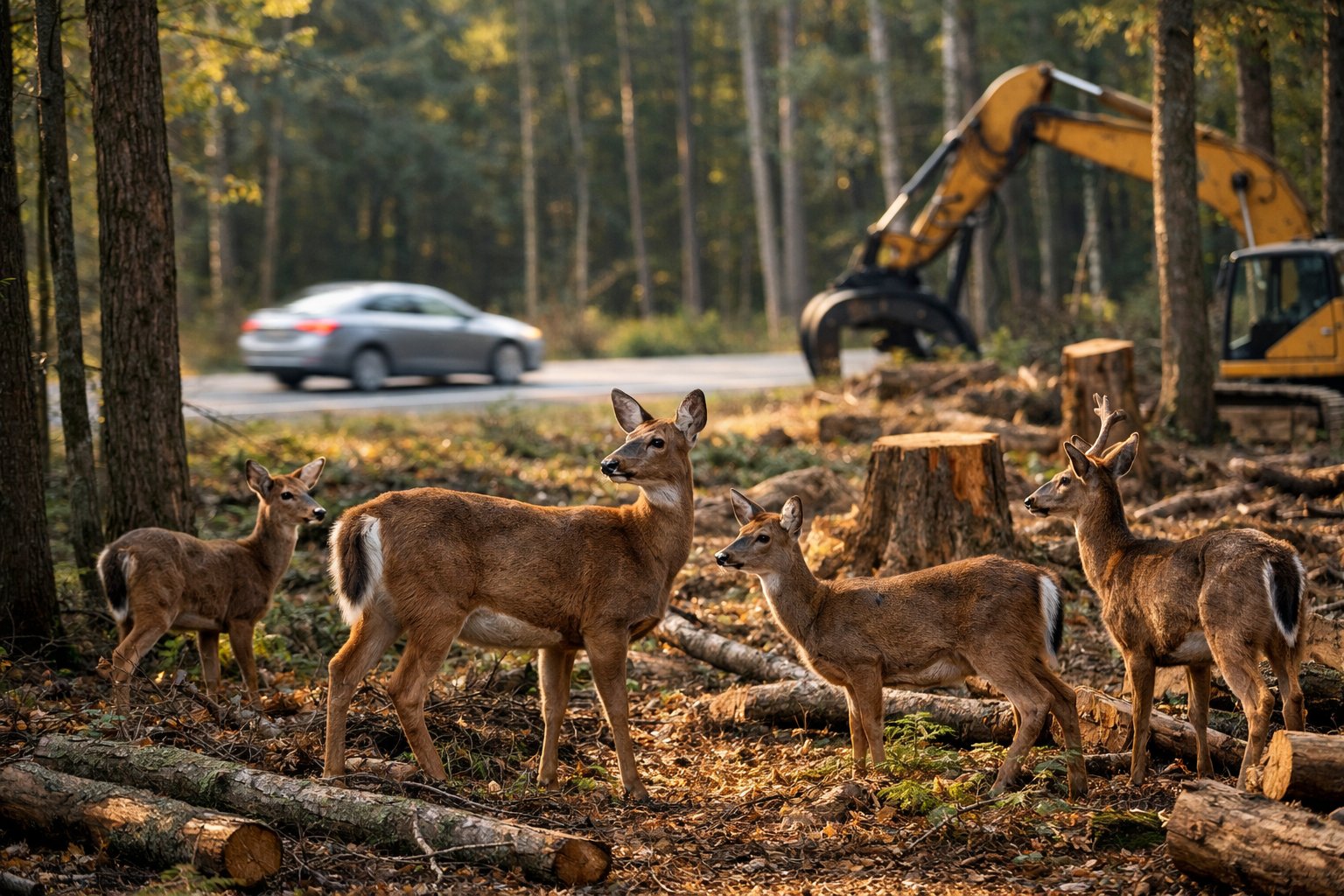
People make a huge difference in where deer live, how many survive, and what they eat. Let’s look at what happens with crowded herds, hunting, poaching, invasive species, and what agencies do to help.
Overpopulation and Resource Competition
When deer outnumber the land’s ability to feed them, you start to see the forest floor stripped bare. Young trees vanish and other wildlife have a harder time finding food.
Overpopulation usually happens near suburbs, where gardens and lawns act like a buffet. That’s bad news for forests and the animals that depend on them.
Crowded deer herds mean higher disease risk. Not enough food leads to fewer fawns making it and adults heading into winter in worse shape.
Wildlife managers keep tabs on local numbers and sometimes recommend targeted hunting or habitat tweaks to get things back in balance.
Deer Hunting and Management Practices
Hunting, with the right rules, helps keep deer populations in check. Agencies like the Pennsylvania Game Commission set regulations by county to cut down on crop damage and car crashes.
By following these rules, hunters help keep herds healthy and forests from getting over-browsed. Regulated hunting targets certain age and sex groups, making sure we don’t lose too many breeding females.
Agencies use surveys, roadkill data, and hunter reports to set quotas. If regular hunting isn’t enough, they might add special permits or longer seasons in areas with too many deer.
Illegal Poaching and Invasive Species
Poaching throws off all those careful management plans. When people illegally take deer—often near cities where it’s harder to catch them—they can remove key breeders and mess with the local balance.
Invasive plants and animals also cause problems. Non-native shrubs can take over, pushing out the plants deer and other wildlife actually need.
You can help by reporting poaching, supporting invasive species removal, and following local rules for land use and habitat restoration. Every little bit counts.
Conservation Strategies and Wildlife Agencies
Wildlife agencies blend science and policy to protect deer and their habitat. They count populations, set hunting rules, and invest in restoring habitats.
You’ll notice programs that create wildlife corridors. Agencies also tackle invasive species and work on forest understory to boost deer survival and plant diversity.
Conservation teams focus on public education and hands-on habitat projects. They also partner with city planners.
If you volunteer, follow hunting guidelines, or support local habitat work, you make a real difference. Your actions help cut pollution, protect forests, and support deer for the long run.
Curious about balanced deer management? Check out the New York State guidelines on deer overabundance: https://dec.ny.gov/nature/animals-fish-plants/white-tailed-deer/deer-management-conflict-avoidance/overabundance.


