
Deer and horses might look a bit similar at first — those long legs and the hooves, right? But if you peek at their family trees, the story changes fast. Deer and horses are distant cousins: both are hoofed mammals, but they split into different orders millions of years ago. That split matters if you’re curious about how they move, eat, or even how they ended up so different.
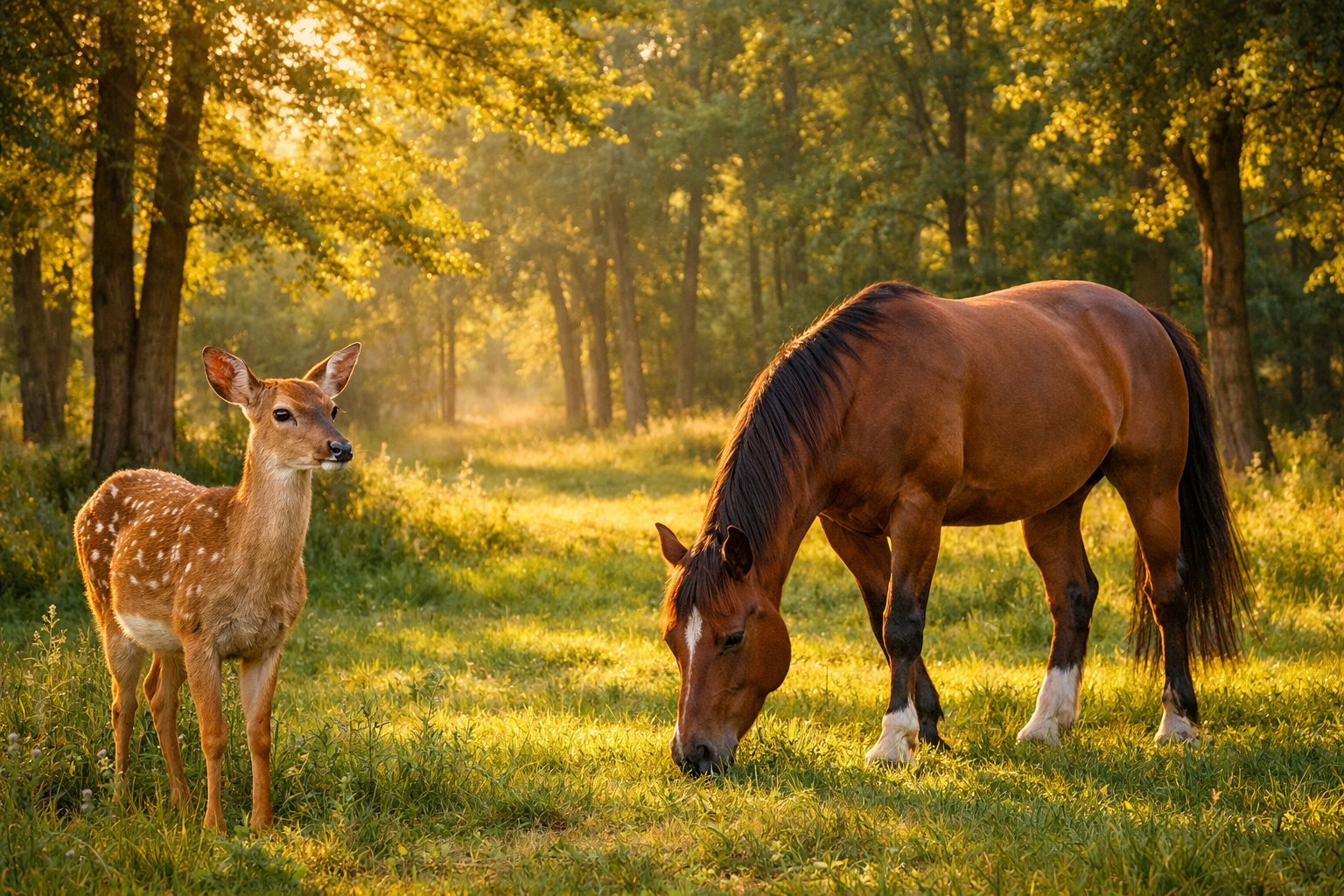
Let’s dig into how close their relationship really is, what makes them so different, and why those differences matter out in the wild or on a farm. Some traits come from shared ancestry, but a lot evolved for totally separate lifestyles.
How Closely Are Deer and Horses Related?
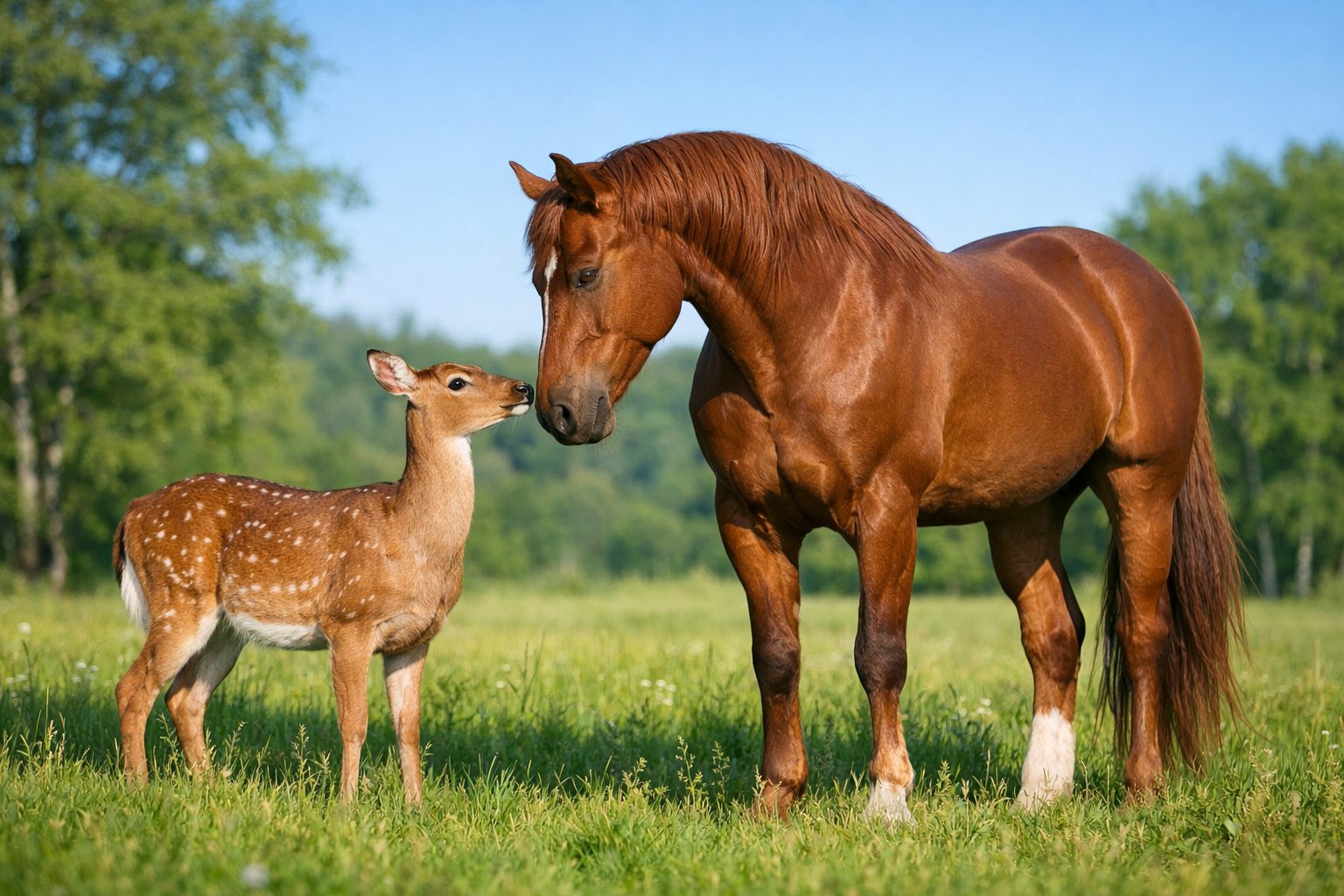
Deer and horses share a link from way back, but their evolutionary journeys went in different directions. Let’s see where they fit in the mammal family and when their paths split.
Taxonomy and Biological Classification
Deer fall under the family Cervidae and horses under Equidae.
These two families actually sit in different mammal orders. Deer land in the even-toed ungulate order, Artiodactyla, while horses belong to the odd-toed group, Perissodactyla.
Deer usually have two main toes per foot, while horses walk on a single hoofed toe.
Here’s a quick rundown:
- Kingdom: Animalia
- Class: Mammalia (placental mammals)
- Order: Artiodactyla (deer) vs Perissodactyla (horses)
- Family: Cervidae (deer) vs Equidae (horses)
Check out this table for a side-by-side:
| Feature | Deer (Cervidae) | Horses (Equidae) |
|---|---|---|
| Order | Artiodactyla | Perissodactyla |
| Typical toes | Two (cloven) | One (single hoof) |
| Digestive type | Ruminant (multi-chamber stomach) | Hindgut fermenter |
| Common groups | Deer, elk, moose | Horses, donkeys, zebras |
Evolutionary Paths and Common Ancestor
Deer and horses split off tens of millions of years ago. Their lineages go back to early placental mammals in the Eocene epoch, but their branches diverged pretty early.
Deer evolved in the artiodactyl group, which also includes cattle and giraffes. Horses took off in the perissodactyl branch, which shaped them for running on open plains with a single hoof.
Genetics tell the story, too. Deer often have high chromosome counts (like 70), while horses usually have fewer (around 64).
These differences in DNA and chromosomes show they’ve been reproductively separate for a long time. Fossils from the Eocene reveal primitive forms that led to both, but after the split, each went its own way.
Key Differences Between Deer and Horses
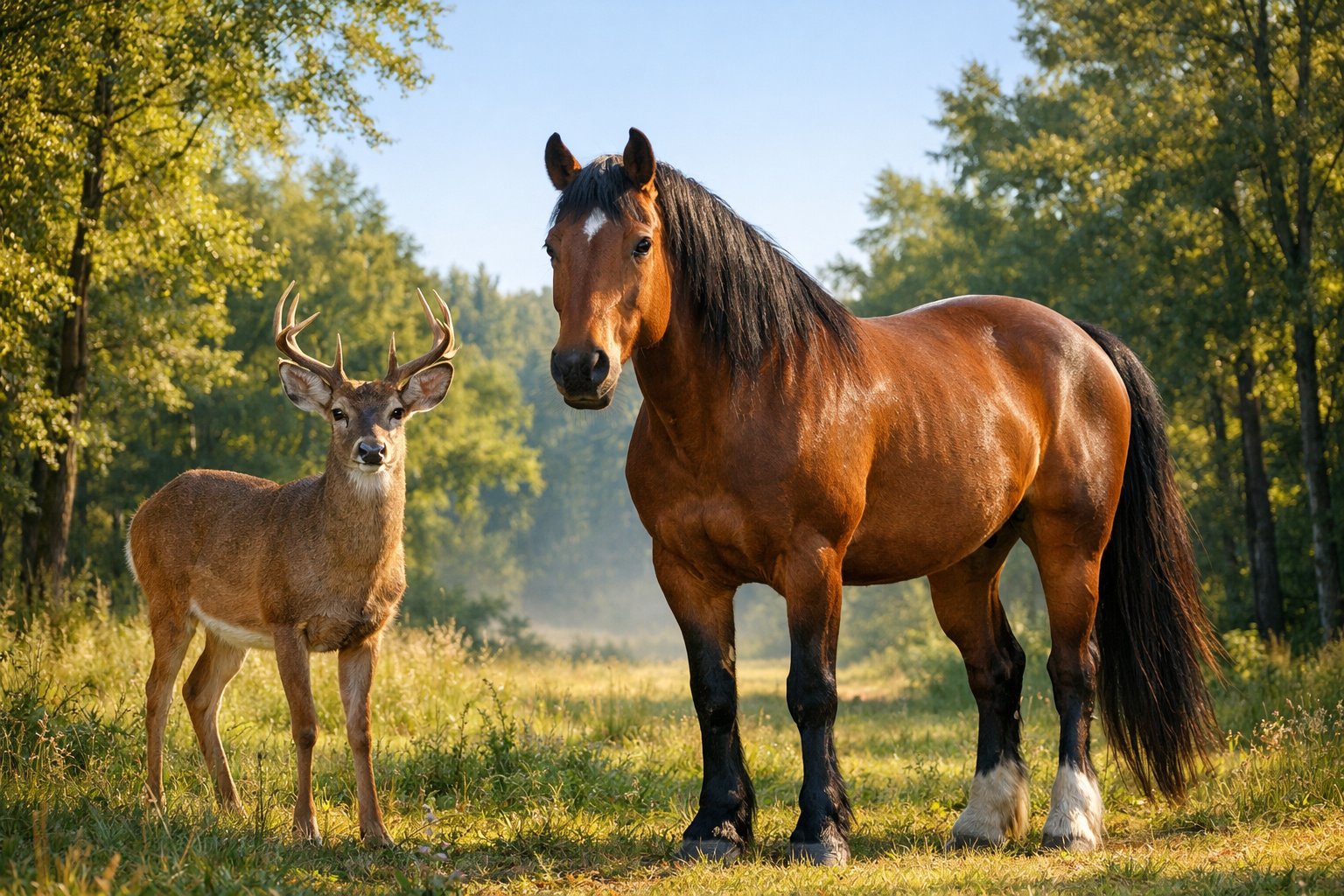
Deer and horses don’t just look different — their bodies, digestion, and even antlers set them apart. These differences shape how they survive, what they eat, and how they deal with predators or humans.
Hoof and Skeletal Structure
Deer have cloven (even-toed) hooves with two main toes bearing weight. This gives them a split, narrow footprint that’s perfect for quick turns and darting through the woods. Their limbs are built for agility and sudden bursts of speed.
Horses, on the other hand, are odd-toed ungulates. They run on a single large hoof per foot. That big hoof spreads out the impact and lets them run long distances on open ground. Their legs have long cannon bones and stiff joints, built for speed and endurance.
Their skeletons differ in more ways. Deer have lighter skulls and flexible spines — they twist and turn easily. Horses have sturdier necks and backs to carry weight or pull loads. Each animal’s bones fit its lifestyle.
Digestive Systems: Ruminants vs. Hindgut Fermenters
Deer are ruminants. Their stomach has several chambers, and microbes break down tough plant material. They chew cud to help with digestion. This system lets them get nutrients from leaves, twigs, and rough plants in forests.
Horses use a different strategy as hindgut fermenters. Their stomach is simple, and most fermentation happens in the cecum and large intestine. This setup lets them eat lots of softer grasses and process food quickly. Horses graze for hours and need steady access to forage.
Their digestive systems shape their diets. Deer can eat low-quality browse and get nutrition slowly. Horses need bigger quantities of food and can’t handle the same diet as deer without health issues.
Antlers and Other Physical Features
Most male deer (stags or bucks) grow antlers each year. These bony structures get shed and regrown, mostly for mating displays and fights during the rut. Antler size and shape depend on species, age, and even diet.
Horses — mares and stallions alike — never grow antlers or horns. Instead, you’ll spot differences in body size and behavior between sexes, but not in seasonal bone growth. Manes, tails, and hoof shape are main features for equines.
Other details: many deer have camouflaged coats and white tails for signaling danger. Horses and zebras have solid hooves and strong teeth for grazing. Donkeys and mules share equine traits, but you’ll notice differences in size and temperament.
Hybridization and Crossbreeding Myths
People sometimes wonder if deer can breed with horses or other equines like zebras, donkeys, or mules. Nope, that just doesn’t happen.
Huge genetic differences and mismatched chromosome numbers stop any chance of hybrids between deer (Cervidae) and horses (Equidae). Nature just doesn’t let it happen.
Within the equine family, hybrids do pop up. You might’ve heard of a zorse (zebra × horse) or a mule (horse × donkey).
Those crosses actually work because equines are much closer genetically and their chromosome counts line up better. So, when you hear someone talk about deer-horse hybrids, they’re really mixing up animals that just aren’t related that way.
It’s smart to be skeptical about wild crossbreeding claims between totally different animal groups. Animals might look similar or share the same space, but real hybrid offspring? That needs matching chromosomes and compatible reproductive systems.


