
You’ll spot deer almost everywhere on earth, except Australia and Antarctica. They come in all sorts of shapes and sizes. Scientists recognize about 40–50 living species in the deer family (Cervidae), though the exact number depends on how they count subgroups and subspecies.
That number gives you a good starting point, but how do scientists sort out all these deer? They look at things like antlers, size, and where each species lives.
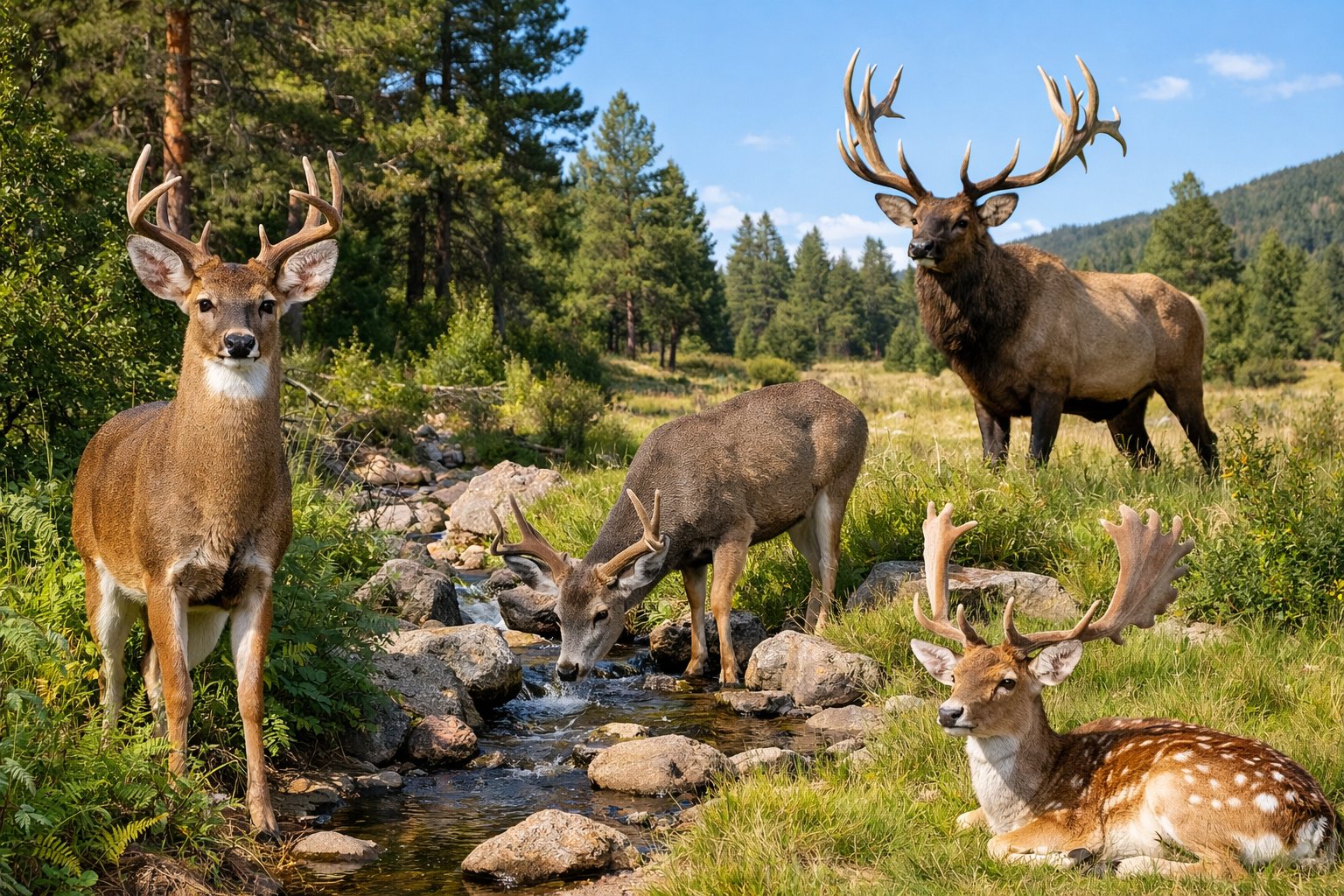
As you read on, you’ll see how deer species fall into familiar types—from tiny muntjac and roe deer to massive elk and red deer. Sometimes, different lists report different totals, and that’s because definitions keep shifting.
You’ll get some quick guides on what makes a species, maps showing where they live, and highlights of the world’s most notable deer. Spotting key differences gets a lot easier with a little background.
How Many Types of Deer Are There?
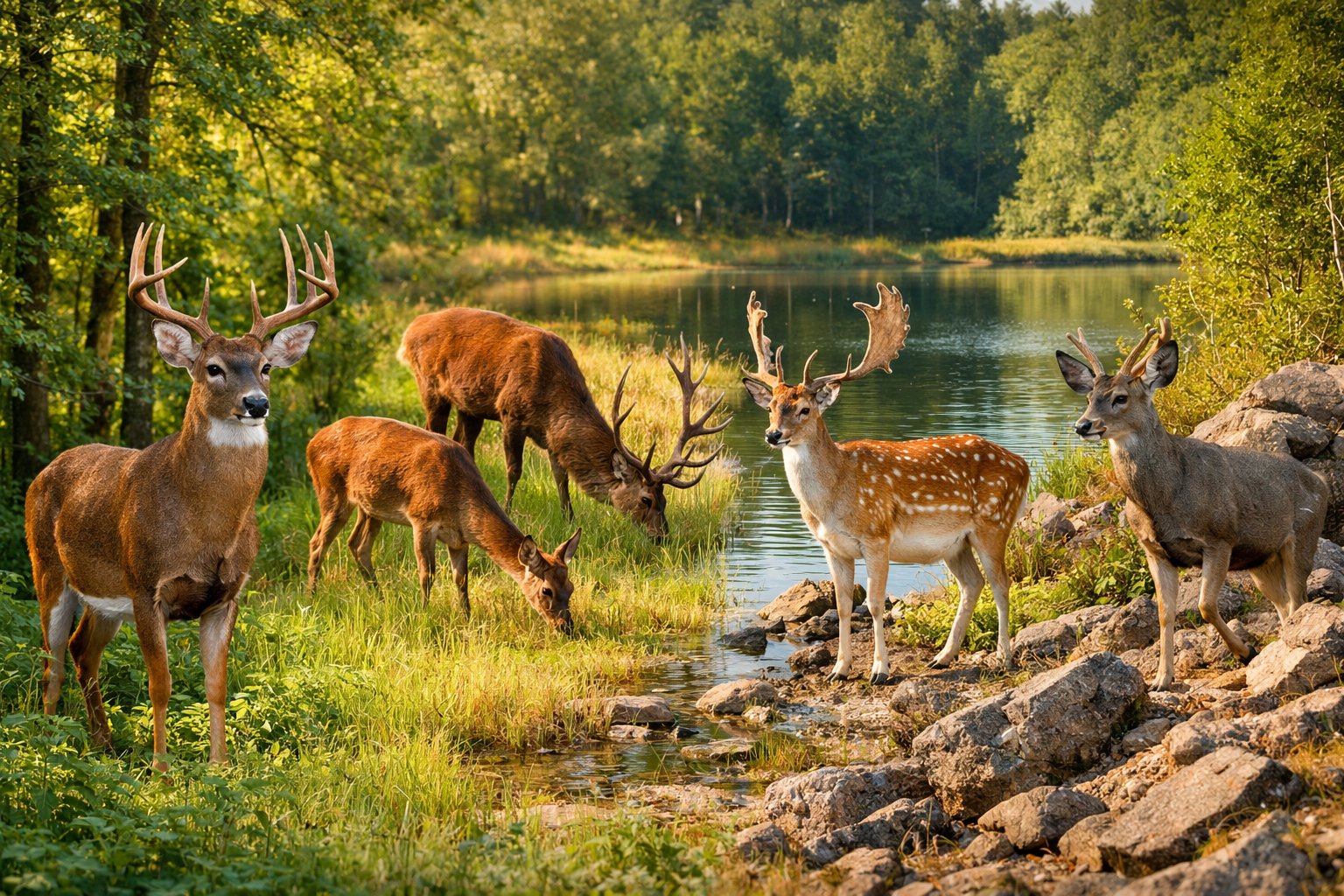
Let’s dig into how scientists count deer species, how they group them, and what physical traits set them apart. I’ll keep it simple: you’ll see clear numbers, group names, and the main features that help you tell species apart.
Scientifically Recognized Species and Classification
Scientists put deer in the family Cervidae, inside the order Artiodactyla. Most modern sources list about 43 to 55 living species—the number changes depending on how researchers split populations and subspecies.
Taxonomists decide if a group is a species or just a subspecies by looking at skull shapes, antler forms, genetics, and where they live.
Moose, elk (often called wapiti), and white-tailed deer count as widely recognized species. Some island or regional deer show tiny differences, so some authorities count them separately.
Genetic studies keep shaking up the list as researchers lump or split groups based on new DNA data. Older field guides might give you different numbers than the latest genetic research.
The family Cervidae keeps changing as scientists find new specimens and better DNA evidence.
Major Groups: Cervinae and Capreolinae
Deer species mainly fall into two subfamilies: Cervinae (Old World deer) and Capreolinae (New World deer).
Cervinae includes red deer, sika deer, and muntjacs. These deer live mostly in Europe and Asia, and their antlers usually branch off a main beam.
Capreolinae covers white-tailed deer, mule deer, caribou (reindeer), and several small South American species. These deer show different skull and antler attachments, and many migrated to the Americas.
A few species don’t fit neatly into “Old World” or “New World” groups. Sometimes their ranges overlap, or people have moved them outside their original homes.
Distinguishing Features Among Deer Species
You can tell deer species apart by looking at a few things: antler shape, hoof structure, body size, and facial markings.
Antlers range from simple spikes to wild, branching beams. Most male deer grow and shed antlers each year, but a few species have females with antlers too.
Their hooves typically have two big and two smaller parts on each foot, which is classic for artiodactyls.
Deer size varies a lot—from the tiny brocket deer up to giant moose. Where they live can help you guess the species too.
Marsh deer have wide hooves for soggy ground, while mountain deer have compact hooves for climbing.
If you want to identify deer, grab a field guide with photos, range maps, and notes on when antlers grow and shed. Some subspecies and seasonal changes can make ID tricky.
For absolute certainty, check recent DNA studies on the local population.
Notable Deer Species Around the World

Deer come in a wild range of sizes and antler shapes, and they live just about everywhere. Some hide in thick forests, while others roam open tundra or boreal forests.
A few species live close to people, but others stay far away from human activity.
White-Tailed Deer
The white-tailed deer (Odocoileus virginianus) roams across most of North America and even into parts of Central and South America.
You’ll spot them by the white underside of their tails, which they flash when startled. Males grow branched antlers each year and shed them by late winter.
White-tailed deer thrive in farmland, suburbs, and forests. They munch on leaves, twigs, crops, and even garden plants.
Fawns wear spotted coats for camouflage. Hunting and vehicle collisions impact their numbers, but conservation and hunting rules help keep populations stable in many areas.
Moose
Moose (Alces alces) are the biggest deer on the planet. You’ll find them in boreal forests and wetlands across North America and Eurasia.
Adult males grow wide, palmate antlers that can stretch several feet across. They use those antlers for mating displays and fights.
Moose eat aquatic plants, willow, and birch. They love wet habitats where they can wade and graze.
Calves stick with their mothers through the first winter. Watch out for moose near roads at dawn and dusk—collisions can be bad news for both you and the animal.
Red Deer
Red deer (Cervus elaphus) live throughout Europe, parts of Asia, and introduced regions like New Zealand.
Males, known as stags, grow big, branching antlers and roar loudly during the autumn rut to attract females and warn off rivals.
You’ll find red deer in woodlands, moors, and open grasslands. They eat grasses, shoots, and lichens.
Many countries manage red deer for hunting and conservation. Subspecies like the Iberian red deer show local differences in size and coat color.
Elk
Elk (Cervus canadensis), sometimes called wapiti, are large deer with huge antlers. You’ll find them in western North America, mountain valleys, and parts of Asia.
Males bugle loudly during the rut. Elk graze on grasses and browse on shrubs.
Some herds migrate between lowland winter ranges and high-elevation summer feeding grounds. Management focuses on habitat, hunting limits, and reducing clashes with ranching and roads.
Fallow Deer
Fallow deer (Dama dama) come in several coat colors, from spotted to nearly black. They’re native to Eurasia but now live across Europe, the Middle East, and on estates worldwide.
Males have palm-shaped antlers with lots of tines. You’ll see fallow deer in mixed woods and parkland.
They’re smaller than red deer and often hang out in parks near people. Fallow deer eat grasses, herbs, and young shoots.
Populations like the Persian fallow deer (Dama mesopotamica) are much rarer and protected.
Sika Deer
Sika deer (Cervus nippon) originally come from East Asia, but now live in parts of Europe and North America too.
Many sika have white spots, and in some populations, the spots stick around all year. Males grow pointed, branching antlers.
Sika handle dense forests and marshy ground pretty well. They browse shrubs and grasses.
Where their ranges overlap, sika can hybridize with red deer. In their native range, people hunt sika, but in some introduced areas, they’ve become invasive and impact local ecosystems.
Roe Deer
Roe deer (Capreolus capreolus) are small, nimble deer found all over Europe and parts of Asia.
You’ll notice their compact bodies and the short antlers on males. They like mixed farmland, woodland edges, and hedgerows.
Roe deer eat leaves, herbs, and even farm crops. They usually stay alone or in small family groups.
Their reproduction is a bit odd: fertilized embryos pause development so fawns are born in spring, which helps them survive in places with harsh winters.
Reindeer (Caribou)
Reindeer, or caribou in North America (Rangifer tarandus), range across Arctic and subarctic regions.
Unlike most deer, both males and females grow antlers. Females use their antlers to dig through snow for food in winter.
Some herds migrate thousands of miles between winter and summer ranges, chasing plant growth and avoiding insects.
Reindeer play a central role in many Arctic cultures, and people have domesticated them in parts of Eurasia. Wild herds face threats from habitat changes and industrial development.
Unique and Lesser-Known Deer
Some deer species stay small, keep to themselves, or only show up in certain regions. Mule deer (Odocoileus hemionus) and black-tailed deer (O. h. columbianus) roam western North America, showing off their big ears and forked antlers.
Axis or chital deer (Axis axis) stand out with their spotted coats. People mostly spot them in South Asia, though they’ve popped up in a few introduced places too.
If you look for smaller types, you’ll find muntjacs (Muntiacus spp.) with their odd barking calls. Tufted deer (Elaphodus cephalophus) have a fuzzy tuft on their foreheads and even little fangs.
Pudus (Pudu spp.)—yep, the world’s tiniest deer—are easy to miss unless you know where to look. Marsh deer (Blastocerus dichotomus) wander South American wetlands, while barasingha (Rucervus duvaucelii) stick to the grasslands of South Asia.
Brocket deer (Mazama spp.), sambar (Rusa unicolor), Eld’s deer, and water deer (Hydropotes inermis) all bring something different to the table. Island species like the Philippine and Visayan spotted deer have their own quirks and face some tough conservation challenges.
If you’re curious about the wild variety of deer out there, check out Britannica’s list of deer for more.


