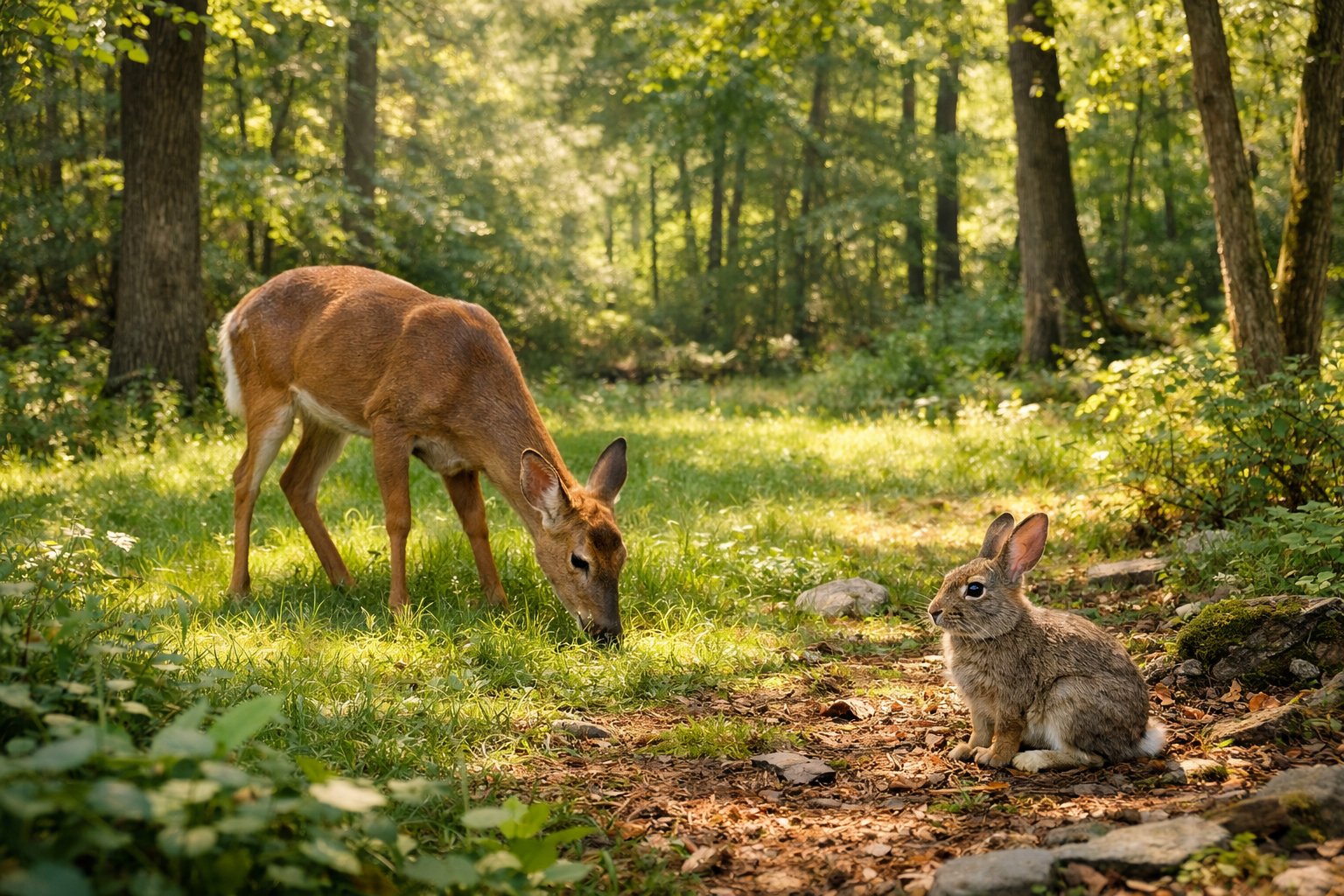
Ever come across those wild online clips and wondered if deer actually eat rabbits? Surprisingly, yes — deer will sometimes eat rabbits or other small animals, but it’s rare and not part of their regular diet. This is worth knowing if you’re interested in wildlife, keeping your garden safe, or just enjoy odd nature moments.
Let’s get into why deer usually stick with plants, what might make them try meat or bones, and how their teeth and stomach play into all this. I’ll toss in some real examples and simple biology so you can spot a real scavenging deer from a misleading viral video.
Do Deer Actually Eat Rabbits?

Deer mostly munch on plants. Still, sometimes they’ll eat small animals or carcasses.
You’ll find a handful of confirmed cases and plenty of myths. Let’s break down when and why this happens.
Rare Documented Cases of Deer Eating Rabbits
Researchers and wildlife watchers have seen a few cases where deer ate rabbits or other small critters. These moments don’t happen often.
Usually, deer find a rabbit carcass instead of chasing one down. Videos and field notes show deer nibbling rabbit flesh, scavenging guts, or even chewing bones for minerals.
If you see these reports, pay attention to what’s going on: most happen near roadkill or in winter, when plants are hard to find. Deer seem to take advantage of what’s there, not hunt.
Deer don’t have claws or sharp incisors for hunting, so going after a healthy rabbit just isn’t their thing.
Common Misconceptions About Deer Eating Meat
Some people think deer hunt like carnivores. That’s just not true.
Deer are ruminant herbivores by design. You shouldn’t picture them as true omnivores that eat meat regularly.
A lot of the myths come from seeing deer at carcasses or eating eggs and assuming they hunted. Most of the time, deer just find easy snacks or scavenge.
Claims about deer regularly hunting rabbits don’t hold up to scrutiny. If you see dramatic stories online, check if anyone actually saw hunting or just scavenging.
Circumstances That May Lead Deer to Eat Small Animals
Sometimes, certain situations make deer more likely to eat rabbits or small animals. When plants are scarce in late winter or early spring, deer might look for extra protein and minerals.
Lactating does and bucks growing antlers need more calcium and phosphorus, so they’ll sometimes chew bones or eat bits of carcasses.
You might spot this around farmyards, where dead animals or high-calorie food are easy to find. Deer are more likely to feed on eggs, nestlings, or roadkill than to hunt a rabbit.
Just keep in mind, these are rare exceptions based on need and opportunity, not the usual deer diet.
Deer and Rabbit Diets: Biology and Behavior

Deer and rabbits both stick mostly to plants. But the way they digest and pick food is actually pretty different.
If you know how each handles fiber, looks for nutrients, and changes habits, you can better guess when one might try something weird.
Digestive System and Herbivorous Adaptations
Deer are ruminants. Their four-chambered stomach lets microbes break down tough cellulose from leaves, twigs, and bark.
This setup means deer can get protein and energy from woody plants and browse that a lot of animals just can’t use.
Rabbits, on the other hand, are hindgut fermenters. Food goes through a single stomach and ferments in the cecum.
Rabbits eat their soft feces (cecotropes) to take in vitamins and amino acids they missed the first time. This lets them process high-fiber grasses fast.
Both systems work for plant diets, but they’re not the same. Deer can handle woody twigs and seasonal browse.
Rabbits stick to grasses and tender shoots. These differences decide where each animal feeds and how they fit into your local landscape.
Plant-Based Diets Versus Opportunistic Feeding
Deer usually eat leaves, buds, fruit, and nuts. In spring and summer, they go for green browse and forbs.
Come fall, they focus on acorns and fruit. In winter, they eat more twigs and bark.
You’ll often see deer near fruit trees or orchards when fruit drops.
Rabbits munch on grasses, clover, and garden greens all year. In winter, they nibble on bark and buds but don’t usually take on big woody stems.
Rabbits need to graze almost constantly to keep up their energy.
Deer do sometimes eat meat or carrion, but it’s rare and only happens when nutrients are low. Their digestive system and habits keep them focused on plants.
Rabbits really don’t go for meat; their guts just aren’t made for it.
Comparing Deer and Rabbit Feeding Habits
Deer are picky browsers. You’ll see them go for the best shoots and skip poor-quality plants.
They’ll travel farther and change feeding times depending on seasons or people nearby. Deer bite and tear leaves, leaving behind stripped stems.
Rabbits graze close to the ground. They clip plants near the soil and make those classic V-shaped cuts on stems.
Rabbits stay in smaller areas and feed pretty much day and night.
Both can mess up gardens, but in different ways. Deer go for higher branches and fruit trees.
Rabbits chew seedlings and lower bark. If you’re trying to protect your yard, match your strategy to who’s doing the munching.
Impact of Diet on Deer Behavior
What deer eat really shapes where and when they move.
If you spot high-calorie foods like acorns or fruit trees, you’ll probably find deer hanging out close by. When male deer start growing antlers, they need more protein and minerals, so they put extra pressure on plants packed with nutrients.
During leaner seasons, deer spend a lot more time browsing in woody areas. Sometimes, they’ll even wander closer to human spaces and take risks they usually avoid.
Their ruminant digestion slows down any sudden diet changes. If their food source changes too fast, their gut microbes can actually get stressed out.
Want to predict deer activity? Just keep an eye on plant phenology. Bud bursts, fruit drops, and those big mast years all bring more deer to fields, edges, or even your own fruit trees.


