
You probably spot deer more often than you realize. White-tailed and mule deer pop up all over North America, while red deer and roe deer seem to run the show in much of Europe and Asia.
A handful of species in the Cervidae family—white-tailed, mule/black-tailed, red, and roe deer—make up most of the world’s deer sightings.
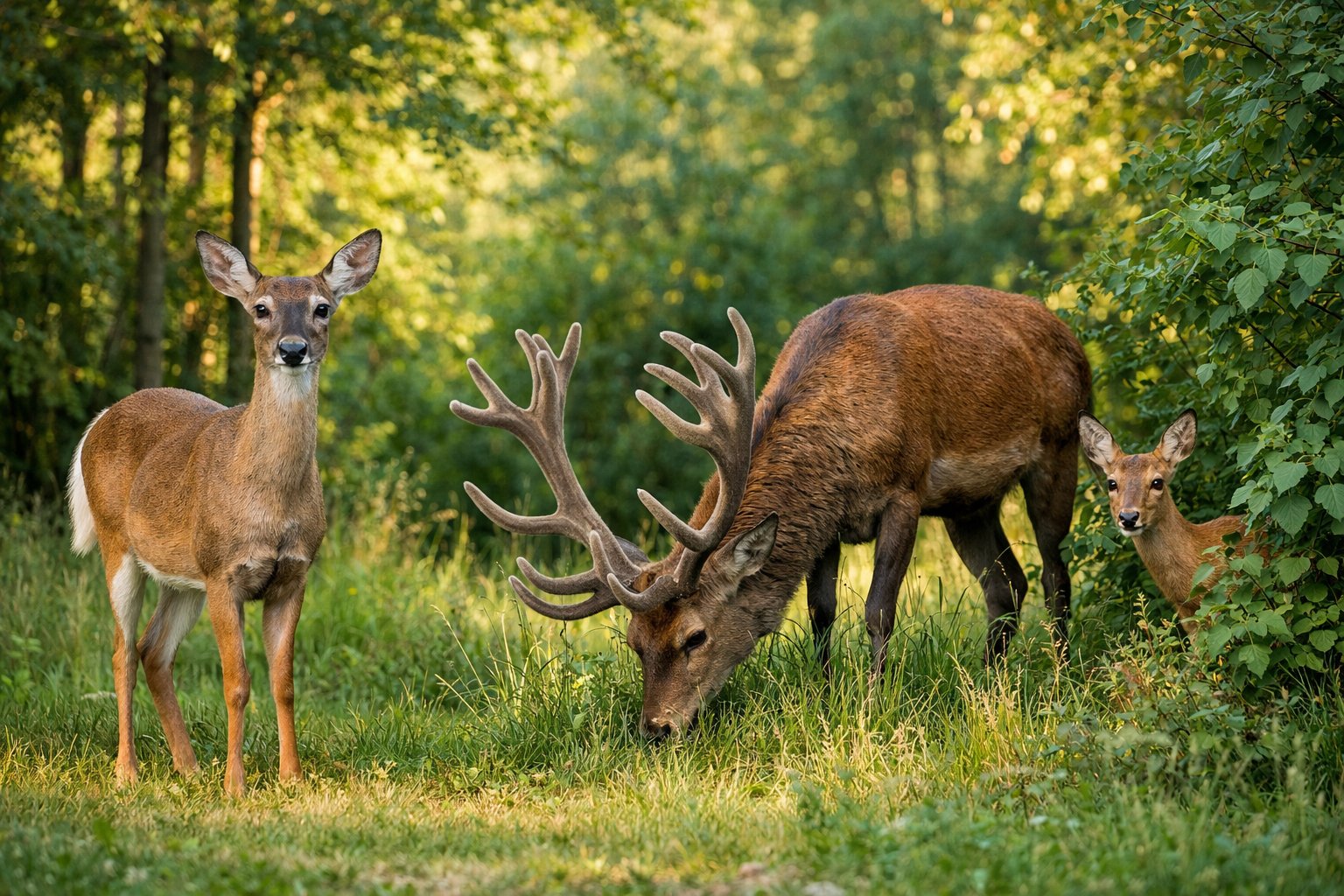
Let’s look at how these deer differ in where they live, how they act, and why some seem to love hanging around towns while others keep to the wild. Knowing that stuff just makes it easier to figure out which deer you’re seeing and how the whole Cervidae crew fits into ecosystems everywhere.
Most Widespread and Abundant Deer Species

These deer pop up in all sorts of places—forests, farmland, even suburbs and open plains. They shape local ecosystems and even change how people use land.
White-Tailed Deer: The World’s Most Common Deer
You’ll see white-tailed deer (Odocoileus virginianus) everywhere in North America. They range from southern Canada all the way down to South America.
They live in forests, fields, and even right outside people’s homes in the suburbs. Both males and females use thick cover, but the males grow antlers each year.
White-tailed deer thrive because they can adapt to farmland and broken-up woods.
Key traits:
- Medium-sized; does usually weigh 75–150 lbs.
- Most active at dawn and dusk.
- That signature white underside of the tail pops up when they’re startled.
White-tailed deer change how plants grow, sometimes damage crops, and affect tick populations. Wildlife managers try to keep their numbers in check with hunting, fences, and changing habitats. If you’re curious about how many deer exist worldwide, the Deer of the World overview (Penn State Deer-Forest Study) has more info.
Mule Deer and Black-Tailed Deer
You’ll mostly find mule deer (Odocoileus hemionus) out west in North America. They like open woods, shrublands, and higher elevations.
Black-tailed deer (Odocoileus hemionus columbianus), a subspecies, stick to the Pacific coast from California up to Alaska. Both types have those big ears, a bouncy way of running, and antlers that fork instead of branch.
Some key differences:
- Mule deer cover a bigger inland area, often in mountains.
- Black-tailed deer have a darker tail and hang out more near the coast.
- Both eat shrubs, grasses, and forbs, but change it up with the seasons.
Herd sizes and migrations change a lot depending on where you are. When snow falls and food gets scarce, you’ll notice them moving to find better forage. Local managers watch for car collisions and crop damage.
Red Deer and Roe Deer Across Europe
Red deer (Cervus elaphus) and roe deer (Capreolus capreolus) are everywhere in Europe. Red deer stand out as some of the biggest deer there, and you’ll see them in woodlands and on managed estates.
Roe deer are smaller, a bit shy, and do well on farmland and in hedges.
A few quick facts:
- Red deer: large bodies, big branching antlers, often managed for hunting or meat.
- Roe deer: smaller, reddish coats, usually alone or in tiny family groups.
Both species have bounced back or spread out in some areas, thanks to changes in forestry and legal protection. In places where deer numbers get high, you’ll find efforts to control populations, prevent car accidents, and manage habitats.
Sika, Axis, and Fallow Deer in Asia and Beyond
You might run into sika deer (Cervus nippon), axis deer (chital), and fallow deer (Dama dama) in different parts of Asia and in places where people introduced them. Sika deer, once native to East Asia, now live in parts of Europe and the U.S.
Axis deer come from South Asia and do well in the Indian plains and some tropical spots where people moved them. Fallow deer started in Europe but now live in parks and wild woods almost everywhere.
What’s worth knowing:
- Sika deer: look spotted in summer, pretty vocal, and sometimes mix genes with red deer.
- Axis deer: always have a spotted coat, hang out in social herds.
- Fallow deer: coats can really vary, and the males grow those palm-shaped antlers.
These deer can change local plant life and sometimes mix with native species, which changes genetics. People use hunting, park management, and fencing to keep numbers in check in places where they aren’t native.
Other Notable Deer Around the World
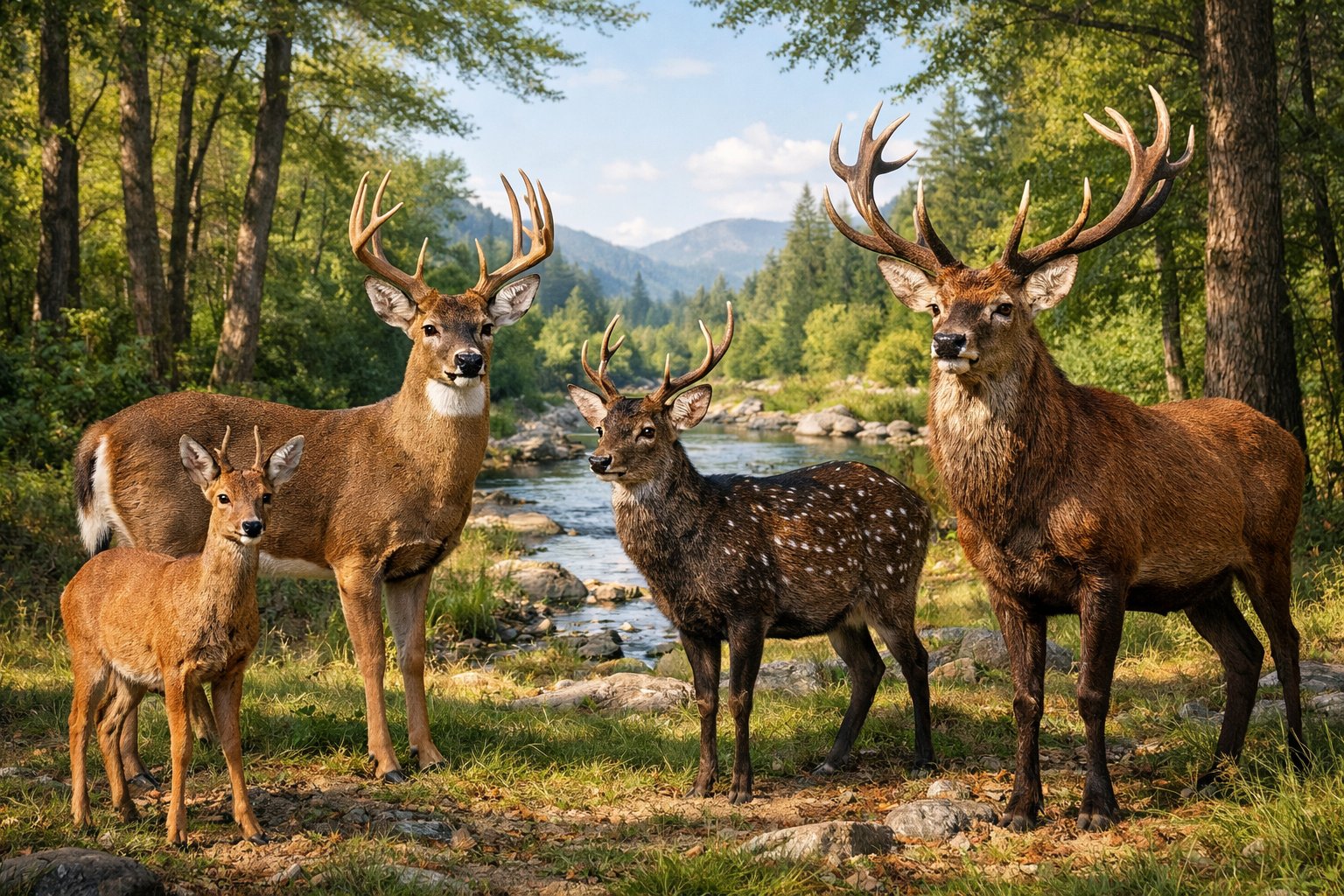
Some deer just stand out—think the biggest species on Earth, Arctic wanderers that travel in huge herds, and a few oddballs with quirky looks or habits. Here’s where they live, how to spot them, and why they matter.
Moose and Elk: The Largest Deer
Moose (Alces alces) live in boreal forests across North America and Eurasia. Males grow those huge, flat antlers—sometimes over 6 feet wide.
Moose are the tallest deer, often over 2 meters at the shoulder. They munch on aquatic plants, shrubs, and young trees.
Elk, or wapiti (Cervus canadensis), roam North America and parts of Asia. They form big herds on open land and breed in late summer, when males bugle to attract females.
Elk antlers branch out instead of flattening. You’ll probably see elk out in meadows, while moose prefer spots near water.
Some differences:
- Moose: flat antlers, usually alone or in small groups, eat a lot of wetland plants.
- Elk/wapiti: branching antlers, big herds, eat grass and browse.
Reindeer and Caribou: Arctic Species
Reindeer and caribou (Rangifer tarandus) wander the Arctic and sub-Arctic in Europe, Asia, and North America. Both males and females usually grow antlers—kind of rare for deer.
They migrate huge distances between summer and winter ranges, often in herds of thousands. Their diet is mostly lichens, grasses, and shrubs, and they survive harsh winters on stored fat.
Domesticated reindeer are pretty common in Scandinavia and Russia, where people herd them for meat, hides, and transport. Wild caribou still play a big role in northern ecosystems and indigenous cultures.
If you see a big herd, it’s best to keep your distance—especially during migration or calving season.
Unique and Regional Deer: Marsh, Sambar, Water, and Muntjac
You’ll probably remember some regional deer just by their looks or where they live. Marsh deer (Blastocerus dichotomus) stick to South American wetlands, and their long legs help them wade through shallow water.
Sambar (Rusa unicolor or Rucervus duvaucelii, depending who you ask) roam the forests of South and Southeast Asia. The males carry rugged, three-pointed antlers, and honestly, they seem to prefer hiding out in dense cover.
Water deer (Hydropotes inermis) from East Asia don’t have antlers at all—males grow long, tusk-like canine teeth instead. You’ll usually find them in reed beds and along riverbanks.
Muntjac (genus Muntiacus) are those small, barking deer scattered across Asia. Males sport short antlers and, yep, they grow tusks too.
Muntjac breed fast and handle all kinds of habitats, which lets them spread far beyond their original ranges.
If you’re trying to figure out which deer you’re looking at, check out where it lives and whether it’s got antlers or tusks. Each one really carves out its own spot, from marshes to thick tropical forests.


