
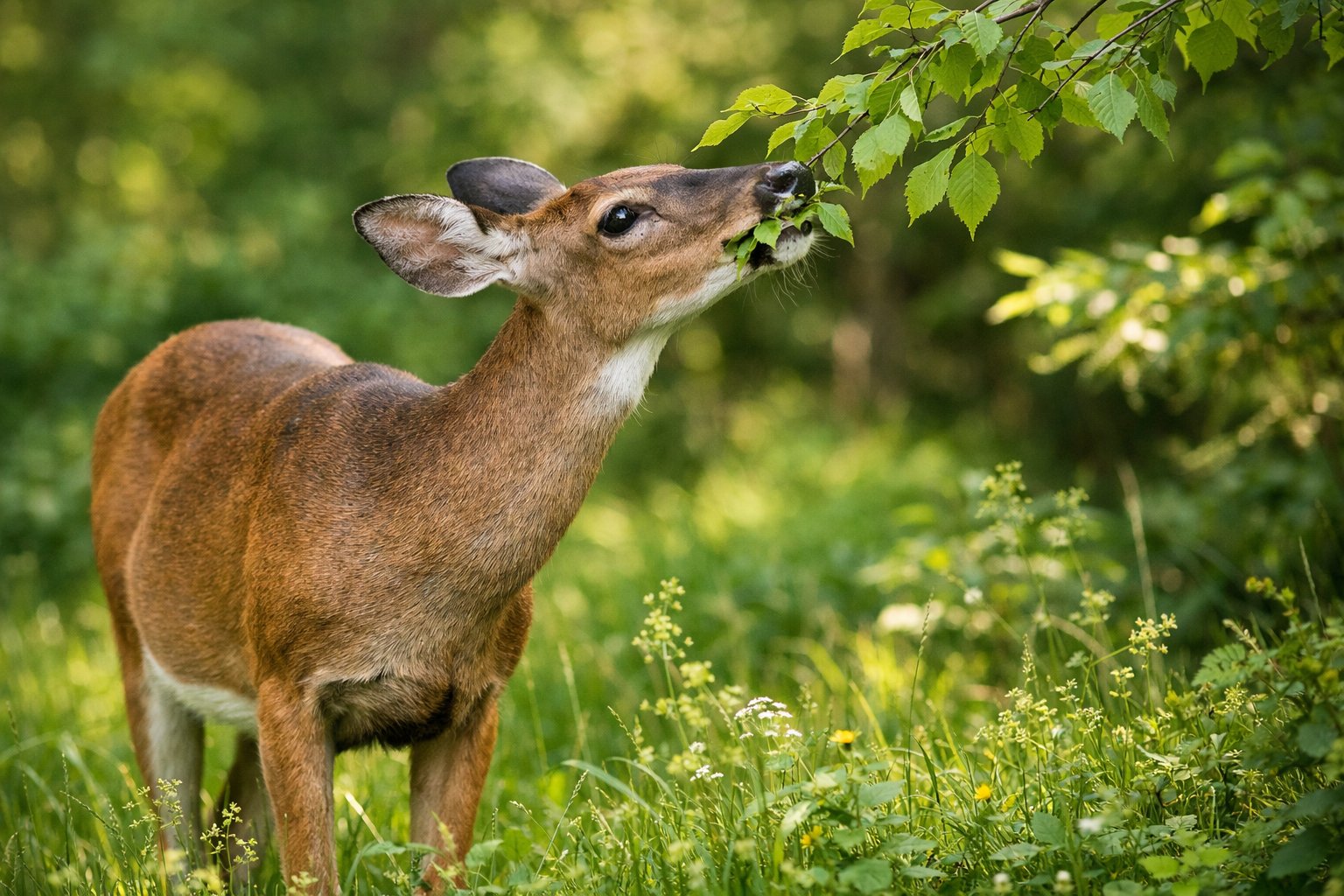
Deer munch on all sorts of plants, but here’s the quick answer: they mostly eat leaves, shoots, fruits, nuts, and some grasses, and they swap out foods with the seasons to get what they need. That’s pretty much why you see deer wandering into your yard, garden, or those nearby woods.
If you stick around, you’ll find out which foods deer like best and why some plants seem to lure them in. Their stomachs can handle plants that would probably make other animals sick, which is honestly kind of impressive.
You’ll get a better idea of what to plant, what you might need to fence, and when deer are most likely to appear.
What Do Deer Eat? Core Diet and Key Foods

Deer eat a mix of woody plants, leafy greens, grasses, nuts, and whatever fruit they can find. They pick foods based on what’s in season, where they live, and what’s growing nearby.
Browse: Leaves, Twigs, and Shrubs
Browse is just a fancy word for the leafy bits, buds, and twigs of trees and shrubs. You’ll catch deer nibbling on oak leaves, maple buds, willow shoots, and even young aspen saplings.
When winter hits and soft plants disappear, deer strip bark and chew twigs. Shrubs like dogwood, honeysuckle, and elderberry are regulars on their menu.
Evergreens, especially arborvitae, often take a hit too.
Some ornamentals—think rhododendron, azalea, holly, and hosta—pull in deer during spring and summer. Yew and certain ivy are toxic, so deer steer clear unless they’re desperate.
If deer keep browsing, they can kill young trees and stunt saplings, which is bad news if you want shade trees someday.
Grasses and Forbs in Deer Diet
Grasses and forbs give deer a quick energy boost, especially in spring and summer. You’ll spot them munching clover, white clover, alfalfa, goldenrod, chicory, and dandelions.
Field crops like oats, wheat, sorghum, soybeans, and corn (yep, all those cereal grains) bring deer into farm fields.
Forbs cover broad-leaf plants such as goldenrod, ragweed, asters, and brassicas like turnips and beets. Clover and alfalfa are extra nutritious, so people often plant them in food plots.
Since grasses alone don’t have much protein, deer mix in forbs to meet their needs—especially when fawns are growing or bucks are building antlers.
Nuts, Acorns, and Other Mast
Hard mast—basically nuts—packs a ton of energy for fall and winter. You’ll see deer rooting around for acorns under white oak, red oak, and other oaks.
Beechnuts, chestnuts, hickory nuts, and pecans are all top picks. Sometimes deer go for persimmons too.
The amount of mast in a year really changes where deer hang out and how healthy they get. If the acorns are falling, deer stick to the woods. If not, you’ll see more deer in fields and orchards.
If you want deer around, planting a few nut trees or leaving native oaks standing helps a lot.
Fruits, Berries, and Sweet Foods
Sweet stuff pulls deer in during late summer and fall. Apples, pears, raspberries, blackberries, persimmons, and pokeweed fruit all get eaten.
Fruit trees, berry patches, and orchards turn into deer hotspots when other foods dry up.
Deer also raid gardens for pumpkins, sweet potatoes, peas, beans, and sunflowers whenever they can. Feeding deer directly isn’t a great idea, though—letting them forage naturally keeps them healthier and wilder.
If you’re curious about how their food choices shift with the seasons, there’s a whole breakdown of deer diet out there.
How Deer Digest Food and Adapt Diets

Deer rely on a specialized gut and pretty clever feeding strategies to get nutrients all year long. Their stomachs work in a way that lets them handle tough plants.
You’ll notice their diets shift with the seasons, and habitat and species play a part in what they eat.
The Specialized Four-Chambered Stomach
Deer belong to the ruminant club, sporting a four-chambered stomach that lets them break down tough plant fibers. The rumen works as a fermentation vat, where microbes get busy digesting cellulose.
That process produces fatty acids and amino acids, which feed the deer.
The reticulum grabs heavy or hard-to-digest stuff and helps form cud. You’ll sometimes see deer regurgitate and rechew this cud to grind fibers even smaller.
The omasum pulls out water, minerals, and a few nutrients before food heads to the abomasum. The abomasum acts like a regular stomach, using acids and enzymes to finish digesting proteins.
Most deer act as concentrate selectors, picking high-quality plant parts—buds, young leaves, fruits—over bulk grasses. That’s why your local deer usually go for nutrient-rich foods.
This digestive setup lets deer squeeze more nutrition from woody browse and mast once green plants vanish.
Seasonal Changes in Diet
Deer change up their diets as plants grow and their energy needs shift throughout the year. In spring and summer, they focus on forbs, young shoots, and soft greens to get protein for antler growth and nursing fawns.
These foods ferment more easily in the rumen and pack more nutrients.
When fall rolls around, deer switch to hard mast like acorns and soft mast such as berries. Mast brings in carbs and fats, helping deer bulk up for winter.
Once winter hits and greens disappear, browse—twigs, buds, and bark—becomes their main meal. Microbial fermentation in the rumen becomes even more important to pull energy from these lower-quality foods.
Deer eat more dry matter in the fall to store up energy and slow down in winter as digestion gets tougher. Wildlife managers watch these diet changes to plan hunting seasons and manage habitats.
Differences by Habitat and Species
Where you live and which deer species roam your area really changes what deer eat—and even how they go about it.
White-tailed deer in the eastern forests usually browse oak and maple twigs. In the fall, they’ll snap up acorns whenever they can.
Out West, mule deer and elk go for shrubs like sagebrush and bitterbrush. Elk, honestly, seem to munch more grass than most deer.
Red deer in mixed woodlands? They’ll switch between grasses and woody browse, depending on the season.
Herd behavior makes a big difference, too. When deer pack together, they can overbrowse young tree saplings, which messes with forest regeneration. That’s why wildlife managers sometimes step in with controlled culling or by planting tougher species.
Your local habitat—whether it’s a forest, a meadow, or farmland—really shapes what food is available and how deer feed.
If you manage tree species, plant food plots, or protect oak stands, you’re basically deciding what’s on the menu for your local deer.


