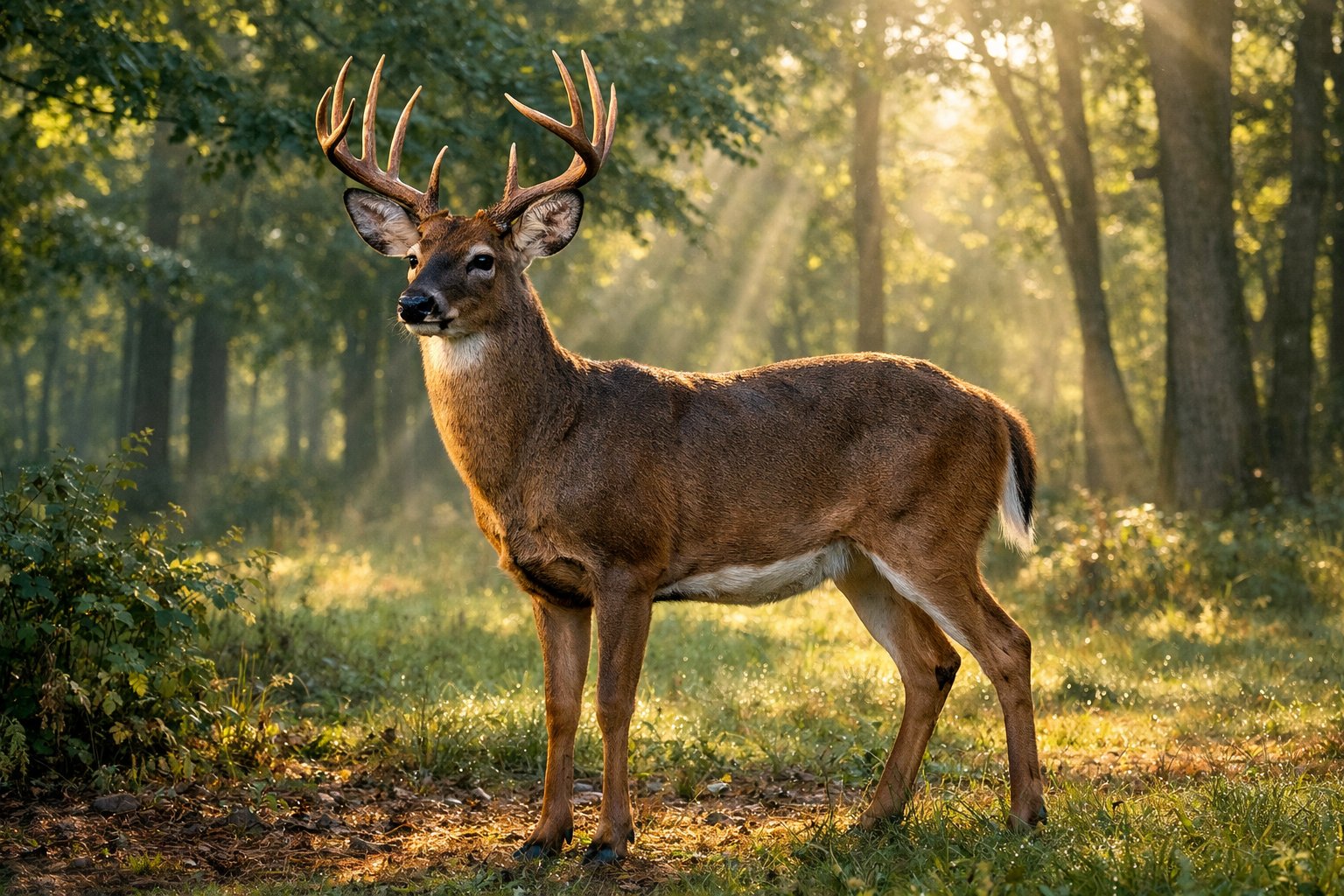
Ever spot a deer in your backyard or along a trail and wonder how long it actually lives? Most wild deer last about 3 to 6 years, while deer in captivity usually make it to 7 or 10 years, sometimes even longer if they’re lucky and well cared for. Some deer really beat the odds and live much longer, but that’s not the norm.
Let’s look at how lifespan changes depending on deer species, where they live, and what dangers they face. You’ll get a sense of why some deer barely make it a few years, while others manage to reach their teens.
Average Lifespan of Deer

Deer lifespan really depends on the species, where they live, and if they hang around people. Wild deer deal with more risks, so they don’t usually live as long. Captive deer get a safer life and can reach some impressive ages.
Wild Deer Lifespan
In the wild, deer don’t have it easy. For species like white-tailed deer and mule deer, most only make it about 4–6 years. Predators, starvation, disease, or car accidents kill many fawns before their first birthday.
Adult males, or bucks, usually don’t live as long as females. Bucks take more chances during the rut and wander farther, so hunters and injuries get them more often. Coyotes, wolves, and mountain lions go after fawns and sick or weak adults. Diseases like chronic wasting disease (CWD) and epizootic hemorrhagic disease shorten deer lives in some places.
Where a deer lives really matters. In suburbs, there aren’t many predators, but there are lots of cars, so vehicle strikes become a big problem. In remote forests with lots of predators, deer rarely get old. You’ll see a lot of variation in lifespan depending on the species and the area.
Deer in Captivity
Deer living in captivity usually outlast their wild cousins. With regular food, vet care, and shelter, captive deer often make it to 10–20 years, depending on the species. White-tailed deer in well-managed herds often live into their teens.
How long captive deer live depends on diet, parasite control, and how much space they have. Stress, bad food, and crowding can cut their lives short. Zoos and parks that give deer what they need — like for red deer, roe deer, or sika deer — see better results than small private pens.
Captive deer skip a lot of wild dangers: no predators, no cars, no hunting. But they face new problems like disease spreading in crowded places. Good care and management can keep those risks down and help deer live longer.
Oldest Deer on Record
Some deer absolutely smash the averages. The oldest ones in captivity have lived into their late twenties or even thirties. Wild deer almost never make it that far.
In the wild, the oldest recorded deer usually reach their upper teens. For example, some wild white-tailed deer have been confirmed at 18 or 19 years old, but that’s really rare.
If you’re interested in deer populations, remember these outliers just show what’s possible under perfect conditions. They don’t represent the usual lifespan for most deer species.
Key Factors Influencing Deer Lifespan
Lots of things decide how long a deer will live. Predators, disease, people, and the quality of their habitat all play a role. These factors change depending on the place and the season.
Predators and Natural Threats
Predators hit fawns the hardest. Coyotes and bobcats often hunt young deer, especially along forest edges and in thick brush. Wolves and mountain lions can take down adults, so in those areas, deer don’t live as long.
Bears, especially black bears, sometimes kill fawns and even adults if they get the chance. Predators have an easier time during tough winters when deep snow slows deer down.
Predator pressure shapes deer populations. When predators are common, fewer fawns survive, and there aren’t many old deer around.
Impact of Disease
Disease can be brutal on deer herds. Chronic wasting disease (CWD) causes weight loss and death, cutting deer lives short where it spreads. Epizootic hemorrhagic disease (EHD) can kill off lots of deer in one season, especially during warm months.
Other problems like bovine tuberculosis and parasites — lice and worms — wear deer down over time. Sick deer become easy prey or don’t survive harsh winters.
Wildlife managers track disease by testing and checking deer teeth to see how old they were when they died. Disease control and monitoring can change how long deer survive and even influence hunting rules.
Human-Related Mortality
People have a big impact on deer survival. Regulated hunting removes many adult deer and changes the age and sex balance in herds. Hunting can lower average lifespan, but it keeps populations in check.
Car accidents kill a lot of deer, especially where roads cut through deer habitat. Collisions spike during the breeding season and around dusk. Urban sprawl and habitat loss increase the risk.
Indirect effects from people matter too. Habitat loss, fences, and fewer predators can help deer survive in some places, but that can lead to overbrowsing and bigger problems for the ecosystem.
Habitat, Nutrition, and Climate
Quality habitat gives you cover, diverse browse, and fat reserves for winter.
If deer get poor nutrition, they end up thin and a lot more vulnerable to disease, parasites, or even winter kill.
Places with solid mast crops, farm food, or mixed forest edges usually support better survival.
Harsh winters? Deep snow just ramps up energy needs and makes it tough to find food.
That leads to more winter kill, especially for old and young deer.
Drought dries up available browse and pushes deer toward water, which can raise disease risk and the chance of death.
When you manage habitat—by making travel corridors, keeping cover, or boosting forage—you help your deer herd stay healthier and survive longer.
If you want more details on deer lifespan and what threatens them, check out this overview: What is the lifespan of deer? (https://iere.org/what-is-the-lifespan-of-deer/).


