
You can spot an angry deer if you watch its body language and listen for certain sounds. Stomping, snorting, tail flagging, flattened ears, or a lowered head usually shout “back off!”
If you notice those signals, give the animal space and slowly back away. That’s the best way to avoid trouble.
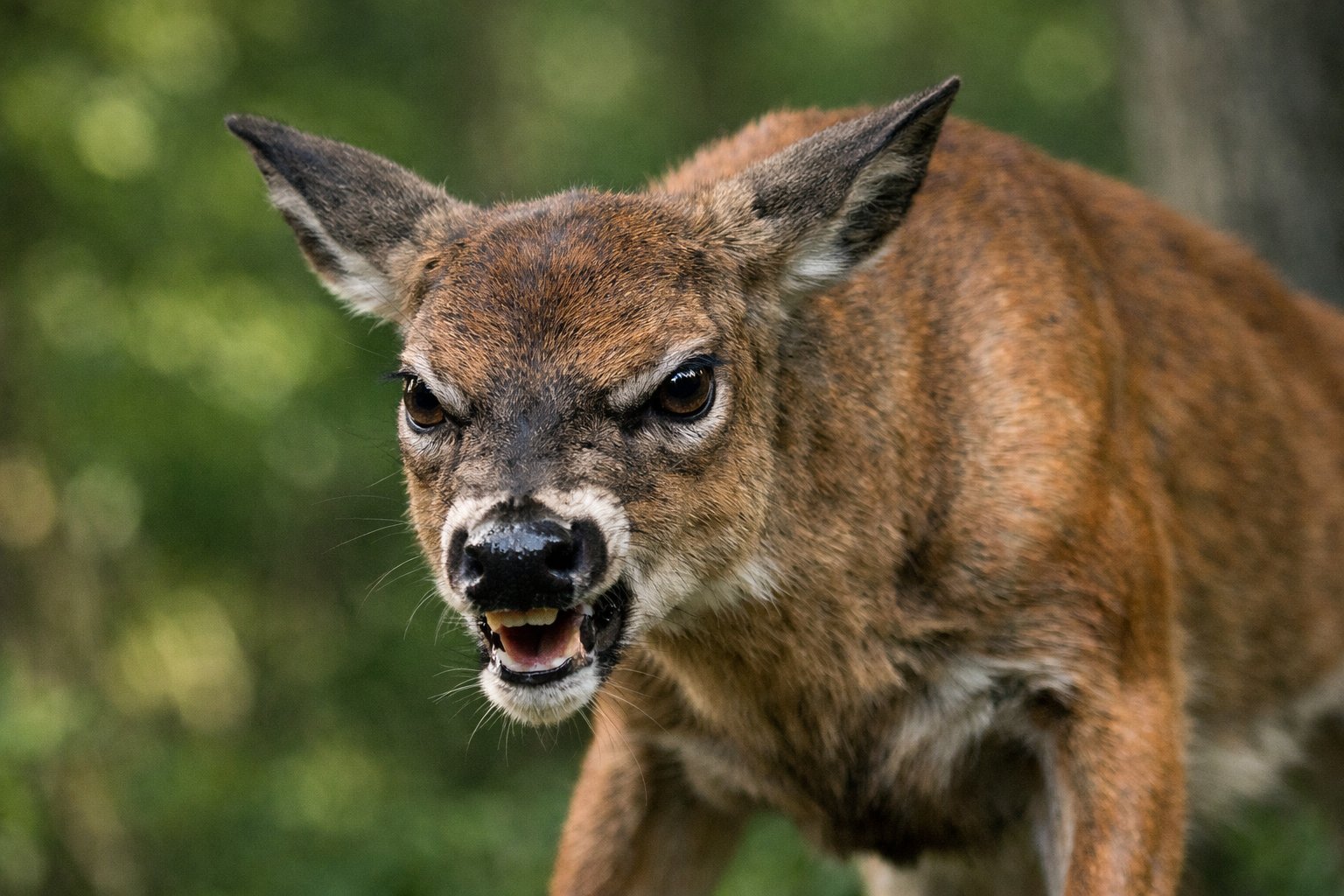
Pay close attention to posture and vocal cues. They really tell you what’s going on in a deer’s mind.
A tense, stiff stance or repeated snorts means the deer feels threatened. It might act defensively, especially if fawns are nearby or it’s rutting season.
Let’s break down how to read these signs, whether you’re dealing with does, bucks, or fawns. That way, you’ll know when to stay put and when it’s smarter to move away.
How to Recognize Signs of an Angry Deer

Look for signals like posture, ear position, tail movement, and vocal sounds. These clues let you know if a deer is alert, defensive, or about to charge.
Key Body Language Cues
When a deer stomps one front foot, it’s giving a pretty direct warning.
If you see a lowered head with ears pinned back, that’s a sign it might use its antlers or hooves.
Antlers pointed forward and head-bobbing often come right before a charge.
Raised hair along the spine or a stiff, hunched posture means the deer feels threatened.
A deer that stares at you without blinking is locked in and focused.
Watch the tail—a high “flag” with exposed white fur signals alarm.
Pay attention to combinations of signals. One alone might not mean much, but several together crank up the risk.
Common Behaviors During Aggression
Angry deer snort and blow loudly.
These sounds warn other deer and try to scare you away.
Charging happens fast and usually covers a short distance.
Sometimes a deer will fake-charge—run toward you, then stop or turn aside just to test your reaction.
A defensive doe might circle or put herself between you and her fawns.
Bucks during rut get more aggressive and rely on their antlers.
If a deer freezes and locks eyes with you, start backing away slowly.
Sudden moves could trigger a charge, but a calm retreat usually keeps things from escalating.
Differences Between Angry and Relaxed Deer
Relaxed deer stand loosely, move slowly, and flick their ears to listen.
They graze, chew cud, and keep their tails down.
Angry deer look stiff, raise their hair, and stare hard.
Their steps get heavy and deliberate, not light or cautious.
A relaxed deer might glance at you, then go back to feeding.
An angry one will stomp, snort, or lower its head.
If you spot several warning signs—like snorting, tail flagging, and pinned ears—it’s time to give that deer at least 50 yards.
For more on body language, check out the advice from wildlife experts at ilearntohunt: What to Know About Deer Body Language (https://www.ilearntohunt.com/blog/deer-body-language/).
Aggressive Behavior in Different Types of Deer

Deer show anger in ways that are actually pretty easy to spot.
If you pay attention to their body signals, sounds, and actions, you can judge the risk and react safely.
How Bucks Show Anger
Bucks usually warn you before they attack.
Look for a lowered head with antlers pointed at you, a hard stare, and hair raised along the neck.
Bucks sometimes paw the ground or grunt just before charging.
Older bucks spar with rivals using their antlers—those fights look rough but mostly test strength.
If a buck circles you with antler tips forward, back away slowly and try to put something solid between you and him.
Bucks at feeding spots or near food can get bolder around people.
When bucks confront other males, they rake antlers and push each other around.
Stay calm, avoid quick moves, and get behind a tree or car if a buck starts advancing.
Does and Protectiveness
Female deer defend their fawns fiercely.
If a doe stomps, snorts, or moves toward you with ears pinned back, she’s warning you to leave.
Does sometimes run a short distance toward a threat to guide it away from their young, then circle back to the fawn.
Never pick up a fawn you find—the mother’s probably close and could react aggressively if she spots you.
Does without visible young still act protective, especially in areas with lots of fawns.
They’ll kick sharply or charge if cornered.
Keep dogs leashed and maintain distance.
That lowers your chance of provoking a doe.
The Role of the Rut and Estrus
The rut cranks up aggression in bucks and even changes how does behave. You’ll spot more chasing, grunting, and those classic buck fights as they battle for a mate.
When a doe goes into estrus, she might pull in several bucks at once. That ramps up the tension and leads to sudden bursts of aggression.
Bucks get so focused on finding mates and dealing with rivals during the rut that they might not even notice people. Still, if you get in their way, they can act unpredictably.
It’s smart to keep your distance, especially at dawn or dusk when things really get wild. If you do see rutting behavior, just back away slowly and put something solid between you and the deer.


