
Ever spot a deer at dawn, right at the edge of the woods, and wonder what’s really going on in their heads? Deer can sprint, swim, and somehow grow whole new antlers in just a few months — these five facts offer a quick peek at their wild speed, sharp senses, and some pretty weird biology.
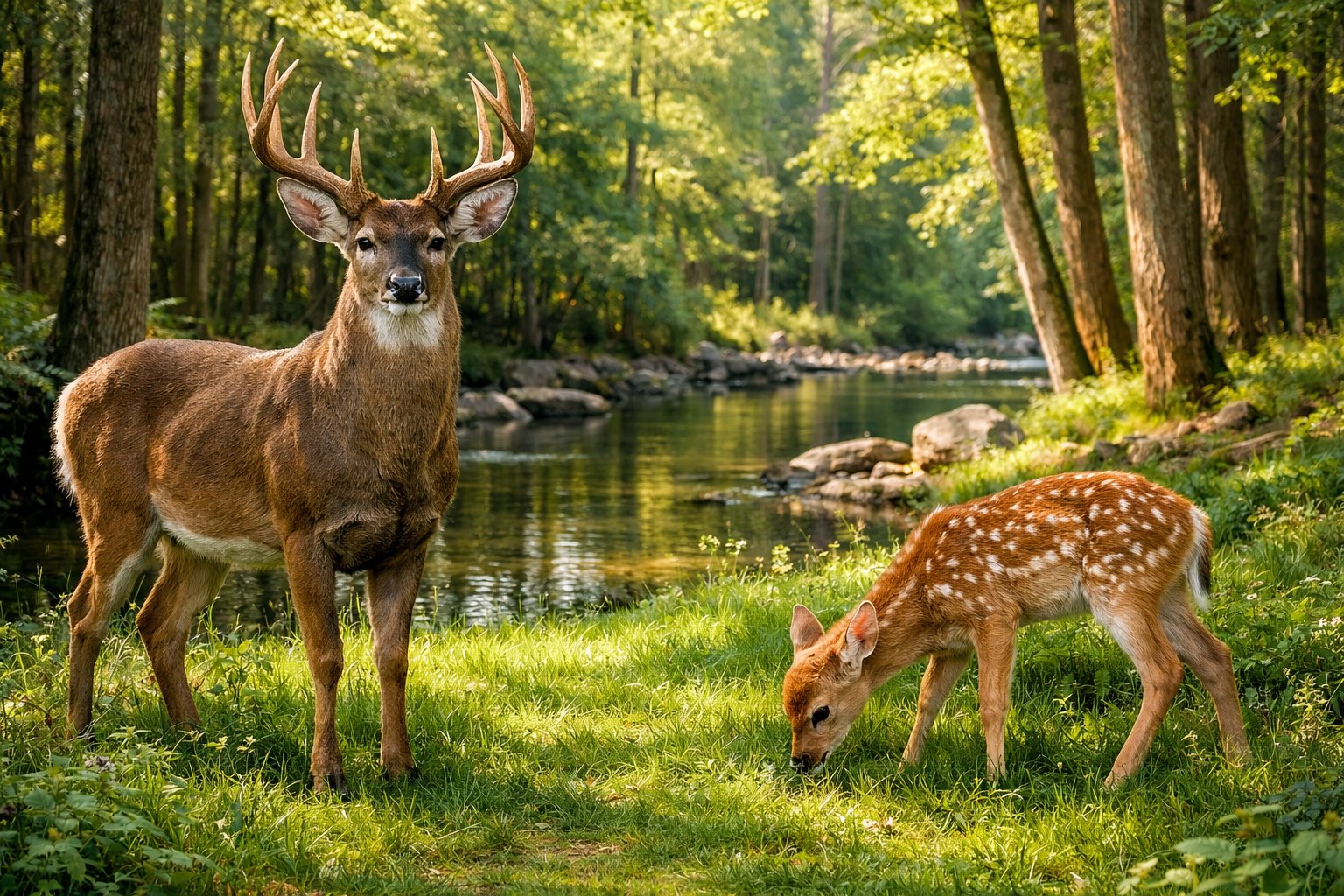
You’ll find out what deer munch on, how fawns pull off their vanishing act, and which species break the rules—like females with antlers or those odd deer with tusks. There are some surprises here that might just change how you look at these common wild animals.
5 Fascinating Facts About Deer

Let’s talk about how antlers grow so fast, why deer are always sniffing, how fawns stay hidden, how quick deer can be, and the ways they “talk” to each other. These details reveal how deer make it in forests, fields, and even near people.
Antlers and Their Rapid Growth
Antlers are bone, not horns, and most male deer grow them back every year. Each spring, hormones kick in and start the process.
Living tissue called “velvet” covers the antlers and brings blood and nutrients. That’s how antlers can shoot up by inches every day when growth peaks.
You can actually guess a buck’s health and age by looking at his antlers. Bucks fight with antlers during the rut and use them to show off for does.
Some species mix things up—reindeer females also grow antlers, and Chinese water deer don’t have antlers at all. Once mating season ends, deer shed their antlers and start all over again.
Incredible Sense of Smell
Deer count on their noses way more than their eyes or ears to stay safe and find food. Their noses have way more scent receptors than ours.
This super sense lets them pick up predators, other deer, and food from far away. You’ll often see deer lifting their heads and sniffing the breeze.
They use scent glands on their legs, faces, and even hooves to leave messages and signal when they’re ready to mate. In areas with lots of ticks, deer wind up carrying adult ticks and helping ticks survive, so their scent and movement matter for disease and the whole ecosystem.
Unique Camouflage of Fawns
Fawns rely on spots and staying still to hide from predators early in life. Their white spots match the dappled sunlight on the forest floor, breaking up their shape.
Mothers hide fawns while they go off to feed. The fawns just freeze and keep quiet.
This camouflage works best in patchy light and among leaves. As fawns get older, they lose their spots and move around more, depending on speed and sticking with the group.
Small deer like pudu need to hide just as much as bigger species do, whether they’re white-tailed deer or even moose calves.
Remarkable Speed and Agility
Deer mix bursts of speed with sharp turns to dodge danger. Many species can hit 30–40 mph, but only for a short time.
They jump high and clear fences or logs with ease. You’ll notice they pick open paths but keep some cover close by.
Their long legs, flexible backs, and light bodies make it easy for them to accelerate fast. This lets them escape wolves, mountain lions, coyotes, and even people.
Not all deer move the same—moose, for example, are strong but not as quick as smaller deer that dart through thick brush.
Deer Social Structure and Communication
Deer tend to form loose groups, but the size and makeup change with the season and species. You might see small family groups with does and fawns, bachelor groups of young bucks, or bigger herds in winter.
Social bonds help deer spot danger and find food. They use body language, scent, and sounds to send messages.
Tail flagging, ear position, and hoof stomping all send quick signals. Scent marks on plants tell others about territory or breeding.
Antlers do more than fight—they also send clear signals during the rut about who’s in charge and who gets to mate.
Diversity and Adaptations Among Deer

Deer come in all sorts of shapes and sizes, with different antlers, diets, and roles in their habitats. You’ll spot species made for mountains, tundra, forests, and even cities.
Each kind of deer uses its own tricks to eat, move, and stay alive.
Types of Deer Around the World
The deer family, Cervidae, includes about 55 living species you could run into. In North America, you’ve got mule deer and elk.
In Eurasia, there’s red deer, roe deer, and sika deer. Caribou (reindeer) live in the Arctic, while tiny pudus hide in South American forests.
Some deer just seem odd—Chinese water deer have no antlers but sport long canine “fangs.” The extinct Irish elk shows just how huge antlers can get when times are good.
Deer range from tiny pudus to big elk and moose (yeah, they’re related). Males usually grow antlers fast every year, right from the bone.
Leg length, hoof shape, and coat patterns all fit the terrain they use to escape and blend in.
Diet and Digestive Adaptations
Deer eat plants and have a four-chambered stomach to break down tough stuff. You’ll notice them browsing leaves, buds, fruit, and twigs more than grazing on grass.
Their stomach lets them get nutrients from cellulose, since they ferment plants in the rumen and then re-chew their cud.
Different deer like different foods. Mule deer go for shrubs along edges.
Caribou eat lichens and mosses in winter. Water deer and hog deer pick wetland plants if they can find them.
Their teeth, gut microbes, and feeding habits all match up with the local plants and seasons.
Deer Populations and Ecosystem Roles
Deer populations shift based on habitat, hunting, predators, and disease. When predators disappear and food stays abundant, deer numbers can jump fast.
In suburban or broken-up habitats, you’ll often notice more deer. They start to impact tree growth and the plants underneath.
Deer shape their ecosystems in a few ways. They eat lots of vegetation and spread seeds around.
Predators like wolves and mountain lions rely on deer for food. Deer also carry ticks, which ties them to human health problems like Lyme disease.
People manage deer with habitat planning, hunting, or sometimes by bringing back predators. These choices ripple through forests, meadows, and every species that calls those places home.
If you want to dig deeper into how deer adapt and what makes them tick, check out this overview of deer traits and adaptations (https://biologyinsights.com/deer-traits-a-look-at-their-adaptations/).


