
Ever heard a bark in the woods that made you pause, wondering, “Wait, was that a dog?” Turns out, muntjac deer—often called barking deer—and sometimes roe deer let out sharp, dog-like barks that can easily fool you.
Let’s dig into which deer actually make those sounds and why. From warning calls to mother-fawn signals, these little deer use barking to get by in thick forests.
What Deer Barks Like a Dog?

You’ll mostly hear these sharp, doggy barks from muntjacs and roe deer. Both use barking for alarm and communication, but their calls have different vibes and pop up in different places.
Muntjac: The Original Barking Deer
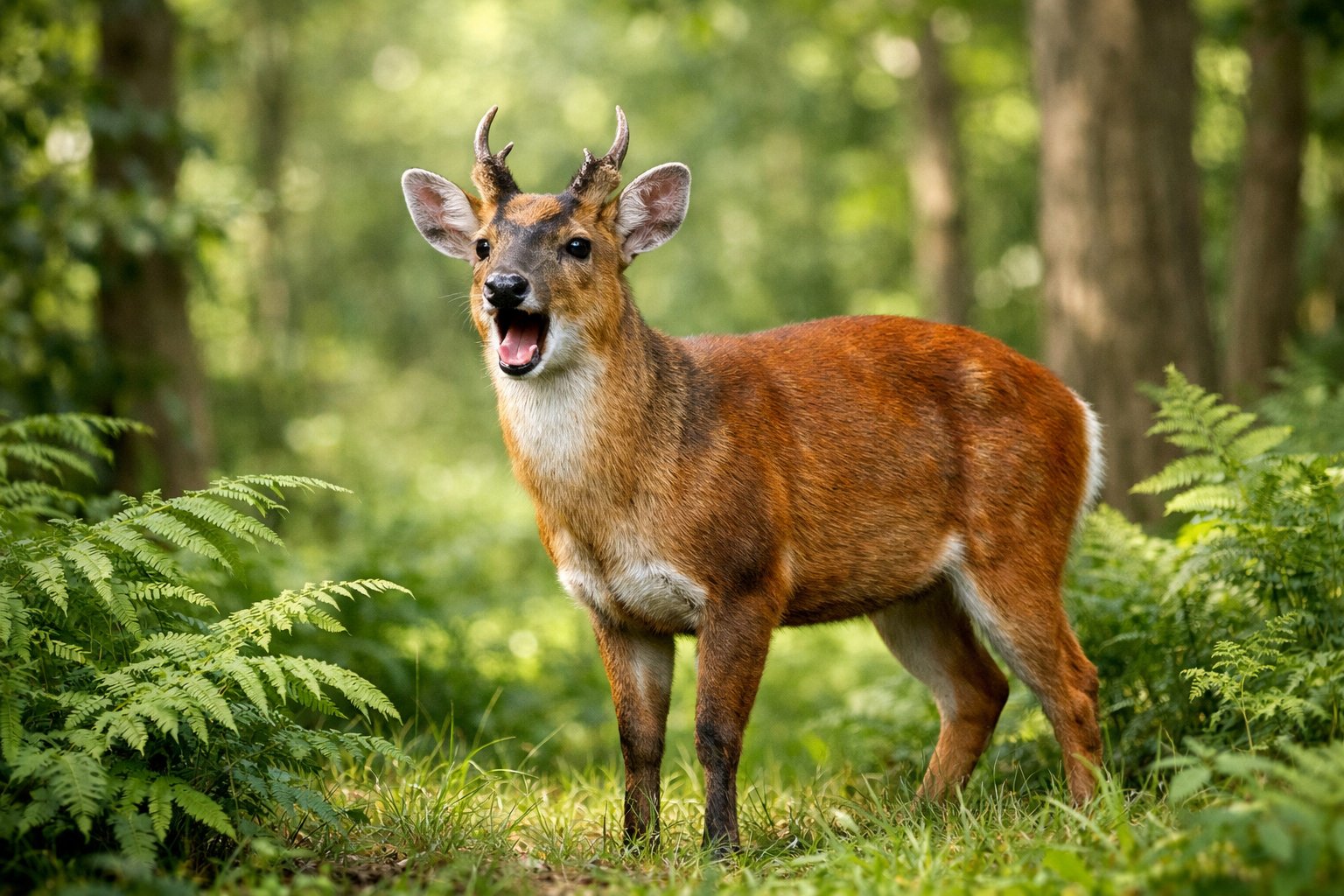
Muntjac deer, especially Reeves’ muntjac (Muntiacus reevesi) and the Indian muntjac, really own the title “barking deer.”
Reeves’ muntjac lives in parts of China and now in Britain, where its loud, harsh bark bounces around the woods. The call? It’s a raspy, repeated “yap” or “bark,” and if a muntjac feels threatened, it’ll keep it up for minutes.
These deer are small, about the size of a Labrador. They bark to warn others, spook predators, and call out to mates or rivals.
If you spot little tusks on a muntjac buck, those are for fighting, not barking.
Hear a high-pitched, persistent bark at dawn or dusk in a tangled forest? Odds are, it’s a muntjac. You can find more about their odd behavior in this barking muntjac guide.
Bark of the Roe Deer
Roe deer throw out a much shorter, sharper bark that still sounds weirdly like a dog.
They bark mainly as an alarm or for does to check in with their fawns. Bucks use the sound during the rut to warn rivals or mark territory.
Roe deer barks are usually single, abrupt, and don’t last long like muntjac calls. The pitch can be higher, and it cuts through woodland pretty well.
You’ll hear roe deer more in Europe, especially where their numbers are high.
They mix barking with bleats and snorts. Curious about roe deer sounds? Here’s a deeper dive into the roe deer bark.
Unique Barking Behaviors Compared
Let’s compare muntjac and roe deer by sound, context, and habitat.
- Sound: Muntjac barks are harsh, long, and repeated. Roe barks? Short, sharp, and staccato.
- Context: Muntjacs bark over and over when disturbed. Roe deer just give a quick bark as an alarm or to find fawns.
- Habitat: Muntjacs love dense forests and thick undergrowth. Roe deer go for mixed woods and fields.
Other deer, like white-tailed or mule deer, might make bark-ish noises, but it’s rare and not quite the same.
Quick comparison table:
- Muntjac (Reeves’, Indian): small, repeated harsh barks, dense forest, Asia and introduced in Britain.
- Roe deer: short, sharp barks, alarm or fawn contact, common across Europe.
Sexual Dimorphism and Mating Calls
Male muntjacs bark a lot more during the rut. They do this to attract females or to warn off rivals.
You’ll notice some males by their short antlers and those downward canine tusks—they use them in fights. Males often bark to challenge each other or show they’re ready to mate.
Females bark too, but honestly, the males get louder and more persistent during breeding season. If you’re out in the field, you can spot mating behavior by listening for these calls, watching for scent marking, and looking for those obvious antlers or tusks.
If you want to dive deeper, there’s plenty of info on muntjac vocal behavior and their scent glands in detailed species accounts and conservation pages.


