
You’ll spot most deer fawns in late spring to early summer. Does usually time their pregnancies so fawns arrive when food and warmth help them survive.
Most deer give birth between April and July, with the peak for many species in June.
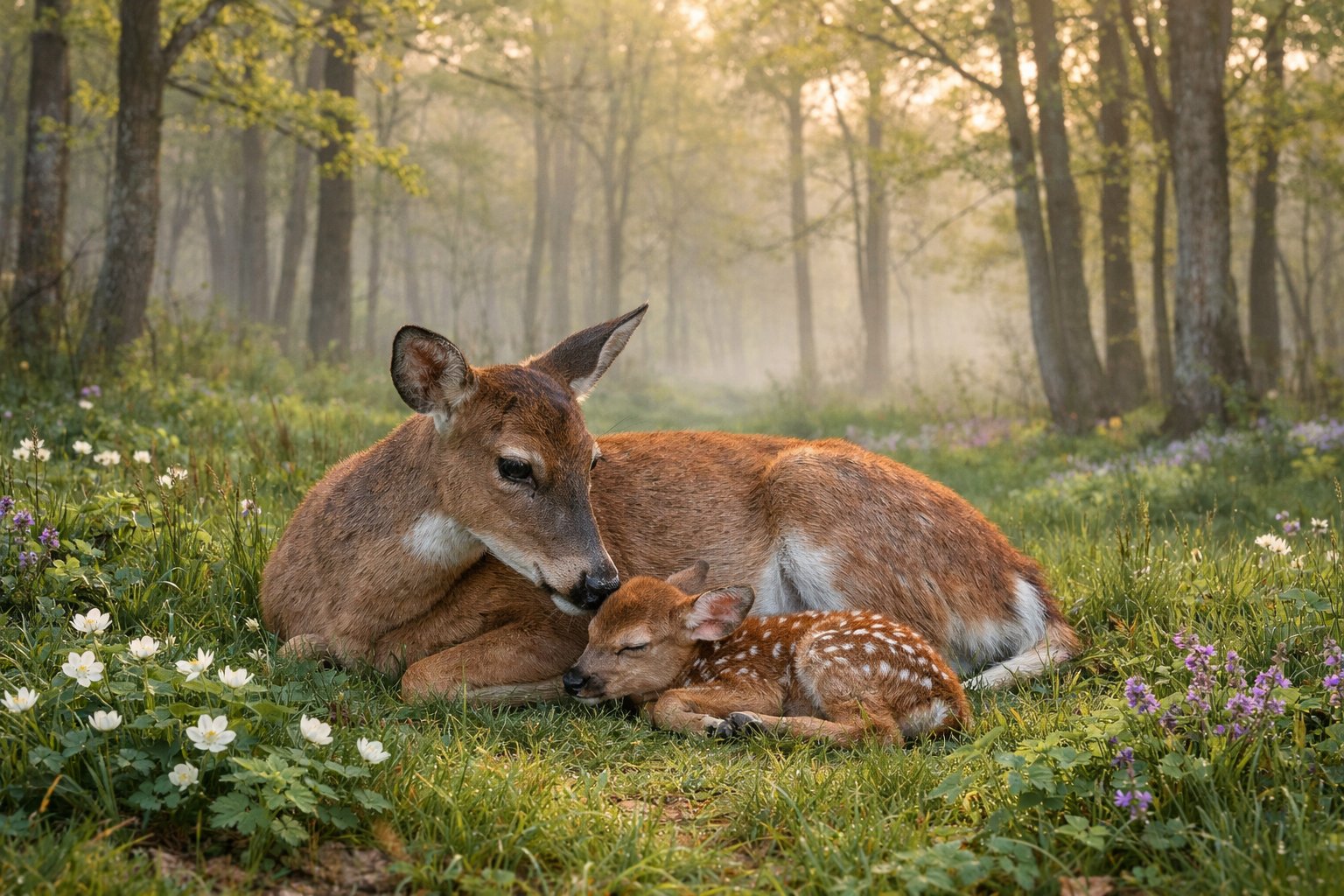
Let’s talk about why timing matters, how local climate and species can change the calendar, and what fawn behavior looks like right after birth.
This helps you know when to watch quietly, avoid disturbing hiding fawns, and understand the risks young deer face during their first weeks.
When Do Deer Give Birth? Key Seasons and Influencing Factors

Most deer births happen in spring and early summer. Fawns get a better shot at life when there’s warmth, food, and cover.
Timing shifts based on latitude, species, and yearly conditions. That’s why you might spot fawns at different times depending on where you live.
Average Birth Timing by Region
In northern states, you’ll usually see fawns born in late May and early June. Short growing seasons push deer to breed earlier so fawns mature before winter.
Expect a tight fawning season there—many does give birth within a two- to three-week window.
In mid-latitude regions, births often span late April through June, with a strong peak in May.
Southern states and milder coastal areas can see fawns from April into July. Sometimes, winter severity and food availability make the season start earlier or later.
If you’re far south, the birthing season might stretch across several months. Local climate and nutrition can shift deer breeding and gestation.
Species Differences in Fawning Season
White-tailed deer usually give birth between late April and early July. Most fawns arrive in May and June.
Their gestation period runs about 200 days, so the fall rut sets up the spring birth window.
Mule deer tend to fawn a bit later, often peaking in June or July. Elk, being larger, usually calve in late May to June.
Gestation lengths vary by species, ranging from about 200 to 270 days. This affects when you can expect fawns to appear.
Different species choose different hiding spots for newborns. If you know your local species, you can better predict when and where to see fawns.
Influence of Photoperiod and Environment
The change in daylight—photoperiod—triggers hormonal cycles that start deer breeding in the fall. That timing sets up when does get pregnant and, after gestation, when they give birth.
Food quality, winter harshness, and population density all play a role. Poor nutrition during the rut can delay conception or lower fawn survival.
Warmer springs sometimes mean earlier fawns; harsh winters squeeze the fawning season into a shorter window.
Human disturbance and habitat loss also matter. When cover and forage change, does might pick different hiding spots or see fewer fawns survive.
Fawn Arrival and Survival After Birth

Newborn deer hide most of the time. They rely on strong camouflage and their mother’s careful visits.
Let’s look at how fawns stay hidden, how does care for them, and what helps fawns survive those first few weeks.
Newborn Fawn Behavior and Camouflage
Fawns lie motionless and breathe slowly to avoid being noticed. Their spotted coats break up their outline among grass and leaves, making them tough for predators to spot.
They don’t follow their mothers right away. Instead, they stay put in a carefully chosen bed.
For the first week, fawns don’t have much scent, so predators can’t sniff them out easily. If you find a fawn, don’t touch or move it—your scent can attract predators or make the mother abandon it.
If a fawn seems cold, injured, or really distressed, it’s best to call local wildlife officials. Trying to care for it yourself rarely ends well.
Within 24 hours, most fawns can stand and walk. They still spend long stretches hidden while the doe goes off to forage.
This whole hiding strategy gives them a much better shot at surviving those tricky first weeks.
Mother’s Care and Hiding Strategies
Does pick out secluded spots with tall grass, brush, or downed logs to give birth. You’ll often see does leave the fawn alone for hours, coming back just to nurse and clean it.
Short, predictable visits help avoid drawing predators to the hidden fawn.
The doe licks the fawn to clean it and get its circulation going. She’ll eat the placenta and nearby bedding to erase scent.
Nursing happens every few hours. During the day, the doe usually keeps her distance and comes back at dawn or dusk when it feels safer.
If danger comes close, the mother moves the fawn to a new hiding spot. You can help fawns on your land by protecting cover and leaving them undisturbed in spring.
Fawn Development Stages
Day 0–7: Fawns mostly hide and drink milk from their mothers. Their legs look wobbly, but they can stand and make a short dash if something spooks them.
You probably won’t see them eating much besides nursing during this first week.
Weeks 2–8: Fawns open their eyes all the way and start moving around more. They get curious and nibble on plants, although milk is still their main food.
Predators seem to notice this stage, since the young fawns wander more and sometimes get into trouble.
Months 2–6: Most fawns start weaning between 8 and 10 weeks, though some stick close to their mothers through winter. By fall, yearlings show those classic adult fur patterns and act more independent.
If spring brings good cover and plenty of food, fawns have a much better shot at growing up healthy.


