
You’ve probably seen a deer freeze for a split second, then suddenly take off. Ever wondered if deer can really run? Oh, absolutely — deer can sprint incredibly fast, but only for short bursts. Their speed and agility often mean the difference between life and death.
Let’s dig into how fast different deer actually move, what lets them accelerate so quickly, and how the world around them shapes their choices. Whether you’re watching wildlife, hiking, or just driving through the countryside, understanding this stuff can be pretty handy.
Stick around for the real numbers, the body features that make deer so quick, and the tricks they use when they really need to get moving.
Can a Deer Run? Fundamental Facts About Deer Speed
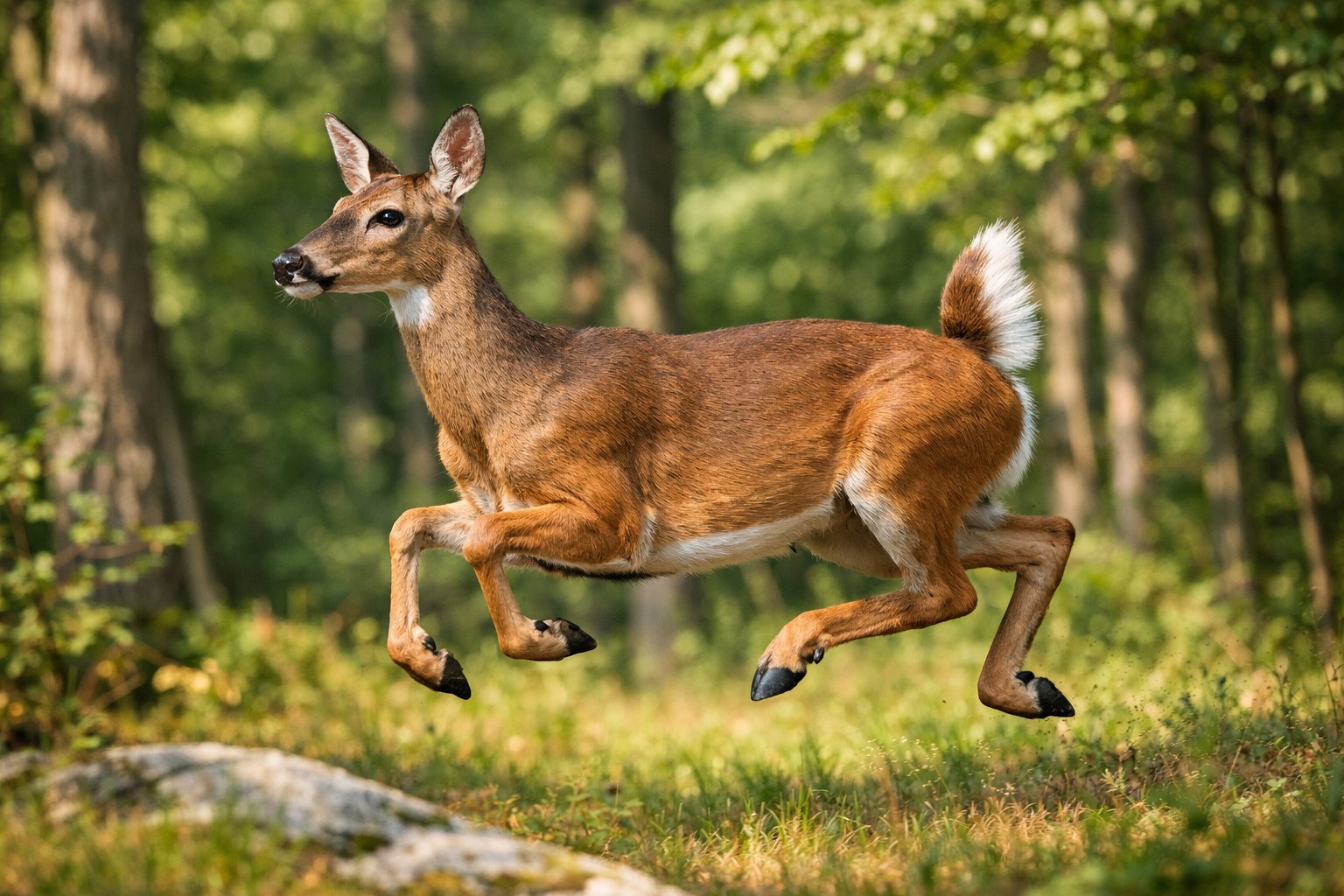
Deer can sprint fast for short distances. They change direction in a flash and use trees or brush to slip away from danger.
Let’s look at typical sprint speeds, how deer compare to other fast animals, and which species are the real speedsters.
Typical Deer Running Speeds
Most deer hit their top speed in quick bursts. A healthy white-tailed deer can reach about 30–40 mph (48–64 km/h), but only for a few hundred yards.
That kind of speed helps them dodge predators or avoid cars. Their powerful hind legs and flexible spines give them that quick acceleration.
They can’t keep up that pace for long, though. Deer overheat and get tired pretty fast since their bodies don’t cool efficiently.
Over rough ground or deep snow, expect them to move slower. Young deer and those that are sick or hurt lag behind adults.
Fawns, for example, just can’t keep up until they grow. Terrain, plants, and even how stressed the deer feels all affect its speed and distance.
How Fast Can a Deer Run Compared to Other Fast Animals
Deer are quick, but they don’t top the charts for land speed. Pronghorns, for instance, can hit about 55 mph, and elk sometimes reach 45 mph.
That means your average whitetail is fast, but not in the same league as pronghorns. Still, they leave humans in the dust.
Smaller deer like roe deer move quickly for short sprints but don’t quite match mule deer or red deer. Moose, being heavier, just can’t move as fast.
Reindeer (or caribou) sometimes clock in at speeds close to larger deer. When it comes to endurance, pronghorns win again.
Deer make up for it with agility. Quick turns and dodges are their specialty, especially in forests or brush where a straight sprint isn’t enough.
Speed Differences Between Deer Species
White-tailed deer, mule deer, and red deer differ by about 5–10 mph in top speed. White-tailed deer usually hit 30–40 mph.
Mule deer run at similar speeds, though their long, bounding leaps can make them look even faster in open country.
Elk and reindeer (caribou) are bigger and sometimes reach higher speeds. Elk, for example, can sprint up to about 45 mph.
Moose move more slowly, mostly because of their size and weight. Still, they can surprise you when threatened.
Smaller species like roe deer or tropical deer don’t hit the same top speeds, but their nimbleness is impressive.
If you want numbers for a specific species, you’ll need to check more detailed reports, since habitat and health play a big part.
- White-tailed deer: ~30–40 mph
- Mule deer: similar, varies with terrain
- Elk: up to ~45 mph
- Pronghorn (not a deer but often compared): ~55 mph
What Makes Deer Run So Fast? Locomotion, Predators & Survival

Deer have bodies made for sprinting, leaping, and dodging. Their speed and agility make it tough for most predators to catch them.
Anatomy and Locomotion Adaptations
Deer legs are long and light, with most of the muscle close to the body. This setup keeps the lower legs light so they swing fast, letting them take more steps in less time.
Their cloven hooves grip rough ground and absorb some shock. Elastic tendons in the lower leg act like springs, saving muscle power and boosting speed during a sprint.
A flexible spine lets deer stretch out their stride when they really get moving, kind of like a racing dog. They run on their toes (digitigrade), which gives them extra leverage and speed.
Big hindquarters give them the power to jump and accelerate quickly, especially when they need to escape fast.
How Speed Helps Deer Escape Predators
When a predator like a wolf or coyote shows up, deer use bursts of speed and sharp turns to get away. Wolves and coyotes can match or beat deer in some situations, but deer usually win when it comes to dodging through cover.
Mountain lions and bears depend on sneaking up and launching short attacks. A deer’s sudden jumps or zig-zags can break that ambush.
Grizzly bears have plenty of muscle, but they can’t change direction as fast. In thick woods or brush, a deer’s quick moves make all the difference.
Speed also buys deer some time. A 30–40 mph dash might be enough to leave a predator behind, especially in uneven ground where turning matters more than running straight.
Factors Affecting Deer Running Performance
Age changes everything. Fawns and older deer just can’t run as fast as adults in their prime.
Health and body shape matter too. Heavy antlers or injuries slow deer down and make them less agile.
Terrain plays a huge role. On flat, open fields, deer can hit top speed. Thick brush, snow, or rocky areas slow them and sometimes give predators the edge.
Weather can mess things up—deep snow or ice means less traction and shorter strides.
Motivation counts. A relaxed deer walks slowly, but when it’s running for its life, it pushes its heart and muscles to the limit.
Species differences exist, but local habitat and what the deer is running from shape how fast and how well it can move.
Deer Running in Hunting Contexts
If you hunt deer, you really need to understand how they move. Deer usually bolt the moment they’re startled, sometimes sprinting in a straight line, other times making sharp J-turns to throw obstacles between themselves and whatever’s chasing them.
You should always think about how far a shot might go if a deer suddenly runs. If you just wound the animal, you’ll probably end up tracking it for quite a while.
Hunting with hounds or still-hunting? Both change how deer behave. Hounds can push deer into open areas, so the chase becomes more about stamina than pure speed.
Still-hunting’s a different story—you have to sneak in close, because once a deer gets spooked, it’ll vanish fast, using both speed and cover.
Legal, ethical hunters try to take quick, clean shots. If you get how deer move—and how predators like wolves or mountain lions force them to run—you’ll get better at predicting escape routes. That means you can avoid those long, frustrating recoveries.


