
Maybe you imagine deer curling up in the same cozy spot every night, but honestly, that’s not how they usually roll. Deer have a few favorite bedding areas and move between them to stay safe, find food, and keep predators or hunters guessing.
They almost never sleep in the exact same spot every night, but they’ll return to familiar, well-chosen bedding areas within their home range.
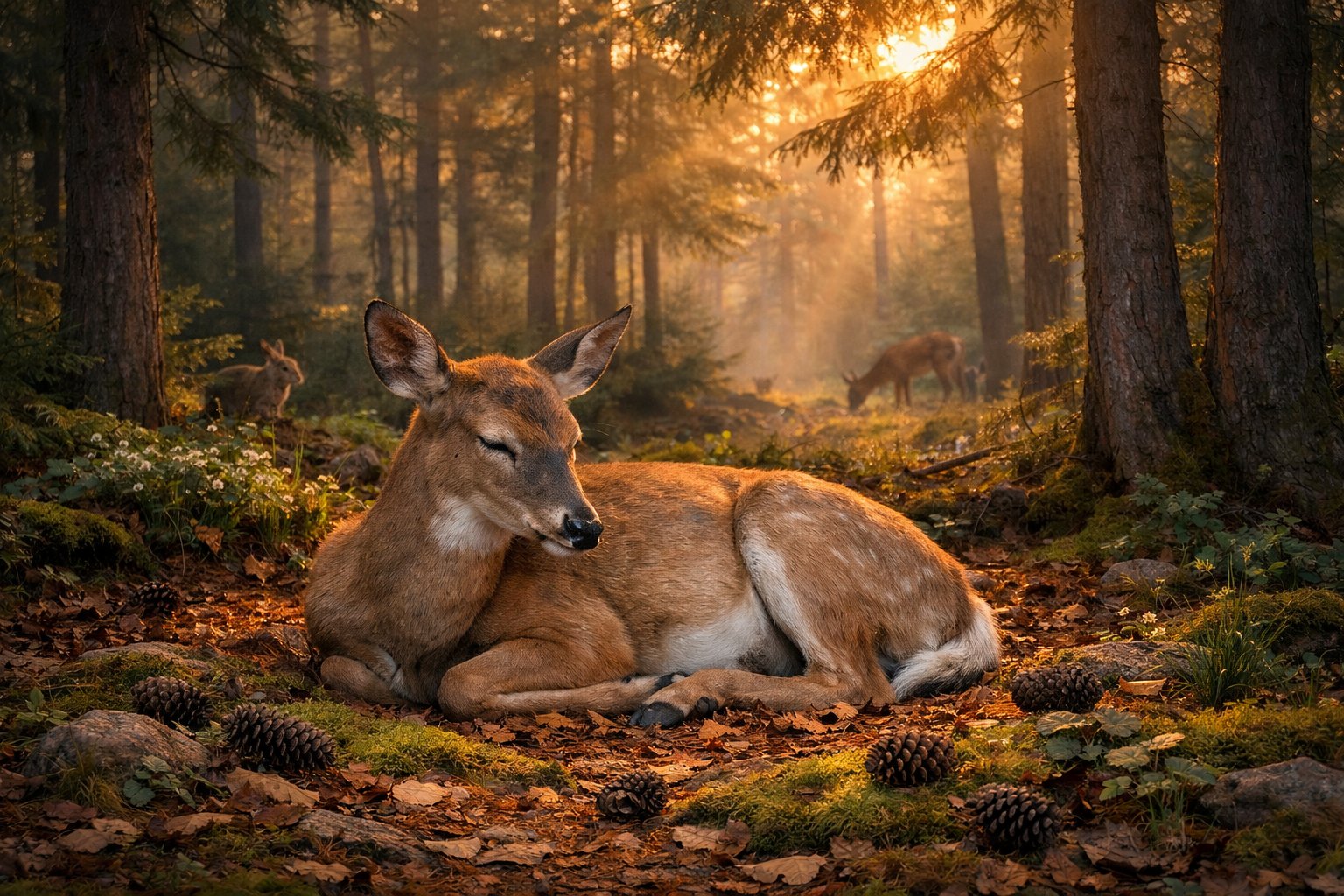
If you’re hoping to spot bedding patterns or just want to get a handle on deer behavior, this post breaks down how and where deer pick their sleeping spots. We’ll also peek at the differences between bucks, does, and fawns, and what signs you can look for out in the field.
Let’s get into what to watch for and why these choices matter for deer survival.
Do Deer Sleep in the Same Place Every Night?

Deer don’t usually sleep in the exact same spot every night. Instead, they use a handful of trusted bedding areas inside their home range.
You’ll see deer rotating among these beds depending on safety, food, and what the weather’s doing.
Bedding Site Fidelity Versus Random Selection
Deer tend to stick with bedding site fidelity at the area level, not at the exact-spot level. So, a deer might come back to the same thicket, conifer stand, or field edge over and over, but it rarely lies in the very same spot two nights in a row.
You’ll often find several beds close together, forming a kind of rotation. This habit helps keep their scent from building up and makes it harder for predators to catch on.
When people, predators, or new disturbances show up, deer abandon a bed fast. But if things stay calm, a doe or buck might use the same group of beds for weeks.
If you want to dig deeper into how deer juggle loyalty to certain spots and their need to move, check out where deer sleep and their bedding patterns (https://biologyinsights.com/where-do-deer-sleep-the-science-of-their-resting-spots).
Factors Influencing Where Deer Sleep
Predator avoidance shapes bedding choices more than anything. Deer pick spots with good visibility and easy escape routes—think field edges, brushy patches, or tall grass near open feeding areas.
Food plays a big role too. Deer often bed closer to rich browse or food plots when they need to eat more, so they don’t have to travel far.
Weather matters a lot. When it gets cold, deer hunker down in sheltered places like conifer stands or south-facing slopes to stay warm. During hot spells, they pick shady spots with a breeze.
Social order comes into play: dominant deer snag the best beds, while younger ones end up in less ideal places. Human activity, hunting pressure, and even water sources can change where deer decide to sleep.
Seasonal Changes in Bedding Habits
Spring and summer bring thick cover and fawns, so does bed near new growth and dense brush for hiding. You might stumble upon fawn beds tucked away and well-camouflaged.
Mothers wander off to feed but return regularly. In autumn, deer shift bedding closer to mast or crop fields, balancing food needs and safety during the rut.
Winter bedding is all about staying warm and saving energy. Deer pick south-facing hollows, conifer stands, or the protected sides of ridges to dodge the wind and stay close to evergreen browse.
When food gets scarce, deer might travel farther between beds and feeding spots. That can change how you look for bedding areas and what you expect from deer movement.
How and Where Deer Sleep: Habits and Group Dynamics

Deer rest in places that balance safety, cover, and easy access to food. You’ll spot them in thick brush, conifer stands, along field edges, or in small clearings, depending on the season and what predators are around.
How Do Deer Sleep?
Deer sleep lightly and stay pretty alert. They usually lie in a shallow depression—called a bed—and tuck their legs under so they can bolt up fast if needed.
Their sleep comes in short dozing bursts, not long, deep stretches.
They choose beds with good sight lines and quick escape routes. In winter, you might see them on south-facing slopes or under evergreens for shelter.
In summer, they prefer shady spots near water. If deer visit your yard, they probably bed where thick cover meets feeding areas.
Deer move among several nearby beds within their home range. This rotation helps keep their scent from building up and lowers the risk of predators catching on.
You can spot bedding by looking for oval depressions, pellet piles, or flattened grass.
Deer Sleeping Together and Social Structure
Social patterns shift by age and season. Does often bed near other related does or their fawns, forming loose groups to keep watch together.
Bucks, especially older ones, usually bed alone outside the rut.
Groups focus on safety. When one deer lifts its head, the others usually follow—it’s a kind of shared alertness that helps them spot predators or people.
In thick cover, several deer might bed within sight of each other but still keep their own space.
Wildlife managers use these habits to predict deer movement and protect important bedding areas. Hunters and wildlife fans can also look for tracks and droppings to find bedding spots without spooking the animals.
Fawns’ Unique Sleep Patterns
Fawns definitely sleep more than adult deer, and they rely on hiding to stay safe. When a fawn is just born, it’ll bed down alone and stay completely still for hours, while its mother feeds somewhere close by.
That spotted coat? It really helps with camouflage, especially when they don’t move a muscle.
As they get older, fawns start bedding closer to the doe and sometimes end up with a few other young deer. You might spot fawns napping in thick cover when the midday sun gets too hot, then moving along with their mother at dawn or dusk.
Fawns usually pick bedding spots that are dense and tough to see into from a distance. Since fawns can’t run off as fast as adults, does look for bedding areas with easy escape routes and food nearby.
If you ever stumble across a fawn alone, it’s best to leave it be. The mother almost always comes back once things quiet down.


