
You’ll spot deer munching on all sorts of plants—leaves, twigs, grasses, fruits, and nuts. They change up their menu depending on the season.
Deer mostly stick to plant-based foods. In spring, they go for tender shoots and grasses; by fall, they’re after fruits and nuts, and during winter, they rely on twigs and buds. This quick rundown gives you a sense of what they’ll be eating any time of year.
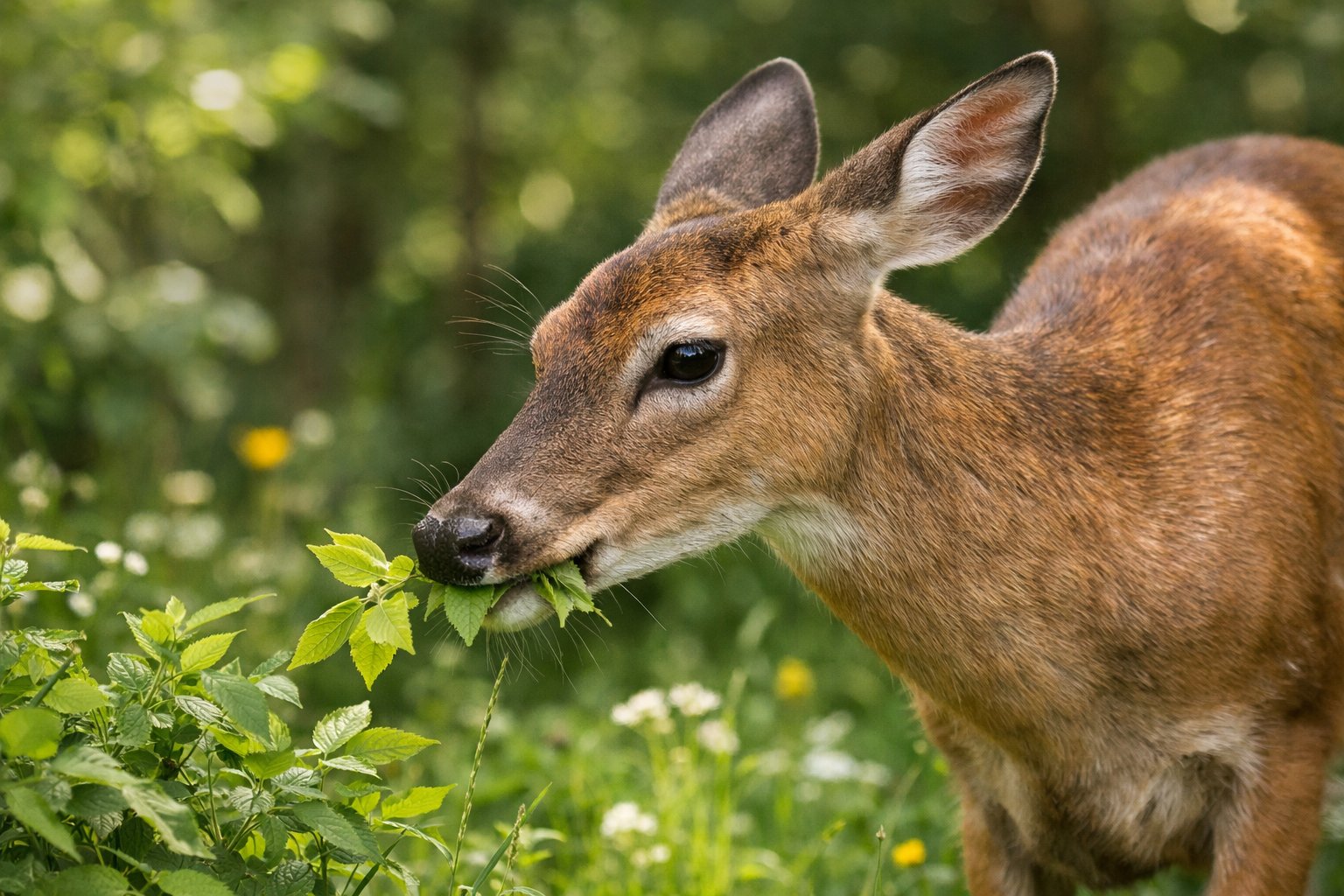
If you’re hoping to attract deer—or maybe keep them away—knowing what they like to eat and how their diet shifts can help you out. You might want to plan your garden, protect your crops, or just figure out where to spot them.
Let’s get into the details: which plants do deer love, how do their feeding habits work, and what’s their plan when food gets tough to find?
What Do Deer Eat: Key Foods and Preferences

Deer pick foods that give them quick energy, protein, and minerals. Their choices change with the season and what’s growing nearby.
Leaves, Twigs, and Browse
Deer love eating leaves and twigs from shrubs and young trees pretty much all year. In spring and summer, they prefer the soft, new growth from willow, maple, ash, and white cedar.
New leaves pack more protein and are just easier to digest than tougher, older stuff. Once winter hits and green plants vanish, deer rely more on browse.
You’ll catch them nibbling oak leaves, dogwood, and shrub buds. They even strip bark and chew twigs when snow buries everything else.
Tender shoots and leaf buds from shrubs like honeysuckle or willow really draw deer in. If you manage land, leaving patches of young woody plants can help deer get through tough times.
Acorns and Other Nuts
Acorns and nuts are like energy bars for deer, especially in autumn. They love white oak acorns, chestnuts, beechnuts, hickory nuts, and pecans because these pack in fat for winter.
When acorns drop, deer gather under oak trees—especially in those “mast years” when acorns are everywhere. Hard mast like hickory and beechnuts matters even more up north, where winters get brutal.
But not every year brings a big nut crop. If acorns are scarce, deer go back to eating browse, crops, or fruits. If you want more deer around, it’s smart to plant or keep oak and other nut trees along woods and fields.
Fruits and Berries
Deer go for soft mast—think apples, persimmons, pears, raspberries, blackberries, and elderberry. These fruits give them sugars and water in late summer and fall, and they often lure deer right into orchards or gardens.
They’ll eat overripe or fallen fruit off the ground just as happily as they’ll reach for it on branches. Dogwood berries and honeysuckle fruit are also on the menu if they’re around.
Fruit is a fast energy source, but it doesn’t last long. Once cold weather comes, fruit drops and disappears. If you plant fruiting shrubs, you can pull in deer, but watch out—they might go after your garden plants or even ornamental shrubs.
Grasses and Forbs
Grasses and forbs are a big part of deer diets, especially in spring and early summer. You’ll see them grazing on clover, bluegrass, and legumes in fields or along fences.
Forbs—those broad-leaf herbaceous plants—offer lots of protein. Clover, legumes, and wildflowers are favorites in spring. Deer need these green, easy-to-digest plants to keep up their energy as everything starts growing.
Once grasses get tough and mature, deer don’t like them as much. On land that’s been grazed down, deer struggle because they really need higher-quality forbs and browse. Planting clover mixes and keeping some edge habitat can boost food options for deer.
Deer Feeding Habits and Nutrition Explained
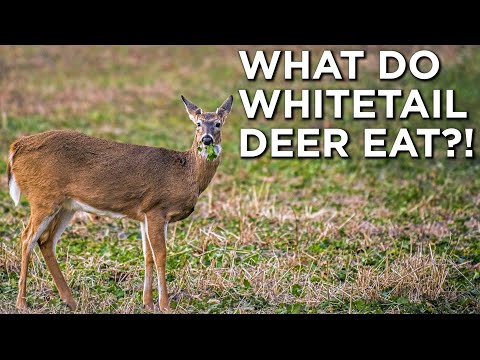
Deer rely on a mix of leafy plants, woody browse, nuts, fruits, and sometimes crops. Their meals shift with the seasons and whatever’s growing nearby.
So, if you want to manage habitat or decide whether to feed them, it helps to understand how deer digest food, what they pick, and how people affect their choices.
Digestive System and Ruminant Adaptations
Deer have a four-chambered stomach: the rumen, reticulum, omasum, and abomasum. Microbes in the rumen break down cellulose from leaves, twigs, and stems, letting deer pull out energy from plant fiber.
The reticulum grabs denser bits and helps form cud. Deer bring up this cud and chew it again to break things down more.
The omasum absorbs water and a few nutrients. The abomasum works like a regular stomach, using acids and enzymes to digest proteins.
This whole setup lets deer survive on low-quality winter browse like twigs and bark, but also makes it easy for them to switch to better foods when they’re around. If you suddenly change a deer’s diet, it can mess with their digestion—something to keep in mind.
Concentrate Selectors: How Deer Choose Their Food
Deer act as concentrate selectors. They look for the most nutrient-rich parts of plants—tender leaves, buds, fruits, and seeds—instead of chewing through a bunch of grass.
You’ll see them pick young aspen shoots, clover, chicory, and berries or apples when they can find them. They also zero in on hard mast like acorns and hickory nuts in the fall to build up fat.
When food gets scarce, deer browse saplings, twigs, and even conifer needles. If you’re trying to help deer out, plant food plots with brassicas, turnips, chicory, and clover for spring and fall, and let mast trees mature.
This concentrate-selecting habit explains why deer might skip your lawn but wipe out your vegetable garden or orchard if it’s full of calorie-rich crops like corn, soybeans, or pumpkins.
Seasonal Changes in Deer Diet
Spring brings out tender leaves, forbs, and new shoots—these are packed with protein and help with fawn growth and antlers. In summer, deer mix it up with forbs, grasses, and some crops like alfalfa and cereal grains if they’re around.
Come fall, deer chase high-energy foods—acorns, berries, and stored crops like sorghum and sunflowers—to put on fat for winter.
Winter forces deer to eat twigs, buds, bark, and whatever evergreen foliage they can reach. White-tailed deer and mule deer eat a bit differently: mule deer in the West go for sagebrush and bitterbrush, while whitetails prefer oak, maple, and shrubs.
Deer herds move around to follow these seasonal foods. If you’re managing land, it’s smart to set up habitat patches and food plots that match what’s available locally.
Human Interaction: Should You Feed Deer?
Feeding deer often causes problems. When people give them handouts or use steady feeders, they spread disease and change how deer move around.
Deer can start relying on unnatural food sources. That’s not good for them in the long run. If you’re managing habitat, try targeted strategies instead.
Plant a mix of food plots—think brassicas, turnips, clover, and chicory. Leave some mast-producing trees, too.
Protect young saplings from heavy browsing. It’s a simple step, but it really helps.
If you decide to offer supplemental feed, don’t stick to single grains like just corn or only soybeans. Those lack important nutrients and mess with a deer’s rumen balance.
Honestly, it’s better to follow local wildlife management guidelines. They’ll help you pick balanced pellets or mixed forages.
When landscaping near deer travel routes, skip toxic garden plants. Yew, rhododendron, azalea, holly, and daylilies can all harm deer.


