
Ever spot deer wandering your lawn or lingering by the road after dark? Yeah, it’s a common sight. Deer usually come out at night because they feel safer away from busy daytime humans and can grab a bite with less hassle. Let’s dig into what’s really going on and how it might affect your yard, your drives, and the critters nearby.
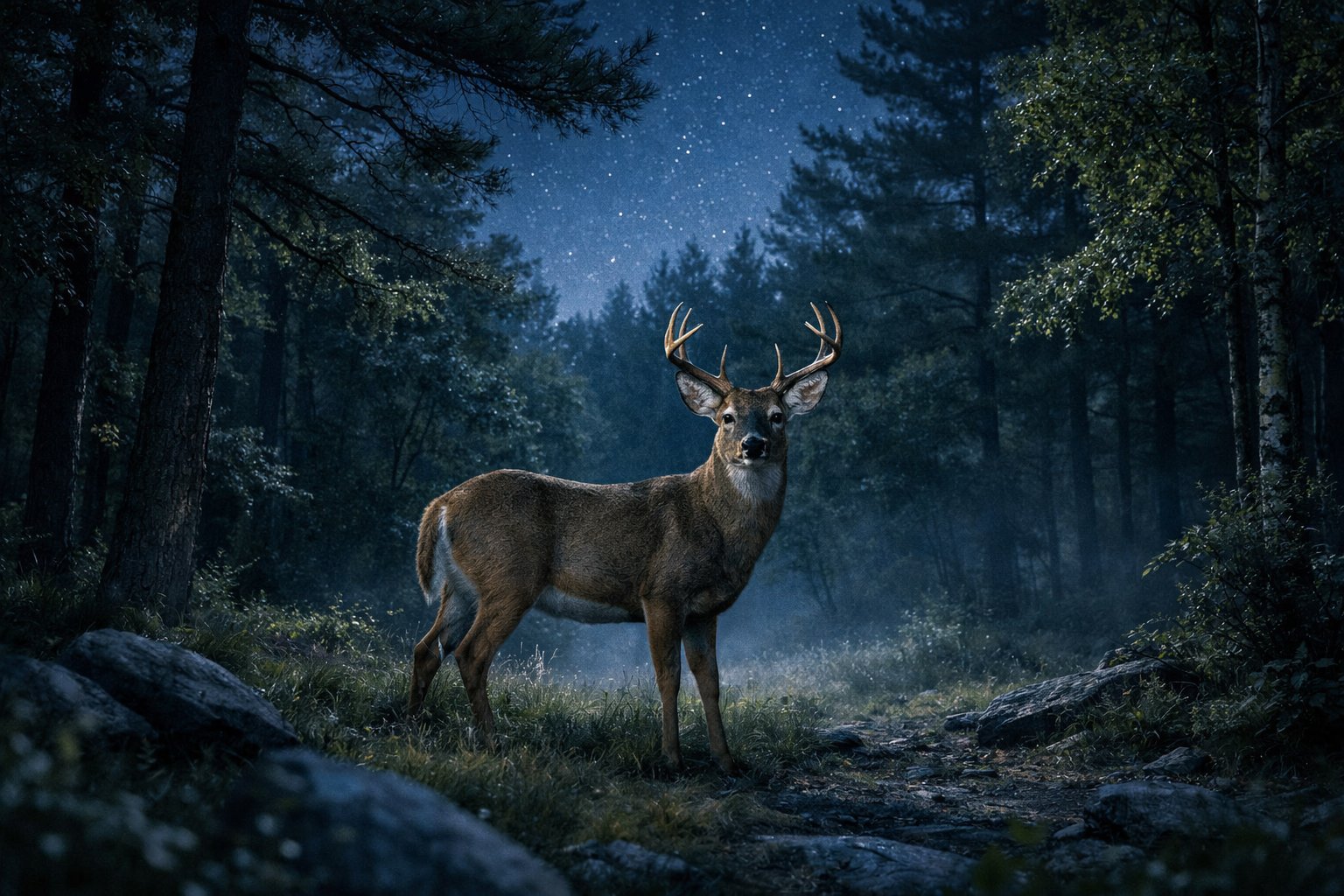
Things like hunting, bright lights, traffic, and where food pops up all nudge deer to switch up their routines. I’ll toss in some examples and a few tips for spotting these patterns, maybe even how to keep them from raiding your garden at midnight.
Why Deer Are Awake at Night

Deer decide when to move based on safety, food, and temperature. You’ll notice their activity lines up with low light, predator threats, or people being around.
Crepuscular vs. Nocturnal Behavior
Most deer do their thing at dawn and dusk. You’ll probably see them munching in the half-light since their eyes and bellies work best then.
This crepuscular routine lets them eat plants while dodging the heat and most people.
But deer can switch to being more nocturnal if they need to. If there’s more daytime noise or danger, you might see them sneaking around after dark.
That shift helps them keep eating and moving without drawing attention.
Seasonal changes shake things up too. When fall breeding or cold snaps roll in, deer might move at weird hours to find mates or grab extra food.
They’re pretty flexible—there’s no set schedule.
Adaptations for Night Activity
Deer eyes pack tons of rod cells and that shiny tapetum lucidum layer. That means they’re good at catching movement and seeing in the dark, which keeps them out of trouble at night.
Their noses and ears are sharp as well. If you ever try to sneak up, you’ll find it’s not easy.
Deer chew their cud and need to eat several times a day, so their feeding is spread out.
Their coats and bodies help them hold in heat during chilly nights. You might find deer bedding down in sheltered spots, staying safe while they rest.
All these traits let deer make the most of nighttime hours.
Influence of Hunting Pressure and Predators
Hunters and heavy traffic make deer switch to nighttime. When people fill the woods during the day, deer just wait for the quiet of night.
Researchers have actually tracked this—more hunters during daylight means deer get more nocturnal.
Predators matter too. In places with mountain lions or wolves, deer pick their routes and timing to steer clear.
You’ll see them stick to thicker cover, cross roads when it’s safer, and try to avoid being out when predators are hunting.
People change the landscape, and deer respond. Near busy roads, farms, or neighborhoods, deer move more after dark.
It keeps them safer, but honestly, it can lead to more car accidents or other nighttime problems.
Factors That Increase Nighttime Deer Activity

Lots of things push deer to get moving at night. Let’s look at how people, seasons, food, and different deer species all play a part.
Human Disturbance and Urbanization
When we build roads, put up houses, or work fields during the day, deer just wait until night to move in.
More traffic and daytime activity push both white-tailed and mule deer into the quieter hours.
That’s why you’ll often see deer crossing roads after dark, which isn’t great news for drivers.
If hunters show up, deer learn to avoid those daylight hours. Trail cameras catch this shift—deer start moving at night where people are busy.
Artificial lights in towns can mess with their patterns a bit, but it’s really the noise and presence of people that keep deer away until dark.
Seasonal Changes and the Rut
During the rut, bucks get restless and move at odd times. You might spot more deer at night in the fall as males roam, looking for mates.
That uptick leads to more deer-vehicle crashes, especially in October and November.
Winter brings changes too. Deer might travel more at night to reach food or find shelter, especially if the days are warm.
Hunting seasons can make these shifts even more noticeable.
Access to Food and Foraging Habits
Deer come out at night when it’s easier or safer to eat. If your yard, field, or corn patch has crops, garden plants, or spilled grain, deer will show up after dark to avoid people.
Both white-tailed and red deer do this near farms and gardens.
You’ll notice more nighttime visits where food is easy to get. Motion lights, sprinklers, or fences can help protect your plants.
Trail cameras are handy for figuring out which food sources draw deer, so you can focus your efforts where it matters.
Deer Species and Regional Differences
Different species handle the night in their own ways. Whitetail deer, for example, often settle into suburban areas and turn mostly nocturnal when they’re close to cities.
Mule deer live out in the open western landscapes. They might stick to daylight hours, but if people are around a lot, they’ll still move at night.
Red deer and elk—especially in Europe and North America—follow their own patterns. Predators and how people use the land really shape what these animals do.
Regional hunting laws and predators like coyotes or mountain lions push deer to adjust their routines. When those threats are around, deer usually shift their timing to stay safer.
Your local mix of deer and how the land gets used? That explains most of the differences you’ll notice in when deer move at night.


