
Let’s get right to it: deer can actually survive brutal cold, sometimes down to around -30°F. That’s not a hard limit though—it really depends on how deep the snow is, how hard the wind blows, what they’ve got to eat, and how much fat they’ve stored up.
If a deer’s healthy and has some shelter plus enough food, it can handle crazy low temps. But when the cold drags on, the snow piles up, or the wind just won’t quit, even the toughest deer might not make it.
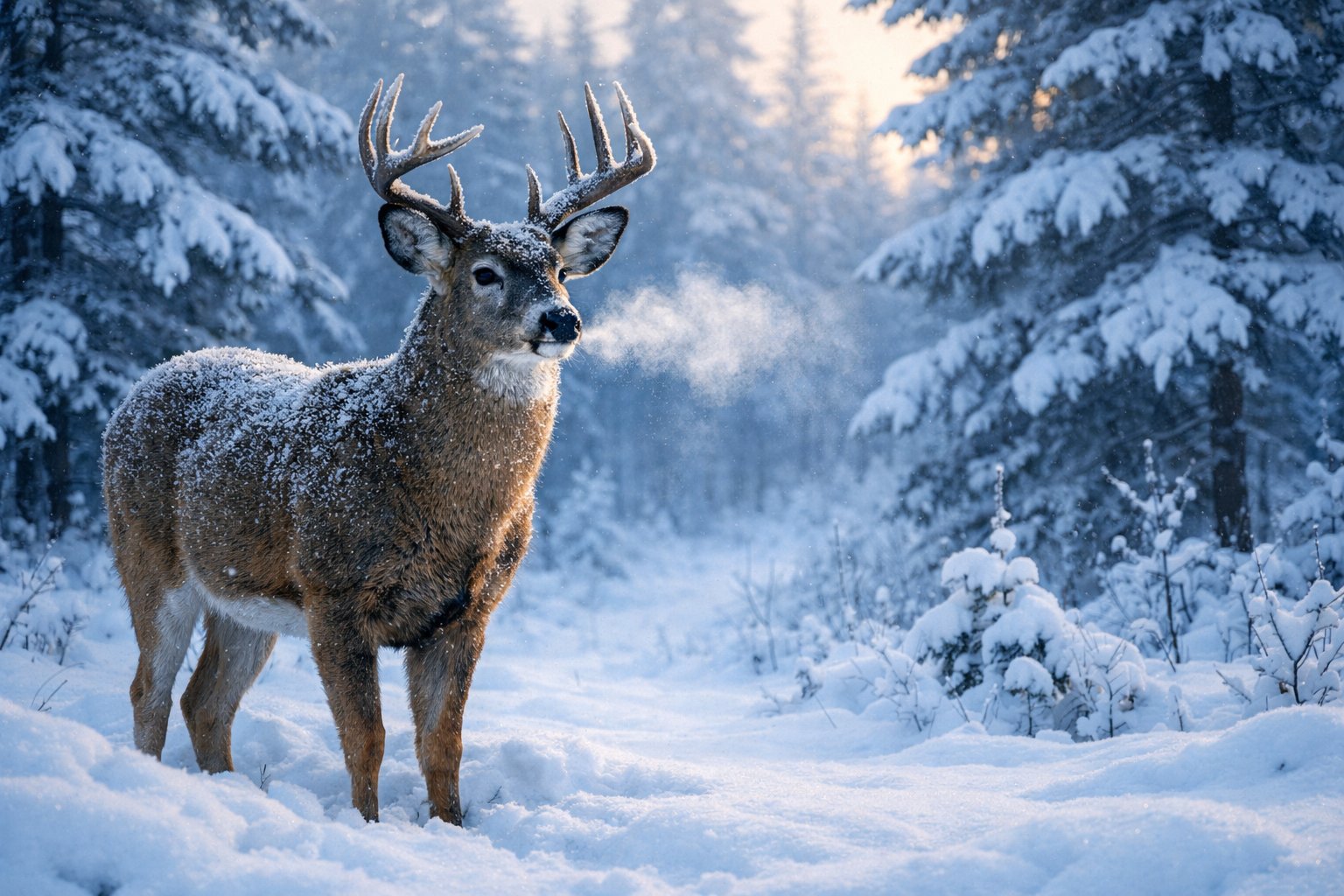
Here’s what’s wild: their fur, fat, slower metabolism, and even their habits all help deer save energy and keep warm.
But deep snow or not enough food? That’s when cold gets dangerous, especially for the youngest and oldest deer.
How Cold Can Deer Survive? Physiological and Environmental Limits

Deer use both physical changes and smart behavior to get through harsh winters. Their winter coat, fat, and where they choose to bed down all shape how they handle freezing temps, snow, and wind.
Lowest Temperatures Deer Can Endure
When conditions are right, deer can tough out insanely low temperatures.
Some white-tailed deer have even survived short spells at -30°F (-34°C).
But surviving those lows isn’t just about the thermometer.
They need solid fat reserves, decent health, and access to some kind of shelter. Fawns and older deer? They’re in more danger because they don’t have as much fat or immune strength.
Once the temperature drops below -20°F (-29°C) for a while, deer need way more calories to stay alive.
If they can’t eat enough, they burn through fat and the risk of dying goes up.
Usually, it’s not just the cold that kills—it’s when cold teams up with hunger and lousy shelter.
Role of Insulating Winter Coat and Fat Reserves
That thick winter coat does most of the heavy lifting.
It’s got two layers: hollow guard hairs that trap air and a dense underfur for serious insulation.
These layers help deer lose less heat, so they don’t have to burn as much energy.
Fat reserves matter too. Deer build them up in the fall, and the fat sits right under the skin, acting as both insulation and a backup fuel supply.
When a deer runs low on fat, its metabolism can’t keep up, especially during long cold snaps or after the rut when bucks are pretty lean.
That’s when things get dicey.
The Impact of Deep Snow and Wind Chill
Deep snow really wears deer out.
Moving gets harder, and food gets buried.
Once snow gets deeper than about 15–18 inches, deer burn a lot more calories just to walk around.
They’ll stick to packed trails, huddle under thick conifers, or find wind-sheltered ravines whenever they can.
Wind chill is another beast.
Even with a good coat, strong wind blows away that insulating layer, so deer have to burn more fat to stay warm.
Where you get cold, wind, and deep snow all together, and not much shelter, expect more deer to die over winter.
If you’re curious, there’s a ton of research on how deer coats and certain habitats help them survive.
Some studies dig into how thermal cover—like thick woods—can really take the edge off winter’s worst.
Key Survival Adaptations and Strategies in Winter

Deer don’t just rely on their bodies—they also change how they act and what they eat.
Their thick coat and fat help, but so do smart shelter choices and switching to a more woody diet when winter hits.
Physiological Adaptations for Cold Survival
Deer grow a serious winter coat with long, hollow guard hairs and thick underfur.
Those hollow hairs trap air and blunt the wind, while the underfur keeps warmth close to the skin.
This setup means deer can handle colder air before they need to burn extra calories.
Fat reserves, built up in fall, keep them going when food runs low.
Deer can lose a surprising amount of body mass and still pull through if they started winter in good shape.
Their metabolism drops a bit in the cold, which helps them save energy—but if food runs out, that lower metabolism isn’t enough, especially for fawns and older deer.
Behavioral Strategies and Seeking Shelter
To save energy, deer move less.
You’ll notice they bed down more, stick to the same spots, and avoid blazing new trails in deep snow.
Less movement means fewer calories burned each day.
They pick sheltered places like dense spruce or fir stands, or find ravines that block the wind and trap a bit of warmth.
Yarding—when a bunch of deer gather in these protected areas—helps everyone conserve heat and stick to easier trails.
But it can also mean they eat up the local browse pretty fast.
Deer also use microhabitats: south-facing slopes, windbreaks, and thick thickets where snow isn’t as deep.
These spots let them dodge predators without having to trek long distances through drifts.
Food Availability and Winter Diet
When winter hits, deer shift from green plants to woody stuff.
They munch on buds, twigs, and bark from trees like spruce, fir, willow, and aspen.
These foods aren’t high in calories and they’re harder to digest, so deer have to balance what they eat with how much energy it takes to find it.
Snow depth matters—a lot.
When snow gets deep, deer can only reach the lower branches, so they strip what they can.
Sometimes, they use up more energy moving between food patches than they get from eating, which raises the risk of starving.
Sometimes people feed deer in winter, but that usually leads to crowding and disease.
Wildlife managers watch winter browse and deer numbers closely to keep them from eating themselves out of house and home, making future winters even rougher.
Population Impacts and Climate Change
Extreme winters hit hard. Starvation and predators claim more deer, especially fawns and older animals.
When snow piles up and cold drags on, local herds shrink fast. If food returns and the weather eases up, some years let the numbers bounce back.
Climate change shakes up snow patterns and plant life. Milder winters might mean fewer deer starve, but you’ll probably see more ticks and disease.
Shifting tree species and unpredictable plant growth mess with food supplies. Deer end up changing how and where they migrate or yard, just to keep up.
Wildlife managers keep a close eye on winter survival and habitat. They work to protect key wintering spots like mature conifer stands, and they try to manage herd sizes so deer have a fighting chance when winters get rough.


