
You might think deer are harmless, but in the right (or wrong) situation, they can definitely injure your dog. Deer usually want nothing to do with conflict, but if they feel threatened or need to protect a fawn, they’ll stand their ground and fight back.
Knowing when deer act defensively can help you keep your pet out of trouble.
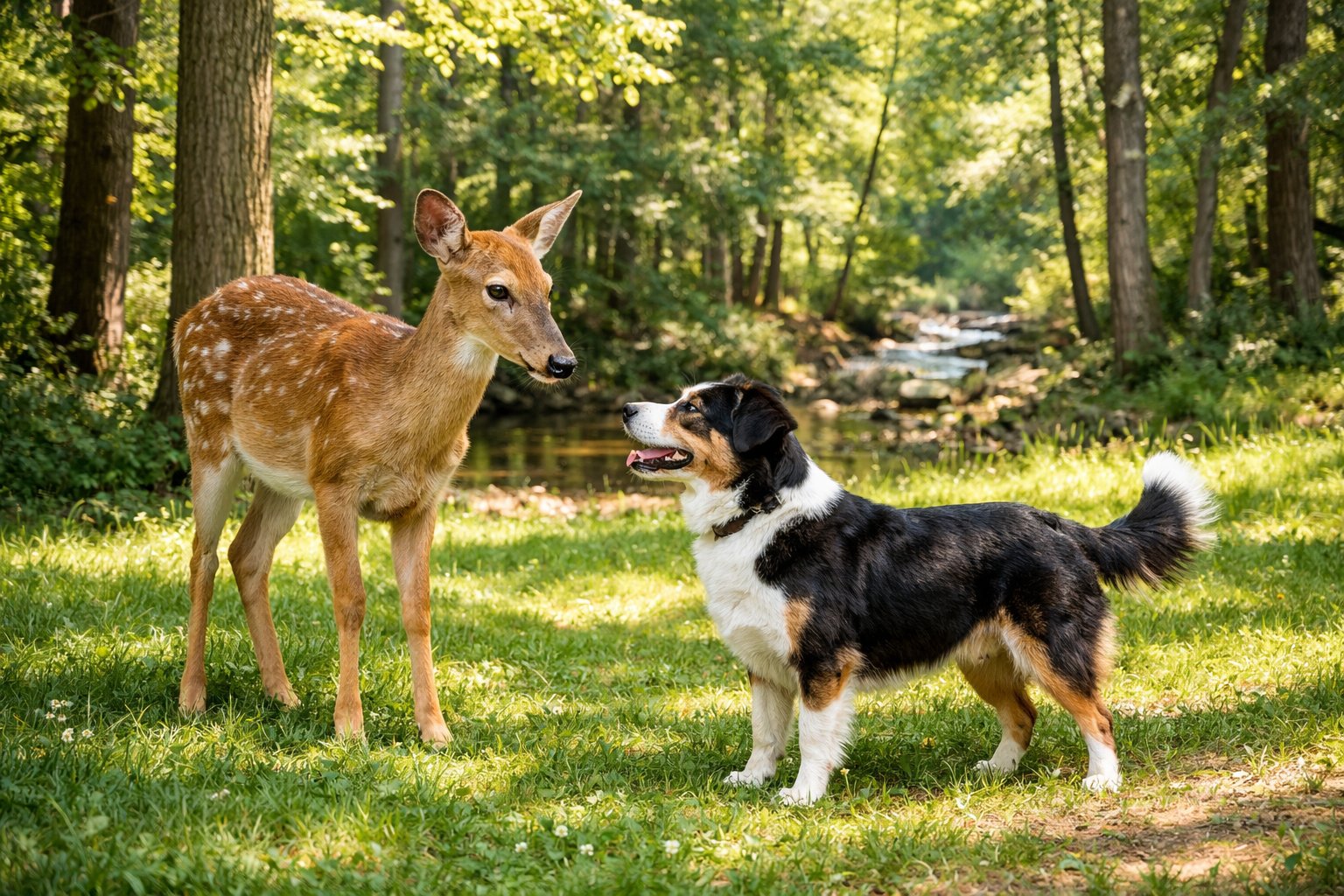
Let’s get into why deer sometimes get aggressive, when the risk is highest, and what you should do if a deer confronts your dog.
You’ll pick up some simple steps to prevent run-ins and learn how to react quickly to avoid injuries.
When and Why Would a Deer Hurt a Dog?
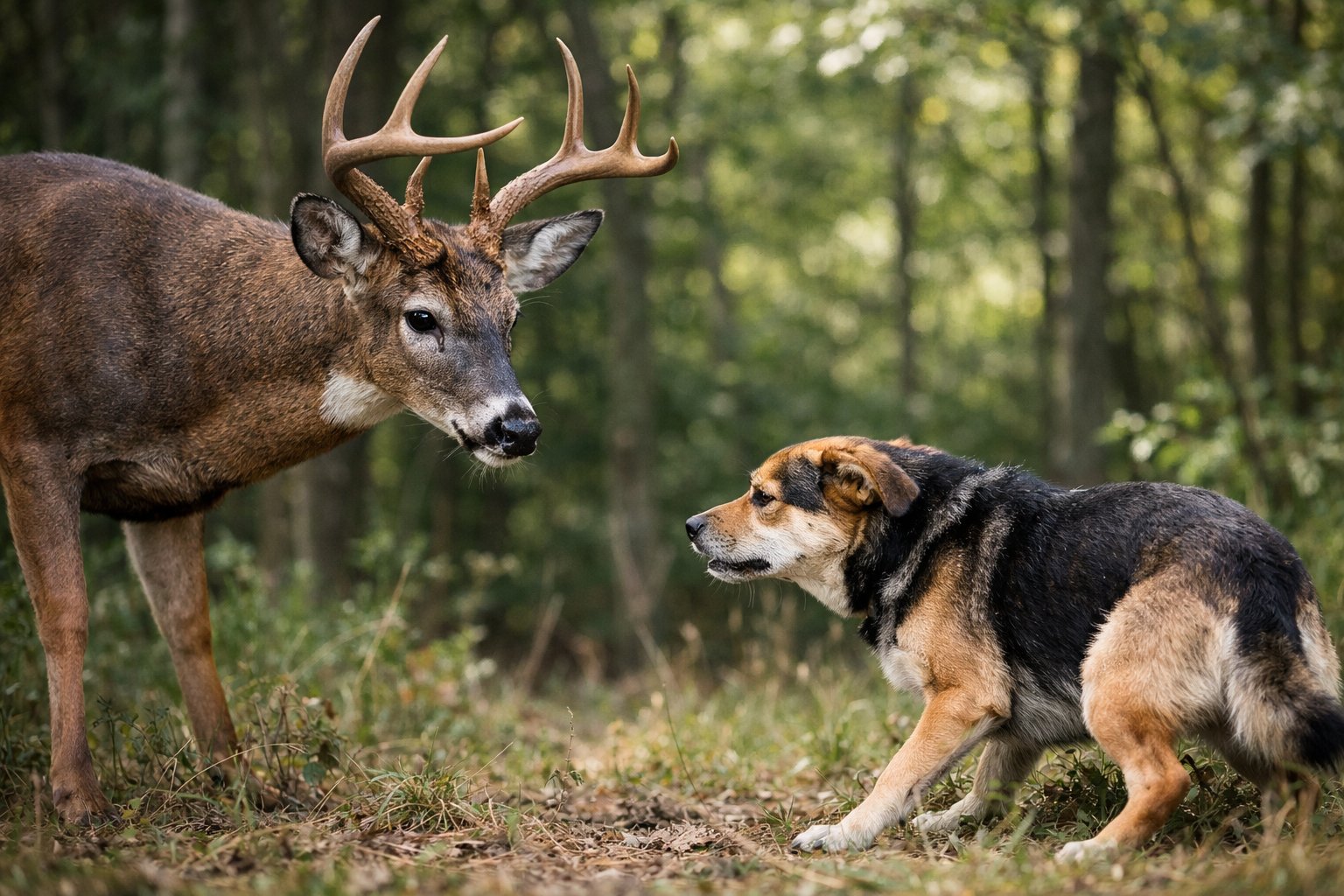
Deer usually steer clear of people and pets, but some situations make them act out.
You should watch for certain triggers—like fawns nearby, mating season, or when a deer feels cornered.
Typical Deer Behavior and Aggression Triggers
Deer act as prey animals, so they’d rather run than fight. You’ll see a deer freeze, stare, stomp, or snort before it bolts.
But if your dog chases or corners a deer, you might push that deer from flight to fight.
Here’s what usually sets them off:
- A dog running after a deer or getting up in its space.
- A deer trapped by fences, yards, or rough terrain.
- Deer that are used to people and don’t bother to run.
- Sudden movements or loud barking that spike a deer’s stress.
If a deer feels trapped, it might kick with its hooves. Those kicks can badly hurt small dogs.
Deer Attacks on Dogs During Fawning and Mating Seasons
You need to be extra careful in spring and fall.
In spring and early summer, does get super protective of fawns. If your dog goes near a fawn, that mama deer might attack out of nowhere to drive your dog off.
During the fall rut, bucks get more territorial and aggressive. A buck guarding a food source or a mate might charge or use its antlers if it feels challenged.
Keep dogs on a short leash in wooded areas, especially at dawn or dusk when deer are out and about.
Warning Signs and Body Language of Aggressive Deer
You can spot a deer’s warning signs if you know what to look for.
Watch for:
- Stomping front hooves—big red flag.
- Snorting or loud exhaling—deer’s getting agitated.
- Fur standing up along the back—tension’s building.
- Head lowered with antlers pointed—could charge next.
If you notice any of these, calmly and slowly move your dog away. Don’t yell or throw things; sudden moves can make the deer react even faster.
How Deer Defend Themselves Against Dogs
Deer defend themselves with speed, hooves, and antlers.
They’ll try to run first, but if that doesn’t work, they kick hard with their front or hind legs. Those kicks can break bones or cause serious cuts.
Bucks might stab or shove with antlers. Does sometimes charge just enough to scatter predators away from fawns.
If a deer grabs or pins your dog, focus on making space—shout, use an air horn, or try to safely remove your dog without putting yourself between them.
For more on deer behavior and risks, check out advice from the Institute for Environmental Research.
Protecting Dogs and Responding to Deer Encounters

You can lower the risk by keeping control of your dog, watching deer body language, and knowing who to call if things get out of hand.
Let’s focus on prevention, safe actions during run-ins, checking for injuries, and when to reach out to animal control.
Prevention Tips for Dog Owners
Keep your dog on a short leash if you’re in deer country, especially at dawn or dusk. A 4–6 foot leash gives you enough control to stop your dog from chasing or cornering deer.
Try making your yard less appealing to deer. Put up tall fences or use motion-activated sprinklers.
Plant deer-resistant shrubs and clear out brush where fawns might hide. These steps help keep deer off your property.
Teach your dog recall and quiet commands so you can call them back fast. If your dog has a strong prey drive, consider muzzle training for short walks.
If you know deer are common nearby, skip off-leash walks in those spots.
Keeping Your Dog Safe During and After a Deer Encounter
If a deer spots your dog, move away slowly and pull your dog in close—don’t run, or the deer might chase.
If possible, put a tree, car, or big rock between you and the deer.
When a doe’s protecting fawns, she might stomp, snort, or charge. If the deer attacks and your dog can escape, drop the leash.
Make yourself loud and big, but don’t put yourself between your dog and the deer.
Afterward, check your dog for cuts, punctures, limping, or bleeding. Even small hoof wounds can get infected.
If you spot wounds, deep cuts, or weird behavior, get your dog to the vet right away.
Injury Risks and When to Contact Animal Control
Deer can cause blunt force trauma, puncture wounds from hooves, and antler injuries during the rut.
Watch for swelling, limping, or signs of internal injury.
Call animal control or wildlife authorities if a deer keeps coming into yards, acts aggressive, or injures someone or a pet.
Give them details—exact location, time, and what you saw. That helps them figure out what to do next.
If your dog needs emergency care, contact your vet first.
Let local wildlife officials know about the incident afterward so they can track aggressive deer and alert your neighbors to any risk.
Community Safety and Reporting Aggressive Deer
Let your neighbors know when you spot aggressive deer, or if you notice several in the area. Posting on community apps can really help folks steer clear of trails or backyards where deer like to hang out.
If a deer acts dangerously, go ahead and contact wildlife authorities or animal control. Give them details like the address, time, date, and maybe snap a photo—if you can do it safely. Mention if the deer had fawns or antlers.
Authorities might suggest things like putting up fencing, installing motion-activated sprinklers, or reaching out directly to affected residents.
Get involved in local efforts to cut down on deer attractants. Picking up fallen fruit, securing compost, and planting deer-resistant shrubs all make a difference.
When neighbors work together, it helps keep deer from crowding into neighborhoods and lowers the risk of a deer charging near someone’s home.


