
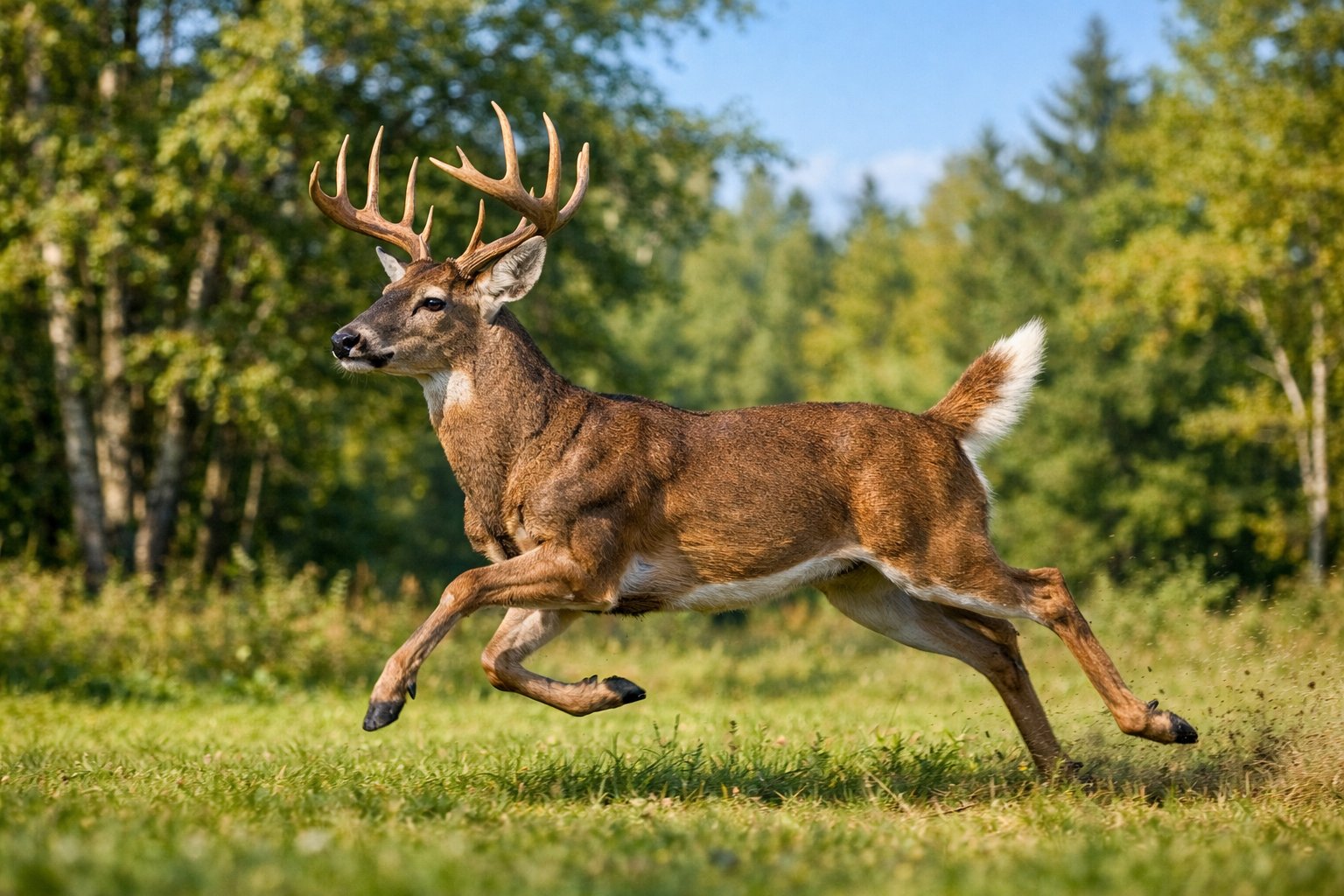
Ever catch a glimpse of a deer darting through the trees and wonder just how fast they can move? Most deer can sprint anywhere from 30 to 50 miles per hour in short bursts. Caribou and elk sometimes hit those top numbers, while white-tailed deer usually max out around 30–40 mph.
You’ll find out which species really lead the pack and how things like terrain, age, or even a sudden scare can change a deer’s speed on the fly.
I’ll lay out the actual speed ranges, compare different deer, and break down the anatomy and situations that make a deer bolt.
How Fast Can a Deer Run: Key Facts and Top Speeds
Let’s talk about the real speeds you’ll see in common deer species. I’ll cover typical sprints, how long they can keep it up, and how some species edge out others.
The focus here is on North American and European deer you might spot in your local woods or fields.
Average Running Speed of Deer
Most adult deer dash at 25–30 mph (40–48 km/h) when they need to get away from danger. White-tailed deer usually hit about 30 mph in those quick bursts across open ground.
Mule deer tend to run a bit faster on flat land. Their longer legs and bigger stride give them the edge.
Elk and moose look bulky, but they can still move. Elk average around 30–35 mph in a sprint, while moose can hit 25–30 mph even with all that weight.
Smaller deer like roe deer stick to the 25–30 mph range. They rely on agility just as much as raw speed.
The ground and the deer’s age play a big part. Young, healthy deer on solid, flat ground will outrun older or injured ones struggling through rough, wooded hills.
Top Speed by Deer Species
Caribou (reindeer) really take the prize, sometimes reaching up to 50 mph (80 km/h) in short bursts. Mule deer and some elk have been clocked at 45–50 mph when conditions are just right.
White-tailed deer usually top out at 35–45 mph, depending on who’s measuring and where.
Here are a few more quick numbers:
- Red deer: about 35–40 mph
- Roe deer: around 30–35 mph
- Moose: up to ~30–35 mph in a sprint
These are quick, short-lived bursts. The actual top speed depends on the individual animal and the situation. Want more on caribou and sprint records? Check this summary on deer top speeds (https://worlddeer.org/how-fast-can-deer-run/).
Duration and Distance of High-Speed Runs
Deer don’t do marathons—they’re built for quick escapes. They might hit top speed for a few hundred meters, but then they have to slow down as lactic acid builds up and breathing gets hard.
A white-tailed deer could keep up 30 mph for a few hundred yards, but definitely not for miles.
Mule deer and caribou might hold a fast pace a bit longer if they’re out on open plains, but even they run out of steam after a few minutes.
Heavier animals like elk and moose can hit high speeds, but only for very short distances.
Things like rough ground, bad weather, predators on their tail, or just how motivated the deer feels will change how long they can sprint. If you see one running, expect a burst of speed and then a quick switch to a slower, trotting pace.
What Makes Deer So Fast? Anatomy, Survival, and Influencing Factors

Deer rely on strong legs, light bodies, and sharp senses to bolt away from trouble. Their speed lets them escape wolves, cougars, coyotes, and even people. They can move fast through forests or across open fields.
Deer Anatomy and Adaptations
It helps to know that a deer’s body is basically made for sprinting. Those long, muscular hind legs act like springs, storing up energy for a sudden leap.
This setup gives deer powerful thrusts and lets them accelerate quickly when something spooks them.
A lightweight skull and flexible spine help them stretch their stride. Deer often use a bounding gait—sometimes all four feet leave the ground at once.
That move not only boosts speed but also helps them clear logs or fences.
Their hooves work like natural running shoes, gripping dirt, snow, or rocky ground. Big lungs and a strong heart keep them going during those short, high-speed sprints.
Survival Strategies and Predator Evasion
If you’ve ever watched deer, you’ll notice they use more than just speed. They zigzag to break a predator’s line of sight.
Quick turns let them use agility, not just straight-line speed, to get away.
Deer often freeze or blend in until they have to run. During the rut, bucks might take bigger risks because they’re focused on mating, not safety.
Predators like wolves or cougars pick spots where the terrain helps them. Deer, on the other hand, choose open ground when they need to use their speed.
Hunters pay attention to deer escape routes and cover. If you know where deer are likely to bolt—along the edge of woods, by a fence line, or through a clearing—you’ll have a better chance of spotting them on the move.
Factors Influencing Deer Speed
A bunch of things can change how fast a deer runs. Species is a big one—white-tailed and mule deer usually hit around 30–40 mph, but pronghorn? They’re way faster than most.
Age and health play a role too. Fawns, or injured deer, just don’t have the same speed.
Terrain really makes a difference. On flat, open ground, deer can go all out. But if they’re in thick woods, deep snow, or scrambling over rocks, they slow down and rely more on quick bursts.
Motivation counts for a lot. If a deer’s running from a wolf, it’ll push itself way harder than if it’s just wandering between food patches.
Weather and the season matter as well. In winter, a cold and skinny deer might not have the muscle for a long sprint.
During the rut, bucks go all-in and might keep up their speed longer, especially if they’re chasing rivals or trying to escape.
Links: learn more about deer top speeds from this deer speed overview.


