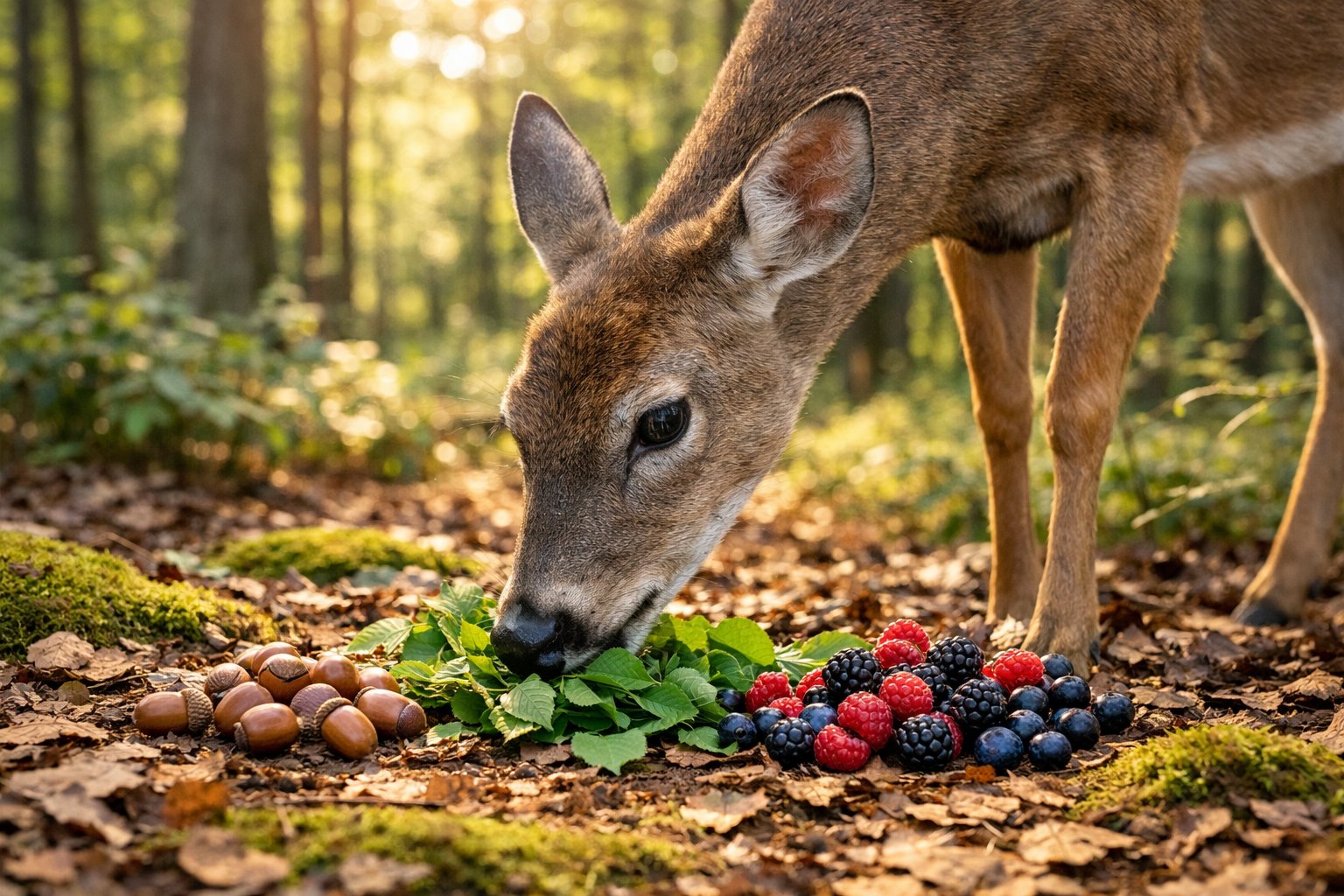
You can actually help deer thrive by offering foods they’d naturally eat and by shaping their habitat to support them all year. The best thing to feed wild deer? Native browse — twigs, buds, leaves, and native fruits or nuts. These foods fit their digestive needs and keep them healthy.
A short list of safe extras, like a handful of apples, acorns, or proper deer pellets, might help during harsh winters. But honestly, those should just supplement what they find on their own.
If you want deer to do well on your land, focus on plants and actions that encourage natural food. Plant native shrubs and trees, leave woody browse accessible, and avoid feeding habits that cause crowding or dependence.
Let’s get into what to offer, what to skip, and how to feed deer responsibly if you decide to help them out.
What Is the Best Thing to Feed Wild Deer?

You should really try to give deer foods that match their natural diet and the season. Focus on woody browse, native mast, and balanced feeds that support their rumen and overall nutrition.
Natural Forage and Browse
Deer mostly eat leaves, twigs, buds, and native shrubs. In late winter and early spring, woody browse like willow, dogwood, and young oak twigs give them the fiber and tannins their rumen needs.
Planting or leaving native shrubs and grasses offers year-round forage. This move also helps prevent the harm from sudden diet changes.
Try offering cut branches or pruned shoots within reach so deer can browse naturally. Skip invasive plants and avoid heavy fertilizer residues.
Let native mast — like acorns from oaks — stay on the ground. Acorns pack a high-energy punch, and deer look for them in fall and winter.
Safe Fruits, Nuts, and Vegetables for Deer
You can give deer whole fruits and nuts now and then, but don’t overdo it. Apples, pears, and berries give quick sugars and moisture.
Nuts like acorns and other mast give fat and calories before winter. Just make sure they’re native and not moldy.
Vegetables like carrots and sweet potatoes are safe in small amounts. Don’t give bread, salty snacks, or processed foods. Those lack nutrition and can mess up their gut.
Scatter food over a wide area to keep deer from crowding and spreading disease. Never feed anything moldy or fermented.
Formulated Deer Food Mixes and Pellets
Commercial deer pellets and mixes can help fill gaps when natural forage runs low. Look for feeds with balanced protein (around 12–20% for growing or late-winter deer), calcium, phosphorus, and added vitamins.
High-quality mixes support rumen microbes and keep deer in better shape. Use them as a supplement — not the main meal.
Skip using plain corn as the only feed. It’s high in starch and can upset their rumen if they eat too much.
Put pellets in a feeder or scatter small amounts on the ground. Always check labels and pick products made for deer. Those usually have molasses, grains like oats, and forage-based stuff to encourage steady eating and better health.
How to Feed Wild Deer Responsibly
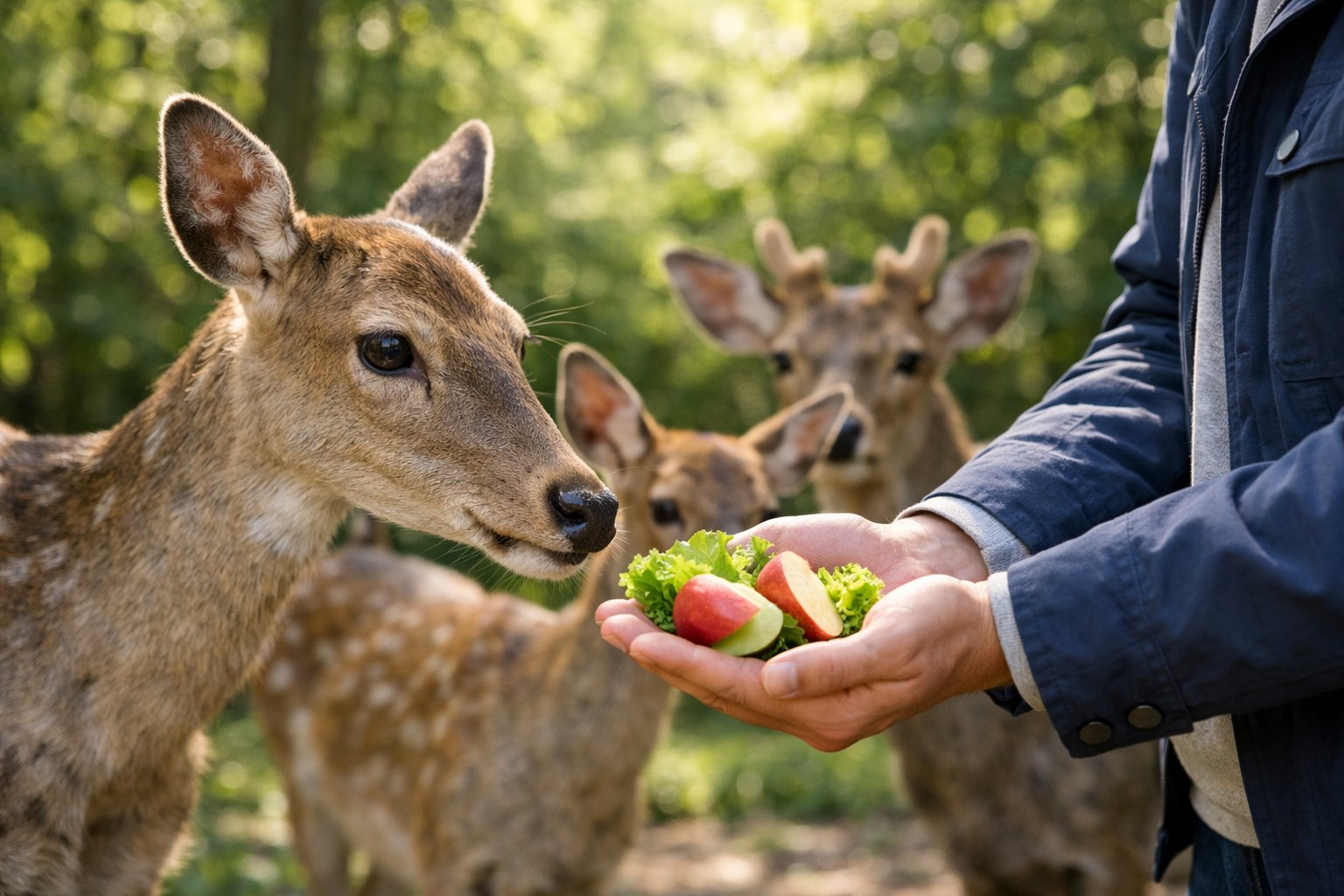
Feeding wild deer has real risks and just a few benefits. If you decide to help, stick to natural foods, keep animals spread out, and follow local rules.
Foods to Avoid Feeding Deer
Never give deer processed foods like bread, chips, or pet kibble. Those don’t have the fiber or nutrients deer need and can cause stomach problems.
Avoid giving them lots of corn or other starchy grains. Corn is low in protein and can lead to digestive issues in winter if deer eat little else.
Don’t feed sugary or salty snacks meant for people. That changes deer behavior and draws pests.
Skip potatoes, chocolate, and junk food completely. These can be toxic or cause malnutrition.
Also, avoid unfamiliar plants. Some garden and ornamental species are actually poisonous.
Best Practices for Supplemental Feeding
Start small and back off slowly if you do feed. Give limited amounts so deer don’t start depending on you.
Put food away from roads and homes to avoid car accidents and neighbor issues. Clean up the feeding area often and toss spoiled food to lower disease risks.
Use natural foods deer already eat: acorns, apples, native berries, and woody browse in winter. Match what you offer to the season and local diet. Always check your state’s rules.
Deer Feeders, Food Plots, and Attracting Deer
If you use a feeder, pick one made for deer and set it to release measured portions. Elevated or gravity feeders that reduce leftovers help keep crowding and rodents down.
Food plots can attract deer without hand-feeding. Plant clover, brassicas, or native mast-producing trees, depending on your climate.
Rotate plots and avoid planting just one small spot over and over. That way, you won’t put too much pressure on the habitat.
Try landscaping with native shrubs and fruiting trees to bring in deer naturally. This supports deer without forcing them to gather in one place.
Risks and Considerations: Disease and Habitat
When people feed deer, they end up crowding together, which actually raises the risk of diseases like chronic wasting disease (CWD). Deer gather around feeders or food plots, and that close contact really helps pathogens spread—think saliva, droppings, even just the ground itself.
If you overfeed, you might notice deer start changing their movement patterns. That can lead to real habitat problems near feeding spots. Soil gets packed down, and deer may overbrowse, damaging the very plants they rely on.
Always check your local laws before feeding. A lot of places either limit or totally ban feeding, mostly to control disease and keep deer populations in check.
Spot a sick deer? Don’t touch it. Instead, get in touch with your local wildlife authorities and let them know.


