
You might think a deer would never take you on. Most of the time, deer bolt as soon as they spot you, but if one feels trapped, is protecting fawns, or gets riled up during the rut, it might stand its ground—and honestly, you could get pretty badly hurt.
A healthy adult deer usually has the upper hand against an unarmed person, thanks to its antlers, hooves, speed, and lightning reflexes.
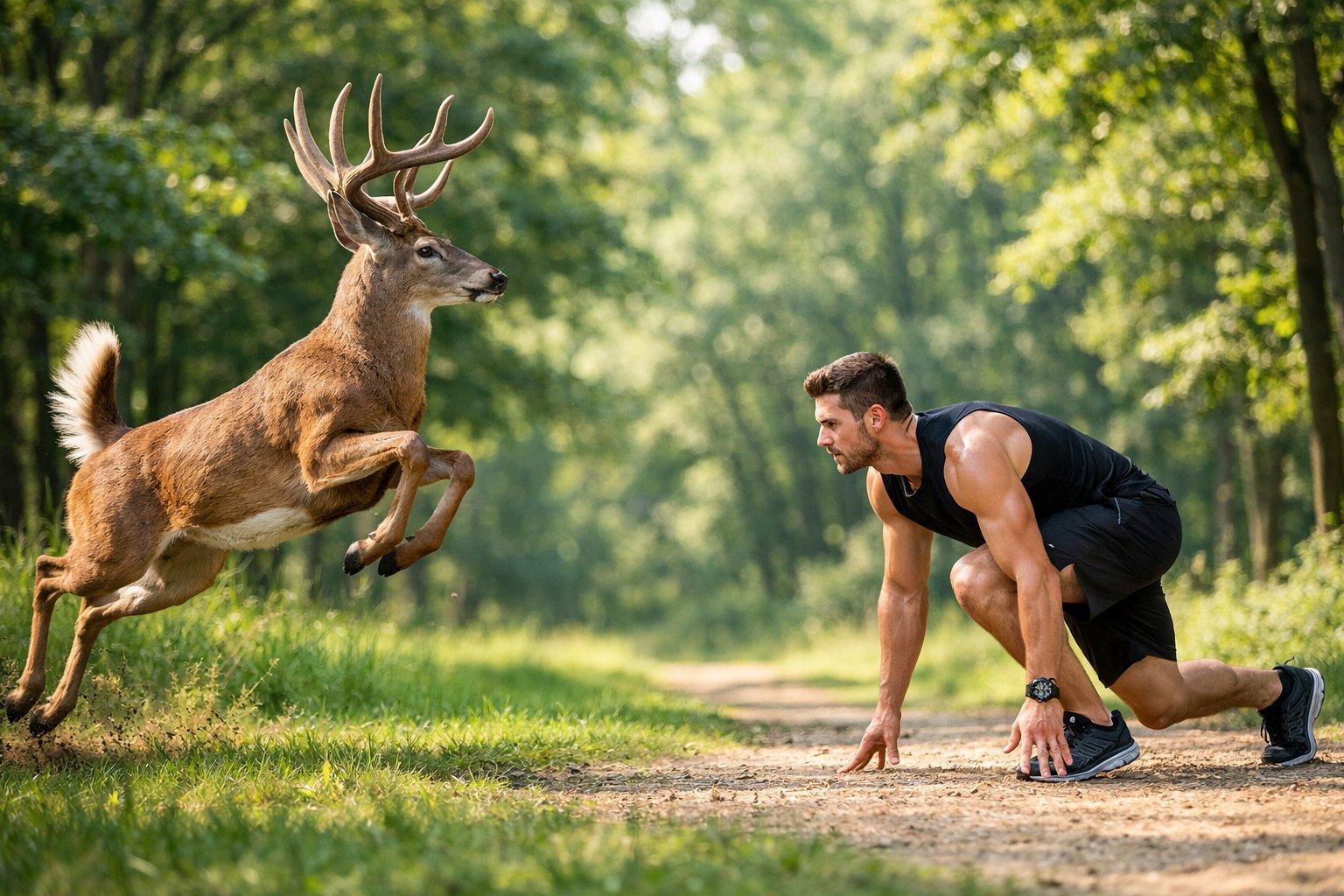
Curious about when deer actually get dangerous? Wondering what kind of injuries they can cause, or how to handle a close call?
Let’s get into why deer attack, what really puts you at risk, and a few straightforward safety moves you can use right away.
Could a Deer Actually Beat a Human?

A deer can injure—or even kill—a person under the right circumstances. It’s important to know how deer fight, when they’re most dangerous, and how your size, gear, and choices might change the odds.
Power of Antlers and Hooves
Bucks use their antlers to shove, gore, and even flip rivals during the rut. Those antlers are solid bone; if they hit your chest, neck, or stomach, you could end up with some nasty wounds.
White-tailed deer antlers don’t reach the size of elk or moose racks, but a charging buck still poses a real threat. Now, elk and moose are on a whole different level—one kick or goring from them could easily be fatal.
Hooves are no joke either. If a deer kicks you with its back legs, it can break ribs or cause internal bleeding.
Deer sometimes rear up on their hind legs to kick harder. Even does, without antlers, will kick to protect their fawns.
If you get hit, you could end up with bleeding, broken bones, or even head injuries.
Human Strengths and Weaknesses
You’ve got some advantages, though. You can grab a sturdy stick, your backpack, or even a jacket to block antlers or steer a charging deer away.
If you’re carrying a knife or another weapon, that might scare off a deer—but honestly, using weapons can make things worse and cause legal trouble, depending on where you are.
Your mobility helps. You can run, climb, or throw something between you and the deer.
But let’s be real: you don’t have hooves or antlers. Grappling up close with a big buck, elk, or moose is not going to go your way.
Panic might make you freeze or mess up, which just increases the danger. If you can reach a car, tree, or anything sturdy, your odds get a lot better.
When Are Deer Most Aggressive?
Deer get especially aggressive during the rut—usually in the fall—when bucks chase each other and might see you as a rival. The timing depends on the species. White-tailed deer rut at a different time than mule deer, elk, or moose.
Does get protective in spring when they have fawns. If you get too close to a fawn, you could trigger an attack.
You’ll also face more risk if a deer feels cornered, is hurt, or has gotten used to people in suburban areas.
Sudden moves, barking dogs, or loud noises can set off a defensive charge. Keep your eyes open at dawn and dusk, since deer are more active then.
It’s best not to approach or feed deer—just lowers your odds of a bad encounter.
Dangerous Deer Encounters and How to Stay Safe

Deer can catch you off guard on trails, in your yard, or even on the road. It helps to know when they get aggressive, how mothers defend fawns, and what you can do to stay safe.
Why Do Deer Attack Humans?
Deer usually bolt if they spot you, but they might attack if they feel cornered, threatened, or injured. During the rut, bucks fight and sometimes mistake you for another buck.
An injured or sick deer might not run and could lash out if you get too close. Sudden moves or trying to handle a deer just ups your risk of getting kicked or gored.
Car crashes are another big danger with deer. Most happen at dawn or dusk, when deer move around more.
Slow down if you see deer signs and use your high beams when you can, so you spot animals sooner.
Don’t feed deer or leave pet food out. When deer get used to eating near homes, they lose their fear and might act bolder.
If you see a deer with raised hackles, stomping, or snorting, back away slowly. Put something big—like a tree or your car—between you and the animal.
Mother Deer and Fawns: Maternal Instincts
Female deer get fiercely protective of their fawns in spring. A doe will hide her fawn in tall grass and stay nearby.
If you step between them or try to touch a fawn that looks alone, the doe might charge to drive you off.
Watch for signs of an upset doe—like a lowered head, pinned-back ears, or rapid stomping.
Don’t handle a fawn you find. Most aren’t abandoned—their mother will come back. Moving a fawn or making loud noises could make the doe attack.
If you find a fawn that’s clearly injured, call local wildlife authorities instead of approaching.
Always leash your dog in deer country. A dog chasing a fawn could bring the mother running right at you, and that’s a situation you do not want.
If a doe charges, try to get to your car or climb something safe. Don’t dash straight through thick brush—you might trip and make things worse.
Deer Safety and Prevention Tips
Try to keep at least 30 feet between you and any deer you spot. Grab some binoculars if you want a closer look.
If a deer comes toward you, just stay put. Speak softly, and slowly back away. Don’t turn your back or run—sudden moves might make things worse.
In your yard, set up motion-activated lights. Clear out anything that might attract deer, like fallen fruit or open compost bins.
You might want to try commercial deer repellents or motion sprinklers. They can help, but honestly, nothing works all the time. Switch up repellents every season, and always check the directions on the label.
When you’re driving through areas with deer, slow down. Keep an eye out for groups—if you see one cross, there’s a good chance more are coming.
If you can’t avoid hitting a deer, just brake hard and stay in your lane. Swerving could lead to a much worse accident.
If you see an aggressive or injured deer, call local wildlife or animal control. Let the pros handle the situation.


