
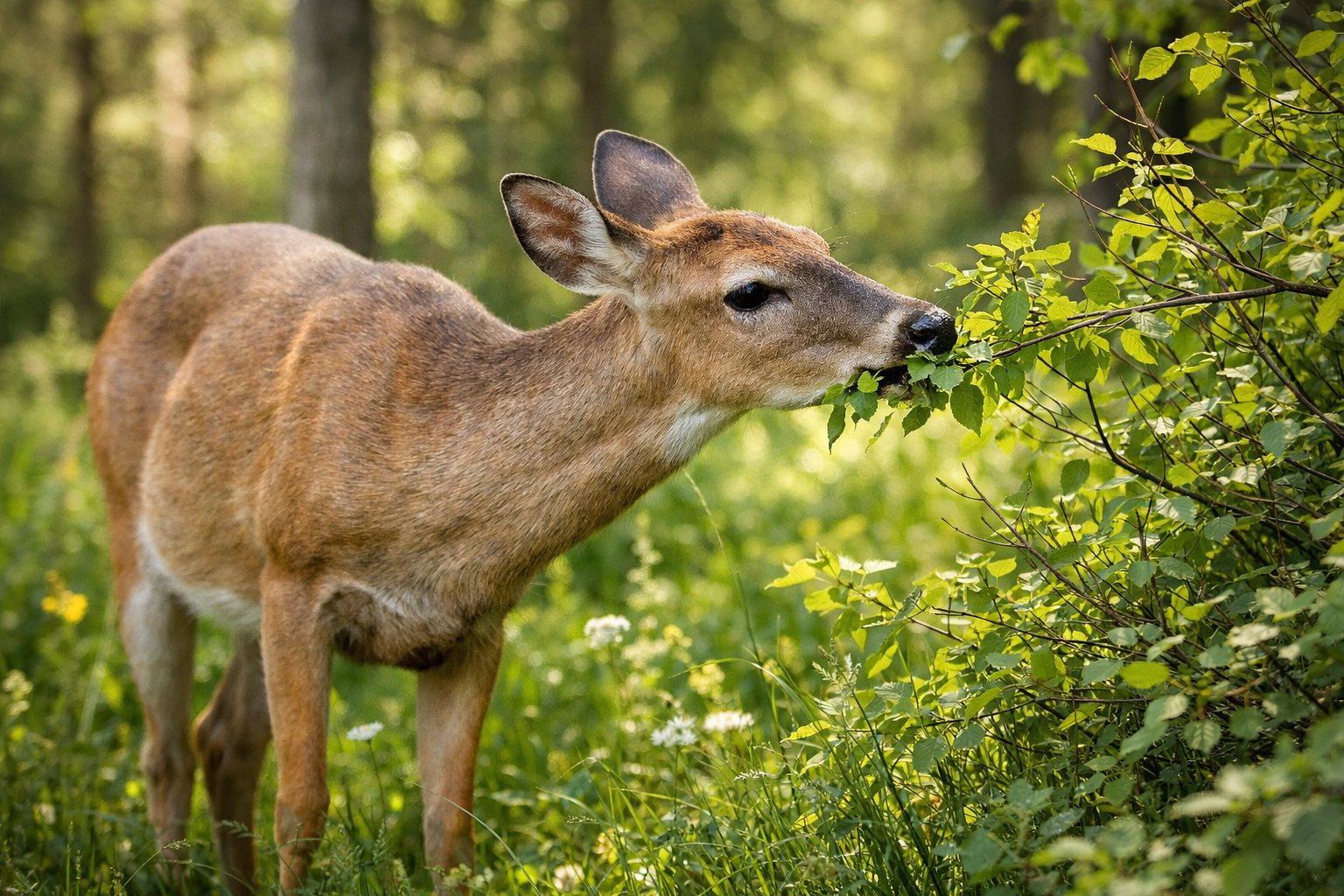
You’ll probably see deer munching on leaves, grasses, fruits, and nuts as the seasons roll by. Deer stick to plants—they go for young, nutritious leaves, forbs, mast (like acorns and berries), and those tender shoots, but their menu changes with the weather.
Ever wonder why deer love some plants and totally ignore others? This article digs into what they eat, how they pick their meals, and how their bodies handle digestion.
You’ll get a look at which plants draw deer to your yard or the woods—and maybe figure out how to keep your garden safer, or just understand these animals a bit better.
Key Foods in a Deer’s Diet
Deer eat all kinds of plants, but a few types really give them the most energy and nutrition. You’ll spot them eating leafy browse, hard mast like acorns, sweet fruits, and sometimes farm crops or food plots.
Browse: Leaves, Buds, and Tender Shoots
Browse covers leaves, twigs, buds, and young shoots from shrubs and trees. Deer go for willow, dogwood, maple, ash, and young oak saplings.
They pick tender leaves and fresh buds since those pack more protein and are easier for their stomachs to handle.
Winter makes browse a lifeline. When grasses and forbs vanish, deer turn to woody stems, buds, and evergreen leaves like white cedar.
Watch out for toxic ornamentals—plants like yew, azalea, and rhododendron can hurt deer if they get desperate and eat them.
You’ll probably find deer nibbling willow, aspen, oak leaves, beech, and shrubs like honeysuckle and elderberry. Those keep them going when softer foods disappear.
Acorns and Nuts: High-Energy Forage
Acorns take the spotlight in fall. White oak acorns, red oak acorns, hickory nuts, beechnuts, chestnuts, and pecans load deer up on fats and carbs for winter.
When oaks drop a bunch of acorns, deer flock to those spots.
As autumn goes on, deer shift from forbs to mast. Hard mast carries more energy than most leaves, which helps pregnant does and bucks gearing up for the rut.
If the mast crop fails, deer fall back on browse and crops instead.
You might see hoofprints under oak trees or near hickory stands. If you’re managing land, planting or saving mast-producing trees really helps deer nutrition.
Favorite Fruits: Apples, Pears, and Berries
Soft mast means fruits like apples, pears, persimmons, wild grapes, raspberries, and blackberries. Deer hang out at orchard edges and along berry-filled hedgerows.
These fruits give them sugars and vitamins—quick energy, plus a little variety.
Fruits ripen at different times, which keeps things interesting. Persimmons and late apples feed deer after the acorns are mostly gone.
Berries and elderberry help out does and fawns in summer. If you plant fruit trees or keep up berry patches, deer will keep coming back.
Skip the processed people food, though. Deer handle natural fruits way better.
Crops and Food Plots: Corn, Soybeans, and Clover
Crops attract deer because they’re dense and reliable. Corn and soybeans pack calories.
Clover and alfalfa add protein and make great food-plot choices. You’ll see deer raiding cornfields in the fall and using clover plots during spring and summer.
Plan your plots for the seasons—clover or chicory for spring and summer, then brassicas, turnips, and grains like oats or wheat for fall and winter.
Food plots with legumes (peas, beans) and grasses (bluegrass, rye) give deer protein and a bit of cover, too.
Just a heads up: feeding big piles of corn can spread diseases like CWD. Rules vary by state, so check local laws before putting out food plots or bait.
How Deer Select and Digest Their Food

Deer go after foods that pack the most nutrients with the least effort or risk. Their choices shift with what’s growing nearby and how their bodies pull energy from it.
Concentrate Selectors and Dietary Adaptation
Deer act like concentrate selectors. They pick tender shoots, buds, fruits, and acorns over rough grasses when they can.
Those foods give them more protein and sugar per bite, so they fill up faster and spend less time chewing.
Whitetail deer tend to hang around broadleaf plants and crops near woods. Mule deer do pretty much the same, though in drier places, they browse more shrubs.
When food gets scarce, deer adapt by eating tougher browse and woody twigs. What your local herd eats depends on soil, plant types, and how much people or hunters bother them.
Wildlife managers keep an eye on these changes to tweak habitat—maybe adding food plots or changing tree cover—so deer get better forage.
The Four-Chambered Stomach and Digestion
Deer have a four-chambered stomach: rumen, reticulum, omasum, and abomasum. The rumen holds microbes that break down plant cellulose.
You’ll notice deer stop and rest to “chew their cud”—they bring up partly digested food and chew it again, giving microbes more access.
The reticulum catches odd stuff and works with the rumen to ferment food. The omasum filters particles and soaks up water and some nutrients.
The abomasum acts as the true stomach, using acids and enzymes to digest what’s left.
This system lets deer survive on pretty rough forage compared to other animals, but if their diet changes too suddenly (like switching to dry hay or pet food), it can mess up their gut microbes.
Seasonal Changes in the Deer Diet
You can really spot how seasons push deer to change what they eat. In spring and early summer, deer munch on fresh forbs and new shoots. Nursing females especially crave extra protein, so they’ll also rely on fawns’ milk.
When summer rolls in, deer go for green browse, berries, and—if they’re lucky—agricultural crops. They’re all about packing on fat now to get ready for the colder months ahead.
Come fall, you’ll catch them eating more acorns and mast. Those high-fat nuts help fuel breeding and get them through winter.
Winter gets tough. Deer turn to woody browse like twigs, buds, and bark since soft forage just isn’t around. Their digestion slows, and they lean on fat reserves and whatever the rumen can squeeze out of rough food.
Wildlife managers keep an eye on these patterns. They use that info to decide when to work on habitats or adjust hunting rules, hoping to keep herds healthy.


