
Ever wondered if your dog could take on a deer and come out on top? Sometimes, a dog can injure or even kill a deer, but honestly, most of the time the deer just bolts or stands its ground with those surprisingly fierce hooves.
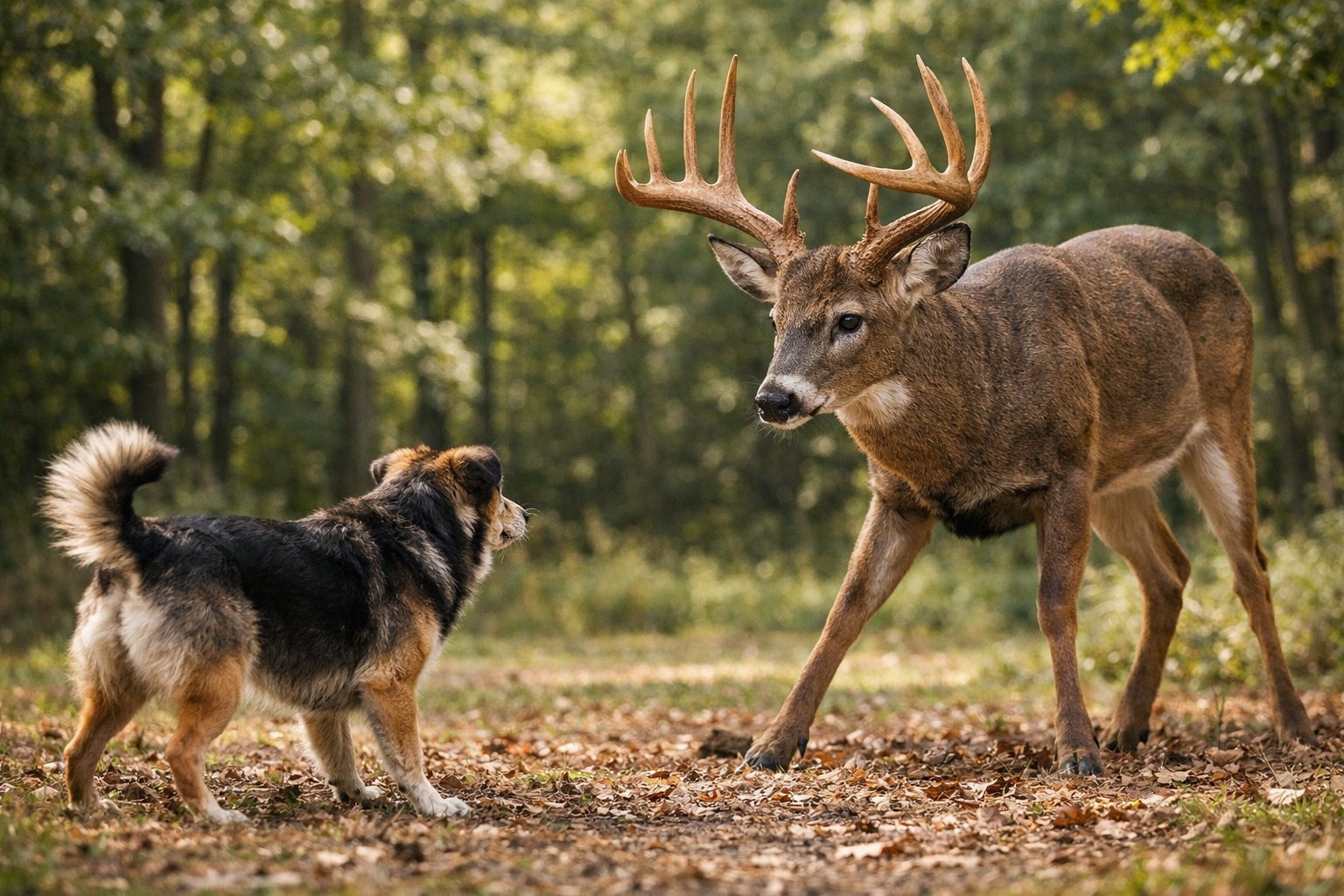
If your dog chases or corners a deer, you’re dealing with real risks—injury to your pet, harm to wildlife, and even potential legal headaches.
Let’s dig into which animal really has the upper hand, the dangers you might not expect, and what you can do to keep both your dog and the local deer out of trouble.
Dog And Deer Interactions: Who Has The Advantage?

A dog’s speed, bite, and instincts all play a part. But when it comes down to it, a deer’s size, hooves, and quick reflexes usually matter more.
Physical Attributes of Dogs and Deer
Deer usually outweigh most dogs by quite a bit. A white-tailed deer doe tips the scales at 100–150 pounds, and bucks or elk are even heavier.
That extra weight gives deer the muscle to kick hard and defend themselves with sharp hooves. Their long legs let them turn on a dime and sprint over rough ground, which is pretty impressive to watch.
Dogs come in all shapes and sizes. Greyhounds and whippets can sprint like crazy, while German Shepherds and Rottweilers have some serious bite force.
Hounds like bloodhounds and beagles are more about endurance and tracking than brute strength. Even the biggest breeds rarely match a grown deer’s weight or the reach of those hooves.
Dogs use bite force, speed, and stamina to chase, but deer rely on hooves, size, and reach to defend. Sometimes, the lay of the land decides who wins out.
Role of Prey Drive and Dog Breeds
Prey drive really changes the game. Hounds and terriers often can’t resist the urge to chase, sometimes way past what’s safe.
Herding breeds—border collies and Australian Shepherds—might nip or try to herd deer instead of going for the kill. Their instincts are more about control than attack.
Sight hounds like greyhounds and whippets can catch up to deer in open spaces, but they usually don’t have the jaw power to finish a big deer. Packs of dogs or really large breeds up the danger for deer.
Training matters a lot here. A German Shepherd with great recall might stay out of trouble, while an off-leash hound on a scent could be impossible to call back.
How you handle your dog makes a huge difference. Using a leash and solid commands can stop a chase before it starts.
Dog Behavior Versus Deer Behavior
Deer see dogs as predators, plain and simple. If you and your dog stumble on a doe with a fawn, she might stand her ground and fight.
Deer defend themselves by kicking, stomping, or using antlers if they have them. Usually, they try to run first, darting into open fields or thick cover to disappear.
Dogs tend to chase, bark, and sometimes try to bite. A single dog might just stress a deer out until it flees or fights back.
But when there are several dogs, things can get out of hand and the deer might get badly hurt. Repeated chases can wear deer down, and during fawning season, they might even separate mothers from their babies.
If you spot deer, it’s honestly best to keep your dog close and under control. That way, you avoid any nasty surprises.
Breed-Specific Encounters
Beagles and bloodhounds love following scents, which can lead you straight into deer territory. They might alert hunters or cause long, exhausting chases.
Hunting hounds sometimes bay and corner deer, and that can end badly for the deer. Border collies and Australian Shepherds usually chase but don’t go for the kill—they nip and harass, which can still cause injuries.
Big working breeds like German Shepherds or mastiffs can hurt deer with their bite, especially if there’s more than one dog. Greyhounds and whippets could outrun a deer on flat ground, but unless they work together, they rarely kill a big deer alone.
It’s smart to match your dog’s instincts to the environment. Fast dogs do better in open fields, while wooded areas give deer an escape and make defensive kicks more likely.
Risks, Responsibilities, And The Law
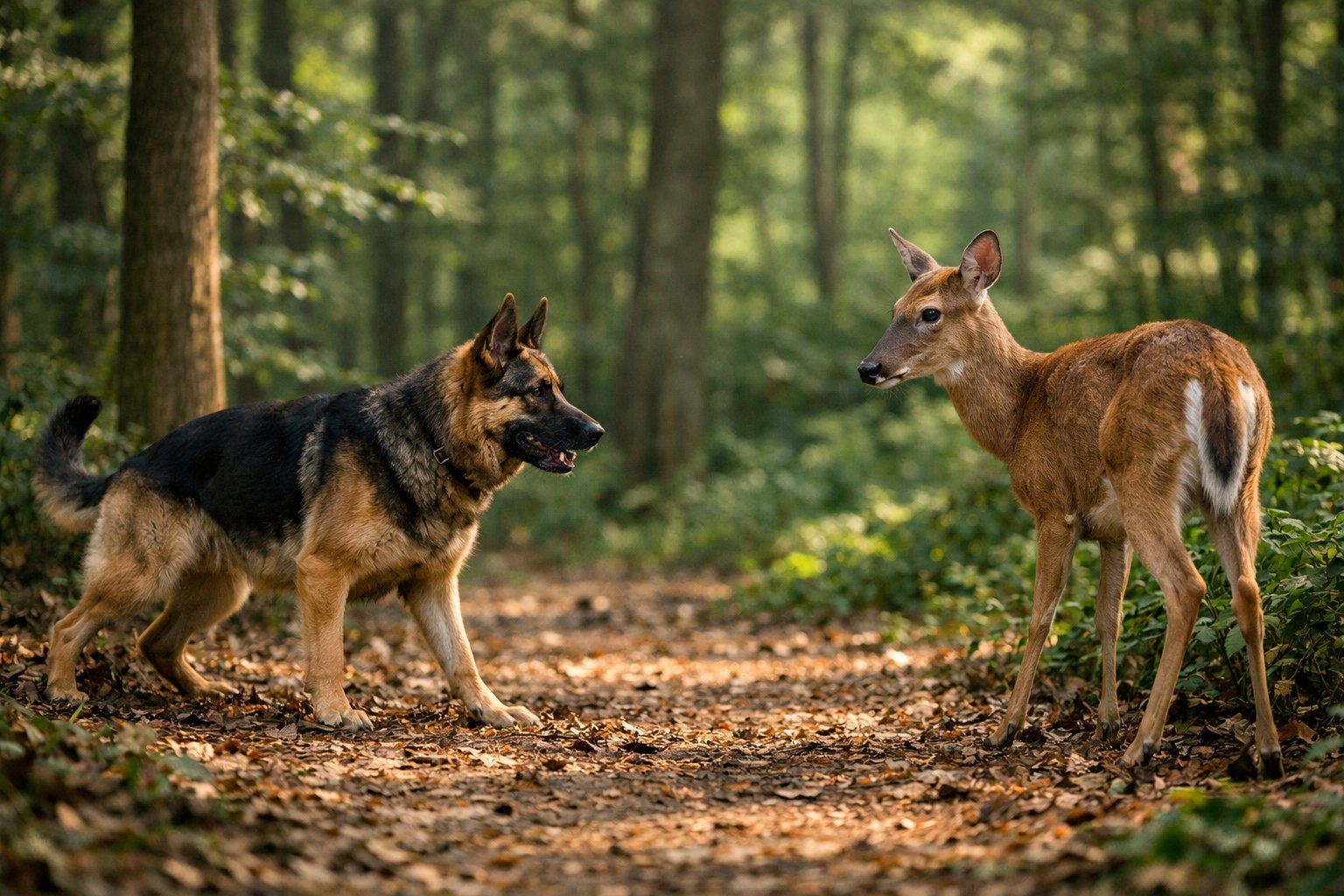
If your dog gets into it with a deer, you could end up dealing with injuries, legal bills, or even a messy cleanup.
You’re also on the hook for following leash rules and wildlife protection laws, which can vary a lot depending on where you live.
Potential Injuries And Risks For Dogs And Deer
A fight between a dog and a deer can leave both animals in rough shape. Deer can kick, gore, or stomp a dog, breaking bones or causing nasty wounds.
Dogs might get infections from bites, and vet bills can add up fast. If your dog kills or badly injures a deer, you might have to deal with removing the carcass or even disease risks.
Deer don’t get off easy either. They can end up with broken limbs or fatal injuries, and mothers with fawns are especially vulnerable. Sometimes, wildlife officers have to put wounded deer down to prevent suffering.
If you hunt with dogs or live near the woods, remember—deer can turn on dogs in a flash. Carry a first-aid kit for your dog and know some basic wound care just in case.
Report serious wildlife injuries to your local animal control or state wildlife agency.
Impact Of Wildlife Law And Leash Laws
Many states treat it as a violation if your dog harasses or kills big game. Penalties range from fines to even taking your dog away, and in the worst cases, authorities might euthanize the dog.
Check with your state’s Department of Natural Resources or wildlife agency to find out the rules where you live. The penalties can be all over the map.
Local leash laws matter too. If your dog runs loose or disturbs wildlife, you could get fined. Animal control officers can ticket repeat offenders, and if your dog hurts a deer on someone else’s land, you might have to pay for the damage.
If you see a dog chasing or attacking deer, call animal control or your state wildlife agency. They’ll know what to do next.
Preventing Conflicts And Responsible Dog Ownership
Control and training go a long way in reducing risk. Keep your dog on a leash near wooded areas.
Use a secure fence at home. Teach your dog a solid recall—yeah, it takes time, but it pays off.
If you own a hunting breed, try scent and obedience training. These can help curb that chase instinct, at least most days.
Here are some practical steps:
- Grab a sturdy leash or use a GPS collar when you’re off the main trail.
- Watch your dog especially at dawn and dusk; deer seem to love those hours.
- If you notice any aggressive dogs in your neighborhood, report them to animal control before things get out of hand.
Stay on top of vaccinations and microchipping, and keep proof of rabies shots handy. If your dog ends up harming wildlife, reach out and cooperate with wildlife officers and animal control.
Taking these steps helps protect your dog, the deer, and, honestly, your own peace of mind.


