
You’ll spot deer snoozing in places that mix cover, visibility, and a quick way out. Deer usually pick dense brush, tall grass, or the edge of the woods so they stay hidden but can see and bolt fast if they have to. Let’s dig into how they pick those spots—and why it matters.
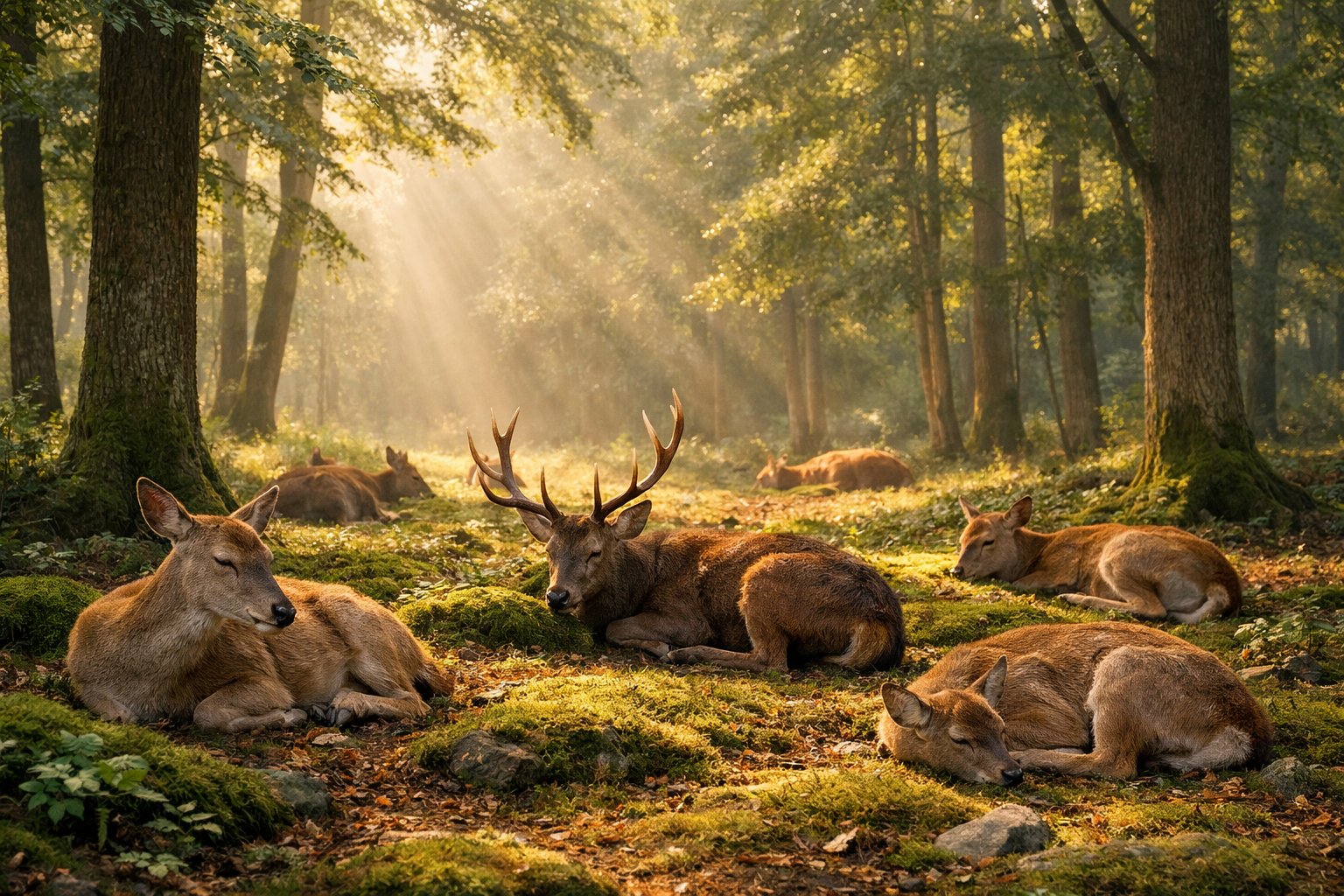
As you read on, you’ll see how daytime naps, nighttime beds, and the changing seasons all play into deer behavior. I’ll share tips for spotting fresh beds, how bucks and does differ, and what bedding patterns really say about how deer move.
Where Do Deer Sleep in the Wild?

Deer pick spots that hide them, let them see danger coming, and give them a fast exit. You’ll notice bedding areas pop up near food, water, and places that block wind or cold.
Bedding Area Locations and Habitat Types
You’ll find deer beds in all sorts of places: tall grass, thick brush, evergreen thickets, and along the edges of woods or fields. In farm country, they’ll bed down along corn or soybean edges, or even fencerows.
Prairie and CRP fields? Deer use clumps of grass and brush piles there. In wetter areas, marsh islands and hidden cattail pockets work well since predators avoid them. Forested land usually means ridge benches, leeward slopes, or spots under conifers for warmth and protection.
Look for oval depressions, flattened grass, and tracks nearby. Bedding spots usually sit close to food and water, so deer don’t burn energy going back and forth.
Buck Beds vs Doe Beds
Bucks and does have their own bedding habits. Bucks mostly bed alone in hidden, higher spots. Their beds look bigger and usually sit near a single clear exit. If hunting pressure goes up, bucks move beds more often.
Does bed in groups, especially with fawns around. Doe beds are smaller and tucked into thicker cover near feeding spots. Fawns hide in well-camouflaged places—tall grass is a favorite—while does feed nearby and return to nurse.
If you’re managing land or hunting, mapping out both lone buck beds and clustered doe/fawn beds gives you a better idea of deer movement and pressure spots.
Seasonal and Weather Influences on Bedding
Seasons really shift where deer rest. In winter, deer prefer south-facing slopes, cedar and pine cover, and wind-blocked spots to save heat. Deep snow pushes them into thick cover and low, sheltered draws.
During summer, deer go for shade, wetland edges, and tall grass to stay cool and hide fawns. The rut and heavy hunting push deer into thicker cover, farther from trails and roads.
Weather changes things too. On windy days, deer bed with their heads into the wind so they can catch scents. If the moon is bright, they’ll move into heavier cover to avoid being seen.
Role of Cover, Visibility, and Escape Routes
When you’re looking for bedding areas, check three things: cover, sightlines, and quick exits. Deer use cover that hides their bodies but lets them see or smell danger coming. Evergreens, dense shrubs, and tall grass all do the trick.
Visibility matters—a lot. Deer often face open areas or upslope so they can spot predators early. They always keep at least one clear path for a fast getaway, usually toward thicker cover or downhill.
A good bed usually sits just a short distance from food and has an easy escape route. If you’re a hunter or wildlife manager, keeping bedding cover and escape corridors intact can really help deer survive and stick around.
Understanding Deer Sleep Patterns and Behavior

Deer rest in short bursts and stay pretty alert even when they sleep. They pick beds that hide them, offer a quick exit, and keep them tuned in to wind and sound.
How Long and When Do Deer Sleep
Deer don’t sleep in one long block. Instead, they nap in short bursts—3 to 10 minutes at a time—through day and night. Altogether, they rack up about 8 to 12 hours of rest in 24 hours.
Most of their deep, quiet sleep happens in safe beds and only adds up to maybe 2 or 3 hours if you count full deep sleep across a day.
Deer are crepuscular, which just means they move most at dawn and dusk. You’ll see them feeding and traveling then, with resting and bedding during midday and parts of the night.
Season, weather, and hunting pressure all mess with that timing. In high-pressure places, they cut visible activity and use thicker cover for daytime naps.
Deer Sleep Cycle Explained
Deer follow a polyphasic sleep cycle, so they take lots of short naps instead of one long sleep. Their naps mix light sleep—heads up, ears twitching—with short bouts of deep sleep in safe beds.
Deep sleep usually lasts 15 to 30 minutes when they get it. How deep they sleep depends on how safe they feel. In open fields, they mostly take light naps. Dense brush, evergreen thickets, or swamp islands let them drop into deeper sleep since the risk is lower.
Wind direction and escape routes also affect where and when they hit that deeper sleep.
Deer Sleep Standing Up
Deer almost always lie down to sleep. If they stay standing, it’s just for quick breaks to stay alert, not real rest. Standing lets them run fast if needed, but it’s not good for actual sleep.
You’ll see deer bedded in a shallow oval spot, head up or maybe tucked in a little. Bucks and does both lie down to rest. Bucks might pick more out-of-the-way beds, while does bed closer together with fawns.
Fawns usually lie super still in tall grass while their mother forages nearby, counting on camouflage rather than standing guard.
Alertness During Sleep
Deer stay partly alert even while they rest. Their ears keep twitching, and they usually face into the wind to catch scents drifting by.
This partial alertness helps them pick up on coyotes, bobcats, or even people nearby. You might notice a deer’s ears swiveling, its eyes half-open, or its head popping up often.
When deer bed down in groups, they boost their safety since more eyes and ears keep watch. If you’re out observing, try to keep your distance—otherwise, you might force them out of deeper sleep and into a state of constant watchfulness.


