
Ever spot a flash of brown in the woods and wonder just how fast that deer bolted? Most deer can sprint about 30 to 40 miles per hour in short bursts—and yeah, some species like caribou can hit even higher speeds. That sudden burst and zigzagging? It’s how they dodge predators and, honestly, why they sometimes pop out of nowhere in front of your car on a country road.
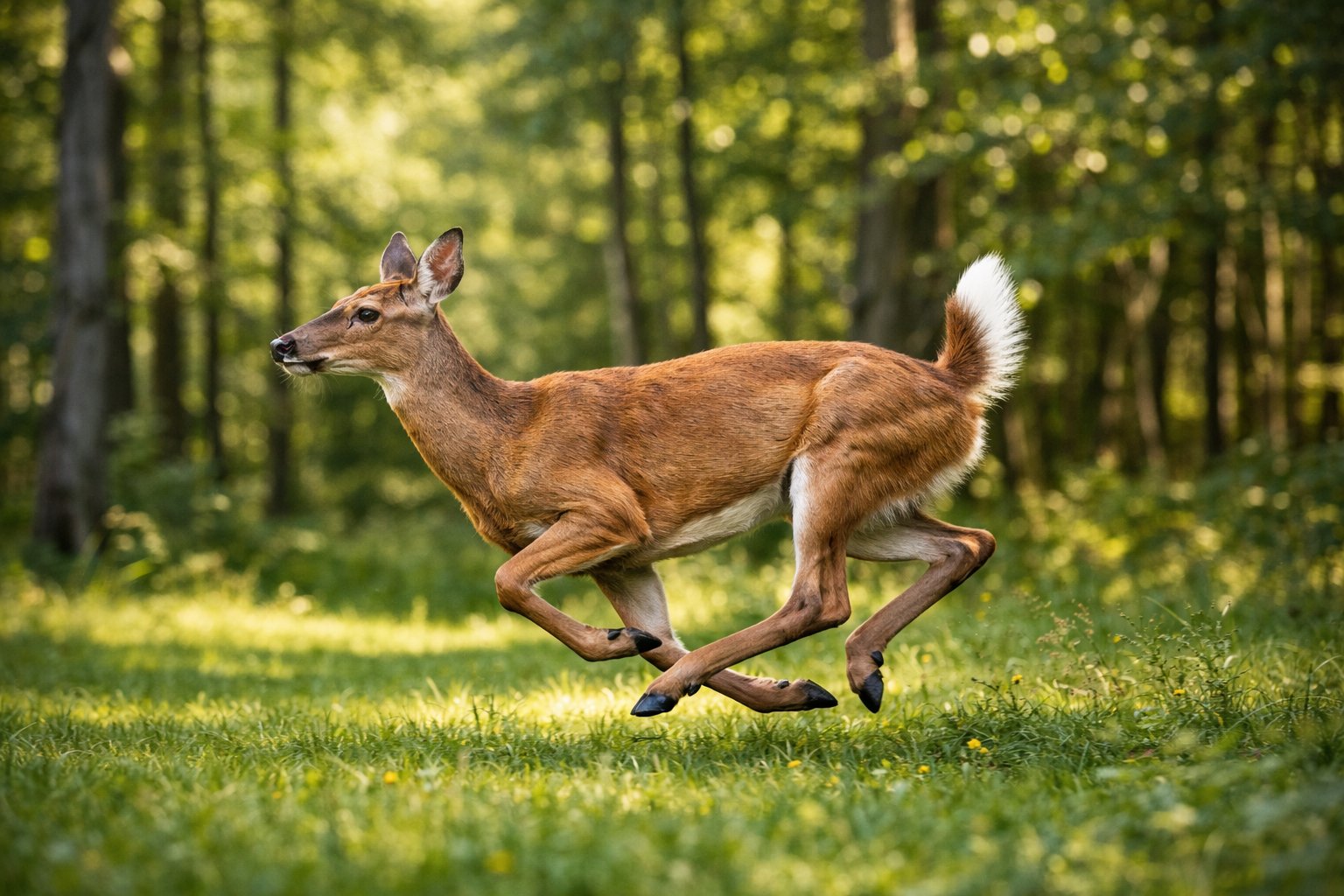
So, which deer species actually run the fastest? What in their bodies lets them move like that? And just how long can they keep up those sprints? I’ll break down the facts, plus a few things you might not expect about how and when deer make their speedy escapes.
Deer Running Speed: Key Facts & Top Species

Deer hit high speeds in short bursts, and it really depends on the species, their size, and the ground they’re covering. Let’s look at the usual sprint ranges, which species top the speed charts, and how the most common North American deer stack up.
Typical Running Speeds and Sprints
Most deer don’t go for long-distance runs—they’re all about those short, powerful sprints. A white-tailed deer, for example, can hit about 30 to 40 miles per hour when it takes off. They accelerate fast and zigzag like pros to shake off predators.
But here’s the catch: deer can only keep that top speed for a few seconds, maybe a few hundred yards at most. Their bodies just aren’t made for marathons. Long legs, strong hindquarters, and flexible spines give them that explosive power, but not much endurance at their fastest pace.
Deep snow, thick brush, injuries, age, or heavy antlers can slow them down. Open fields let them hit their best speeds, but in dense woods, they have to rely more on agility than pure speed.
Fastest Deer Species and Record Holders
Not all deer run at the same pace. Caribou (yep, reindeer) and some elk can actually go faster than the smaller species. Caribou sometimes clock in at around 50 mph for short bursts. Elk? They can push about 45 mph when really motivated.
Mule deer and pronghorns are up there too. Mule deer sprints sometimes get reported as high as 50 mph, though most land in the mid-30s. European red deer are usually in the 30–40 mph range.
Size plays a role. Moose, for example, can move surprisingly fast for their size, but they usually don’t outpace caribou or elk. Those extreme top speeds? They’re just for short dashes.
North American Deer Speed Comparison
If you’re in North America, here’s what you can expect. White-tailed deer usually sprint at 30–40 mph. Mule deer sometimes edge a bit higher, with some reports putting them close to 50 mph, though that’s rare. Elk can reach about 45 mph, and moose, while fast for their bulk, generally don’t beat elk.
The terrain matters a ton. Out on open plains, mule deer and elk show off their top speeds. In forests, white-tailed deer use sharp turns more than outright speed. Here’s a quick cheat sheet:
- White-tailed deer: ~30–40 mph
- Mule deer: ~35–50 mph (depending who you ask)
- Elk: ~45 mph
- Caribou (reindeer): up to ~50 mph
- Moose: quick for their size, but usually a bit slower than elk
For more details: How Fast Are Deer? Top Speeds and How It Compares to Its Predators.
Anatomy, Survival, and Factors Influencing Speed
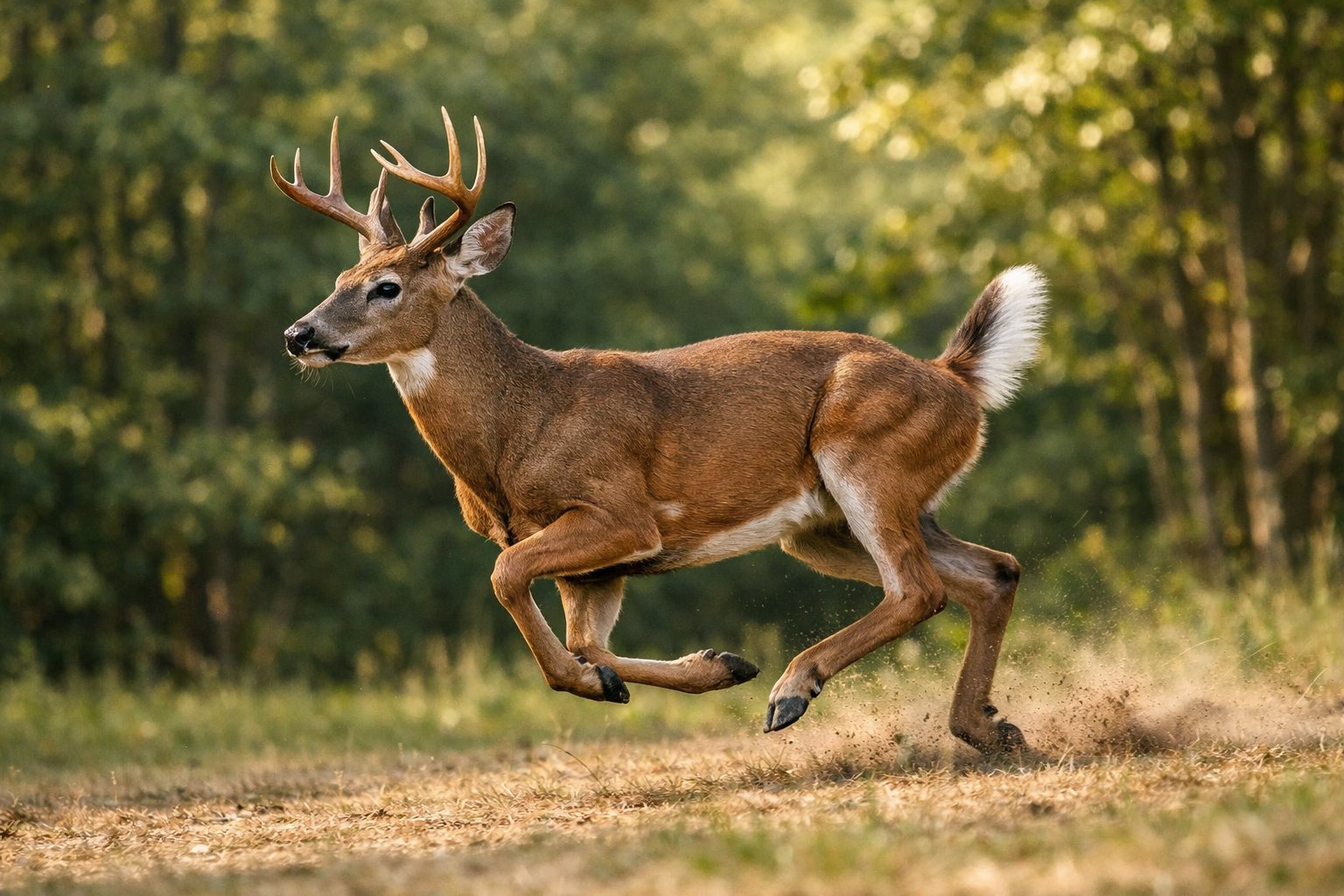
Let’s dig into how a deer’s body actually helps it run, how it uses that speed to survive, and what really affects how fast it can move. Here’s what matters most: muscles, legs, predators, and the limits on those sprints.
Deer Anatomy and Built-In Advantages
Members of the Cervidae family have long, slim legs that give them a long stride and quick acceleration. Their hind legs store energy like springs, thanks to tendons and ligaments, so you’ll see those crazy-fast bursts and high jumps. A flexible spine lets them stretch their stride even more, and lighter bones mean running doesn’t wear them out as quickly.
Their muscles favor fast twitch fibers in the hindquarters. That means they hit top speed fast, but can’t keep it going for long. Hooves give them traction on all kinds of ground, and dewclaws add grip if things get rough. Their eyes sit on the sides of the head, giving them a wide field of view—handy for spotting threats before it’s too late.
Survival Strategies and Predator Evasion
Deer don’t just rely on speed—they mix in a bunch of tactics to dodge wolves, coyotes, cougars, and, of course, human hunters. When startled, a whitetail or roe deer bolts in a sharp burst and throws in zigzags to lose whoever’s chasing. You’ll see them leap over fences and logs—some can clear 8–10 feet high or cover impressive distances in a single bound.
They also use signals, like raising a white tail or stamping, to warn others and maybe even confuse predators. In open areas, deer count on straight sprints. In forests, they lean on agility and cover. Compared to pronghorns, which can keep up high speeds for miles, deer go for quick, agile escapes instead of endurance.
Factors That Influence How Fast Deer Can Run
Age, health, and species really play a big role here. Young, healthy deer usually outrun older or injured ones.
White-tailed deer can sprint up to about 30–35 mph, but only for short bursts. Mule deer and caribou sometimes push even higher, though not for long.
Terrain? That changes everything. On smooth, open fields, a deer might hit its top speed. Thick brush or deep snow, though, slows them way down.
Weather and motivation count too. If a deer gets spooked, it’ll bolt much faster than one just wandering around.
Seasonal stuff—like the rut—might make them more active, but it doesn’t really boost their max speed. And let’s not forget hunting pressure. In areas where people hunt, deer stick to cover and make quick, short dashes instead of running long distances.


