
You’ll spot deer sleeping on moorlands, tucked deep in woodlands, or hidden inside thick hedgerows across the UK. They seem to pick places that give them cover, a quick exit, and a decent view in case danger shows up.
Want to find out where deer sleep? Look for flattened grass, narrow paths through bracken, or quiet banks near feeding spots. Those are usually signs of recent bedding sites.
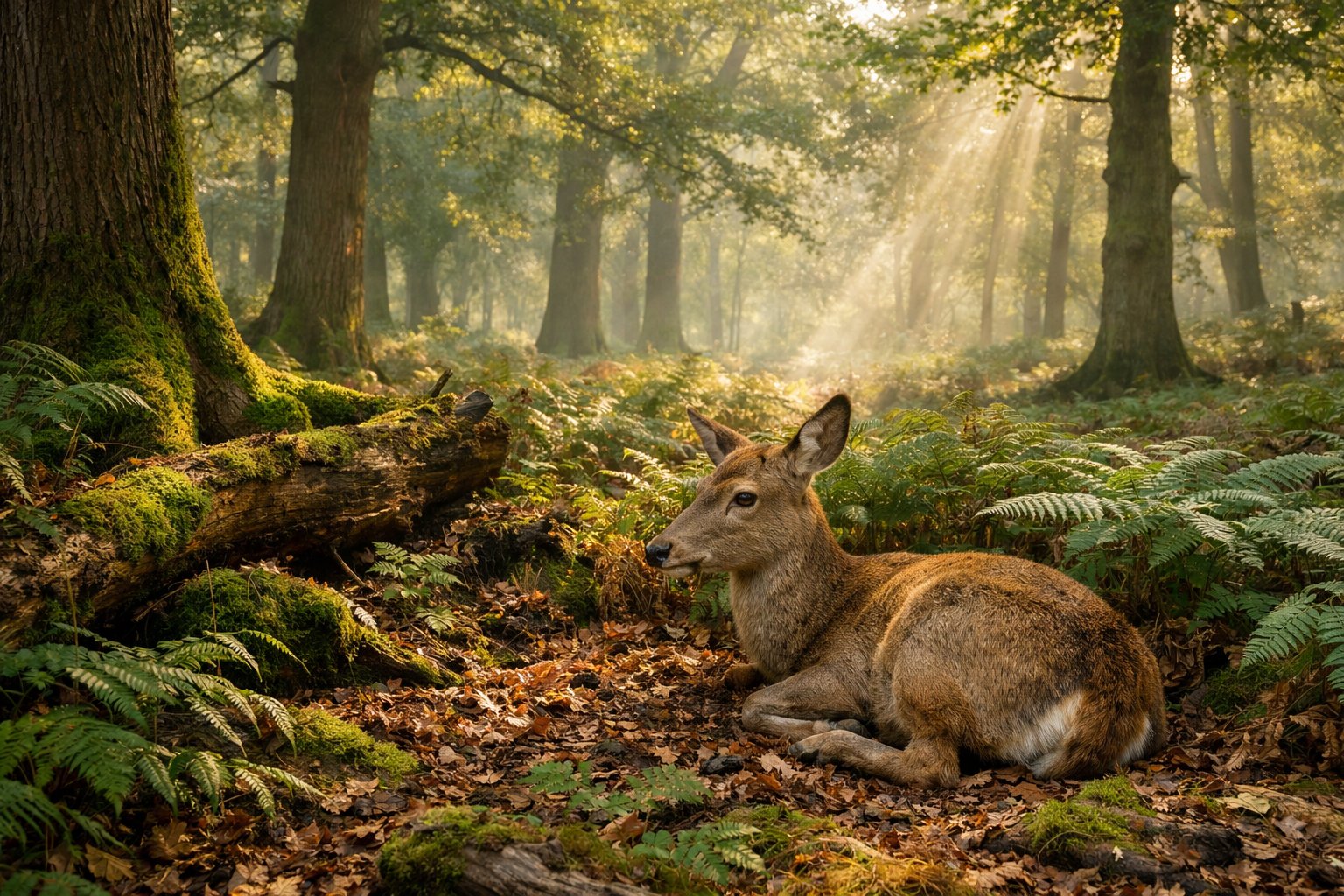
Bucks, does, and fawns all have their own preferences for bedding spots. These choices shift with the seasons, the weather, and even how many people are around.
Let’s get into the exact places deer like to sleep in the UK and what their sleeping habits look like.
Where Deer Sleep in the UK

Deer tend to pick sheltered spots that give them cover, warmth, and a fast escape if they need it. You’ll usually find their beds near food, with a good view, and in places that block wind and keep them hidden.
Common Bedding Locations for Deer
Across the UK, deer often curl up in evergreen thickets, thick hawthorn, or under old conifers. Those branches block out the wind and help keep the ground dry.
Beds often show up along woodland edges and hedgerows, right where deer can slip into grazing fields or make a quick getaway. In open areas, you might see patches of flattened grass in tall vegetation—does use these for hiding fawns.
Bucks seem to like higher ground or small ridges that have some cover, so they can keep an eye out for trouble. Around wetlands and marshes, deer sometimes bed on little raised hummocks to stay dry and away from predators.
Seasonal Changes in Bedding Spots
When winter hits, deer shift to south-facing slopes and thick evergreens. These spots catch a bit more sun and keep out the cold wind.
They’ll bed closer to food like young shoots or coppiced woods so they don’t have to walk far. In spring and summer, they move into thicker understory, tall grass, and bramble patches. This helps hide fawns and keeps them cool.
During rut or hunting season, deer get a bit more cautious. They switch up their bedding spots more often and pick places that are harder to reach. Bucks especially might head for more isolated or higher ground.
If you plant cover crops or keep hedgerows healthy, you’ll notice deer start bedding in those spots.
Daytime vs Nighttime Sleep Patterns
By day, deer take short, light naps in hidden bedding areas. Their ears flick and they’re always ready to bolt.
You won’t see them in deep sleep during daylight unless they feel really safe. At night, deer get more active looking for food, but they’ll rest in beds with a wide view—often near field edges or clearings.
Does sometimes bed in groups with fawns nearby for safety. Bucks, on the other hand, usually bed alone and move between spots to stay undetected.
If you’re out looking for bedding signs, check for oval depressions, flat patches of grass, and tracks nearby. That’s usually a fresh bed.
How Deer Sleep and Bedding Behavior

Deer rest in short bursts and always choose beds that keep them hidden with a good escape route. Let’s dig into how often they sleep, whether they group up, how age and sex matter, and if they ever sleep standing up.
Deer Sleep Habits and Schedules
Deer are mostly crepuscular, so you’ll spot them moving around at dawn and dusk. They feed a lot during those times, then take several short naps both day and night.
They usually rack up about 8–12 hours of rest in 24 hours, but deep, proper sleep only comes in short spells. Rest periods can last just 3–15 minutes when they’re partly alert.
If they feel safe in thick cover, they might get deeper sleep for 15–30 minutes. Weather, moonlight, and people being around all change their routine—on bright nights, they hide in thicker cover, and during hunting season, they bed farther from trails.
Fawns sleep more during the day and hide in tall grass while their mothers feed nearby.
Group vs Solitary Sleep
You’ll notice females often bed in groups, while males stick to solo spots. Does with fawns tend to cluster together and share the job of keeping watch—one feeds, another keeps an eye out.
This group setup helps protect the fawns and lets mothers keep tabs on their young. Bucks, like roe and fallow males, usually bed alone.
They pick spots with a good view or on ridges to spot threats and dodge competition. Bedding alone also cuts down on disease spread and keeps things quiet during the rut.
In towns or suburbs, deer sometimes get more relaxed about neighbors if there’s plenty of food.
Differences Between Age and Sex
Young deer, or fawns, hide still in thick vegetation for hours. You’ll hardly see them move, except when their mum comes back to nurse.
Their beds are tiny, well-hidden, and close to where the doe sleeps. Adult females stay near feeding spots and choose dense cover to keep fawns safe.
Adult males pick higher or more hidden beds and move around more during hunting season. Different species make different choices—white-tailed deer might use field edges, fallow deer like thick scrub, and roe deer pick small, dense patches.
Your own sightings will depend a lot on the habitat and time of year.
Do Deer Sleep Standing Up?
Deer almost never actually sleep while standing. Sometimes, you might catch them dozing lightly on their feet, but that’s only when they’re super alert.
These little micro-naps help them save energy and stay ready to bolt if something spooks them.
When deer need real sleep, they lie down. You’ll notice an oval-shaped depression in the grass or leaves, plus some flattened plants nearby.
They only get deep sleep if they feel safe—usually in thick cover or with other deer around. If you stumble across a spot with a bed, tracks, and droppings, chances are a deer has picked that place for a proper rest.


