
Spotting a group of deer can really make you pause. Most people call a group of deer a herd, and knowing that term lets you describe what you saw without second-guessing yourself.
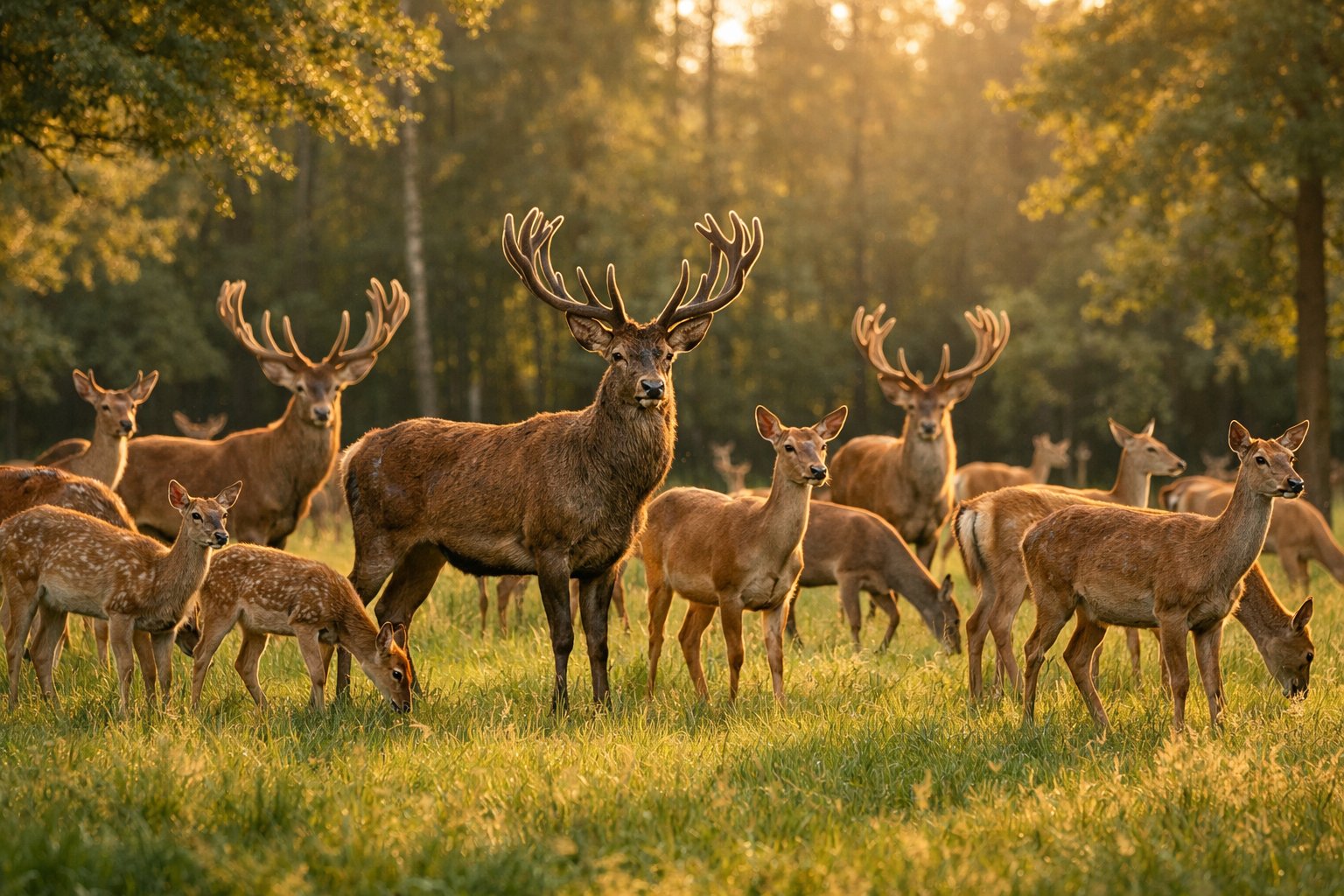
But “herd” isn’t the only word people use. Deer groups actually shift in size and shape as the seasons change.
Curious why does usually lead these groups? Or how stags show up during the rut? Let’s dig into what a herd’s behavior can reveal about deer life.
What Is a Herd of Deer Called?

You’ll learn the main name for a deer group, some quirky alternatives, and how to use the plural form. Each has its place, but some just feel more natural.
Origin and Meaning of ‘Herd’
People use “herd” as the standard collective noun for deer. The word goes way back to Old English, where it described animals moving or living together.
These days, biologists and writers pick “herd” because it clearly means a social group of grazing mammals.
Deer gather in herds for safety, food, or migration. You might spot small herds of white-tailed deer in the woods, but elk or caribou sometimes form huge herds.
If you call a group a herd, most folks picture a loose social unit, not a tightly organized pack.
Use “herd” in both formal writing and casual conversation. It covers all deer species and avoids confusion.
Other Collective Nouns for Deer
Some people like to spice things up with terms like “bevy,” “rangale,” “parcel,” or even “mob of deer.” Each one has its own vibe.
“Bevy” usually means a small, graceful group, often of does. “Parcel” sometimes points to a bunch of young deer.
You’ll see “rangale” and “mob” in older books or regional speech. If a group looks jumpy or wild, someone might call it a “mob of deer.”
Still, most readers expect “herd.” If you’re writing for wildlife fans, pick a word that matches the group’s size or mood. For everyone else, stick with “herd” unless you need to be extra specific.
Plural Form and Usage
The plural of deer? It’s just “deer.” No one says “deers,” and honestly, it sounds weird.
So, you’d write “one deer” or “many deer.” This rule sticks, no matter the species.
When you talk about groups, use the plural right: “a herd of deer,” “a bevy of deer,” or “a parcel of young deer.” Don’t mix things up with “a herd of deers”—that just throws people off.
In conversation, context helps. Say, “I saw a herd of deer near the field,” and people will know what you mean without any fuss.
Herd Structure and Deer Social Life

Deer groups aren’t random. They form around family, age, and the time of year.
You’ll notice female-led family units, wandering males, and bachelor groups. Everything shifts when breeding season hits.
Deer Group Composition by Gender and Age
Does (female deer) usually lead the family. You’ll spot related does with their fawns and yearlings sticking close and feeding together.
These groups help fawns figure out where to eat and how to spot danger.
Young bucks might hang around with their mothers for a bit, but eventually, they drift off or keep to the edges.
Mature bucks (stags) tend to live solo or join small groups of other males, except when it’s time to mate.
Species make a difference. White-tailed and mule deer often form doe-led groups, while elk and caribou can gather in larger mixed groups.
Bucks’ antlers show status—velvet covers growing antlers in spring, then falls away before the rut.
Seasonal Changes in Deer Groups
Seasons really shake things up. In spring and summer, you’ll mostly notice smaller family groups.
Does hide their fawns and teach them to forage when food is plentiful, so groups stay spread out.
Once fall arrives, the rut (breeding season) kicks in. Bucks start looking for does, and suddenly the sexes mix more, with plenty of fights over mates.
Winter’s a different story. Deer sometimes gather in big numbers, called deer yards, where they huddle for warmth and search for scarce food.
Predators and deep snow push them to cluster in these safe spots.
Bachelor Groups and Rutting Season
When it’s not mating season, bucks often hang out in bachelor groups with other males their age.
You’ll see loose pecking orders here, usually set by size and antler growth.
Bachelor groups let bucks save energy and avoid fighting all the time.
But come rut, bucks split off to find does. Mating season brings out the drama—chasing, sparring, and lots of showing off.
Antlers matter a lot in these battles. After the rut, bucks drop their antlers, shed velvet depending on health, and usually rejoin bachelor groups to recover.
Factors Influencing Herd Size
Food, predators, and habitat all play a part in how big a herd gets. When there’s plenty to eat—think lush fields or carefully managed land—you’ll see bigger groups.
But when food runs low or winters get rough, deer start to wander and split up, just trying to find enough to eat.
Predators? They change everything. If there’s a lot of danger, deer stick closer together or hide out in thicker cover, hoping for safety.
People influence things, too. Hunting rules, human activity, and the difference between forests and open plains all affect how many deer gather—and whether those groups last.


