
You can spot six wild deer species across the UK: red, roe, fallow, sika, muntjac, and Chinese water deer.
Each of these six species has its own size, markings, and habits. Once you pick up on a few key features, you’ll start noticing which is which while out walking or driving around.
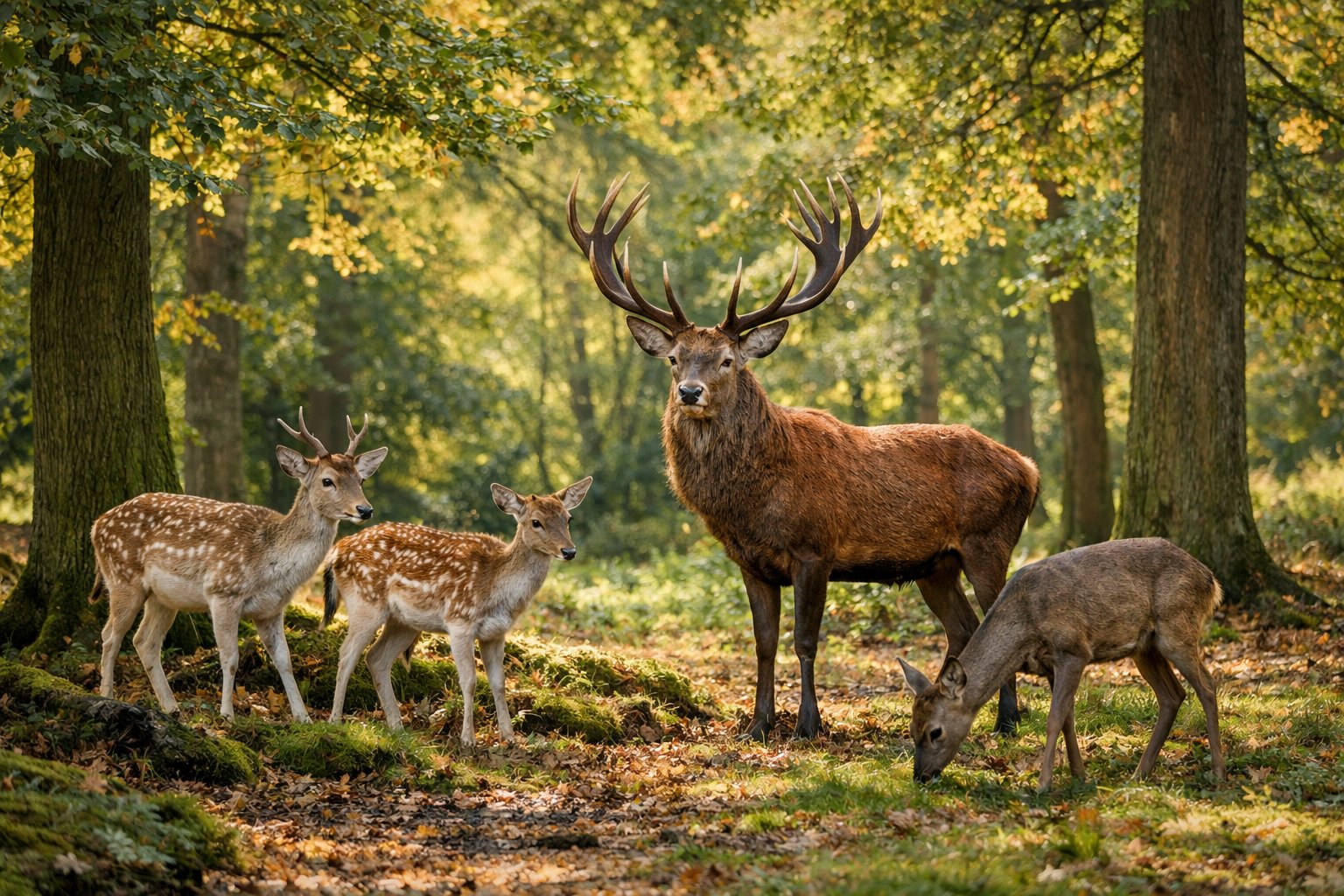
Let’s look at where each species lives and why certain places suit them best. Some prefer open hills, others stick to reed beds or wood edges.
You’ll see how their behavior and habitats shape the British landscape. Some species are spreading out, while others stay pretty local.
Next time you’re in the countryside, keep an eye on things like size, antlers, and tail shape. Those clues can help you tell a red deer from a muntjac or Chinese water deer.
Types of Deer in the UK
Britain has six wild deer species. Each one stands out in size, antler shape, habitat, and where you’re most likely to spot them.
Red Deer
Red deer (Cervus elaphus) are the UK’s largest native deer. Males, or stags, can weigh over 200 kg and grow broad, branching antlers every year.
Females, called hinds, don’t have those big antlers. You’ll mostly see red deer in Scotland’s Highlands, but they also show up in parts of southern England and in deer parks.
Red deer use woodlands, moorland, and open hills. In autumn, during rutting season, stags roar and fight to attract hinds.
They graze on grasses, heather, and young shoots. Outside the rut, red deer form loose herds and move around to find food.
If you want more on their habits, check out the British Deer Society’s guide to red deer.
Roe Deer
Roe deer (Capreolus capreolus) are smaller and more compact than red deer. Adult bucks grow short, upright antlers with three points, while does are smaller and don’t have antlers.
You’ll often spot roe at woodland edges, hedgerows, and fields across much of England, Wales, and Scotland. They’re agile and tend to freeze or dart away if startled.
Roe are browsers and eat leaves, buds, and crops. They breed in late summer, but delay embryo development, so fawns usually arrive in late spring.
Roe numbers have climbed after woodland regrowth, making them one of the most common British deer.
Fallow Deer
Fallow deer (Dama dama) come in several coat colours—common brown, pale, and black. Males grow palmate (flattened) antlers that look a bit like broad hands.
They’re medium-sized, lighter than red deer. You’ll see fallow in parklands, mixed woodland, and farmland.
The Normans probably introduced them, and now they’re widespread in England and Wales, with scattered groups in Scotland.
Fallow deer form larger herds outside the breeding season. During autumn, males show off with noisy calls and characteristic lekking.
Their grazing can affect young tree growth and ground plants, especially in parks and woods.
Sika Deer
Sika deer (Cervus nippon) came from East Asia and now live in parts of Scotland, Northern Ireland, and England. Their coats can be spotted or dark, and stags have slender, pointed antlers.
You’ll find sika mainly in coniferous woodlands, heathland, and moorland. Their range keeps expanding, especially in western Scotland, where they sometimes hybridise with red deer.
Sika are pretty vocal, giving high-pitched whistles during the rut. They browse and graze, eating grasses and heather.
Their growing numbers worry some folks because of possible impacts on native deer and woodland plants. There’s more research on expanding sika populations.
Muntjac Deer
Reeves’ muntjac (Muntiacus reevesi) are small—think the size of a big dog. Males have short antlers and noticeable canine tusks.
Their coat is reddish-brown and their bodies are quite stocky. You’ll mostly spot muntjac in southern and central England, where they spread quickly after escaping or being released.
They live in woodland, gardens, and hedgerows, and you’ll usually see them alone. Muntjac browse on understorey plants, seedlings, and even garden plants.
Their feeding can damage young trees and slow woodland regrowth. They breed year-round, and their small size helps them hide in dense cover, which makes them tough to control.
Chinese Water Deer
Chinese water deer (Hydropotes inermis) don’t grow antlers. Instead, males have long, tusk-like canine teeth.
They’re small, with a dove-grey coat and a pale belly. You’ll find them in lowland reed beds, river valleys, and wet fenland—mainly in East Anglia and the Midlands.
Their range is pretty limited but stable in those areas. Chinese water deer eat reeds, grasses, and crops, and they prefer wet spots with dense cover.
Since they lack antlers, you can pick them out by their small size and visible canines. The British Deer Society and others map their local distribution.
Habitats and Ecology of British Deer

British deer live in all sorts of places—from thick woodlands to open moors. Some species stick to dense broadleaf trees, while others like heath and moor, and a few have gotten used to farms and hedgerows.
Woodland Ecosystems
Woodland supports lots of deer, especially roe and fallow. Roe deer tend to hang out at the edges and in copses, feeding on shoots and herbs.
Fallow deer thrive in mature broadleaf woodland with some understorey and in open parkland where they graze and browse young trees.
Broadleaf woodland gives shelter and food year-round. It also offers cover for young deer and a place to escape predators and busy roads.
In coppiced or mixed woods, regrowth supplies fresh shoots that help deer through winter. If you walk in woodlands, you’ll notice how deer make clear paths and small glades by grazing.
These changes can shape plant communities and sometimes help wildflowers. But if there are too many deer, they can harm tree regrowth.
Distribution Across the UK
Different species gather in specific regions. Scottish red deer are common across the Highlands and on moorland, using open hills and woodland edges.
Roe deer are widespread across England, Wales, and parts of Scotland. You’ll often see them near hedgerows and small woods.
Fallow deer are common in England and Wales but patchy in Scotland. Reeves’s muntjac and Chinese water deer have spread through southern and central England, with muntjac expanding quickly thanks to human movement.
Sika deer are increasing in Scotland and Northern Ireland and prefer acidic soils, like heath and conifer woods.
You can check local maps to see where deer live and how their ranges change. Sightings and surveys help track expanding populations as things shift over the years.
Deer Antlers and the Rut
Most male deer grow antlers, which show age, health, and nutrition. Red, fallow, sika, roe, and muntjac males all grow antlers each year.
Antlers start as velvet in spring, harden in summer, and shed velvet before the rut. Chinese water deer don’t have antlers—they have visible tusks instead.
The rut is the breeding season, and timing varies by species. Red deer rut in autumn on the hills; stags roar and clash antlers to compete for mates.
Roe deer have a shorter, intense rut, with males defending small territories. During the rut, you’ll hear loud calls and see visible fights, while males focus on mating and eat less.
Antler condition matters to females and for male dominance. If food is scarce or there’s a lot of disturbance, antlers might end up smaller and breeding success can drop.
Conservation and the British Deer Society
You can pitch in by reporting deer sightings and learning about how these animals shape their habitats.
The British Deer Society keeps track of where deer live across the UK. They also share tips on identifying different species and how to manage them.
Their surveys keep revealing shifts in deer ranges, which really helps guide conservation efforts.
Managing deer means juggling their welfare, forestry needs, and agriculture. When deer populations get too high, they start damaging young trees and messing with local biodiversity.
People use several conservation methods, like managing habitats, controlled culling (where it’s allowed), and putting up fences to protect trees. Public education plays a big role too.
Consider joining local groups or following advice from organisations like the British Deer Society if you want to stay in the loop.
Your reports and thoughtful actions genuinely make a difference for both deer and the woodlands they call home.


