
British deer go by simple, familiar names. Most wild deer you’ll spot in Britain are called red, roe, fallow, sika, muntjac, and water deer — these six pop up the most. That quick list gives you a head start and sets the stage for everything else here.
As you read on, you’ll find out which two species actually count as native. You’ll get some tips for telling them apart and hints about where each one hangs out in the UK.
We’ll keep the ID tips and habitat clues simple, so you can try spotting them on a walk, a drive, or maybe even a random wildlife trip.
What Are British Deer Called?

Britain’s deer include a mix of native and introduced species, each with its own common and scientific name. You’ll come across two truly native species, a few that have been around for centuries, and some more recent arrivals running wild all over the country.
Native and Introduced Deer Species
Only two species are native to the UK: the red deer and the roe deer. Red deer mostly stick to Scotland and some parts of Wales and England.
Roe deer turn up all over woodlands and farmland. Both have called Britain home since the last ice age ended.
People reintroduced fallow deer way back, first by the Romans, then the Normans. They now roam parks and woods everywhere.
Sika, Reeves’s muntjac, and Chinese water deer aren’t native. They either escaped or got released, and now they’re breeding in the wild.
Sika show up a lot in Scotland and south-west England. Reeves’s muntjac, which is tiny, keeps spreading through England. Chinese water deer, which don’t grow antlers, tend to hang out in marshy lowlands.
You can tell them apart by size, antler shape, and how they act. Red deer are big, and their stags grow branching antlers.
Roe deer are smaller, with short, upright antlers. Muntjac are tiny and have a weird habit of barking.
Water deer don’t have antlers at all, but the males show off tusk-like canine teeth.
If you want a list of species and where they live, check out the Deer of Great Britain entry.
Scientific and Common Names
Every deer species gets a common name (the one you’ll hear in conversation) and a Latin scientific name (the one the experts use). Stick to the common names like “red deer,” “roe deer,” “fallow deer,” “sika deer,” “muntjac,” or “Chinese water deer” if you’re chatting to folks.
Here’s a quick list:
- Red deer — Cervus elaphus
- Roe deer — Capreolus capreolus
- Fallow deer — Dama dama
- Sika deer — Cervus nippon
- Reeves’s muntjac — Muntiacus reevesi
- Chinese water deer — Hydropotes inermis
Scientists and wildlife managers use the Latin names to avoid confusion, especially when common names change by region. You’ll see both names in conservation reports and legal documents.
Male, Female, and Young Deer Terminology
People use special terms for male, female, and young deer. These words help with understanding behavior, hunting rules, and wildlife news.
Here’s how it breaks down:
- Red deer: male = stag, female = hind, young = calf.
- Roe deer: male = buck, female = doe or hind, young = kid or fawn.
- Fallow deer: male = buck, female = doe, young = fawn.
- Sika: male = stag, female = hind, young = calf.
- Muntjac: male = buck, female = doe, young = fawn.
- Chinese water deer: males have tusks; male = buck, female = doe, young = fawn.
You’ll also hear “rut” for the breeding season, when stags or bucks get loud and territorial. Knowing these terms makes it easier to follow wildlife news or spot signs out in the field.
The Six Main Species of Deer in Britain
Six deer species now live wild across Britain, each with its own look, size, and habits. Some have been here forever, while others arrived more recently and have settled in for good.
Red Deer (Cervus elaphus)
Red deer stand as Britain’s biggest wild deer. Adult stags can top 200 kg and grow huge, branching antlers every year.
You’ll mostly find them on Scottish moors, upland forests, and parts of south-west England.
In autumn, the rut kicks off. Males roar and clash antlers to attract hinds.
Hinds give birth to a single calf in late spring.
Their summer coat looks reddish-brown, but it turns greyer in winter. Watch for a pale rump patch and a long-legged, powerful build.
If you want to dig deeper, check the British Deer Society’s Deer Species page.
Roe Deer (Capreolus capreolus)
Roe deer come much smaller and slimmer than red deer. Bucks usually weigh between 15 and 30 kg and have short, upright antlers with a few points.
You’ll spot roe deer at the edge of woodlands, in hedgerows, and out in fields all over England, Scotland, and Wales.
They move fast and often show up around dawn or dusk.
Roe does give birth to one or two fawns in late spring.
Their coat is reddish in summer and turns brown-grey when it gets cold. You can pick out roe by their short head, black nose, and pale rump (no visible tail).
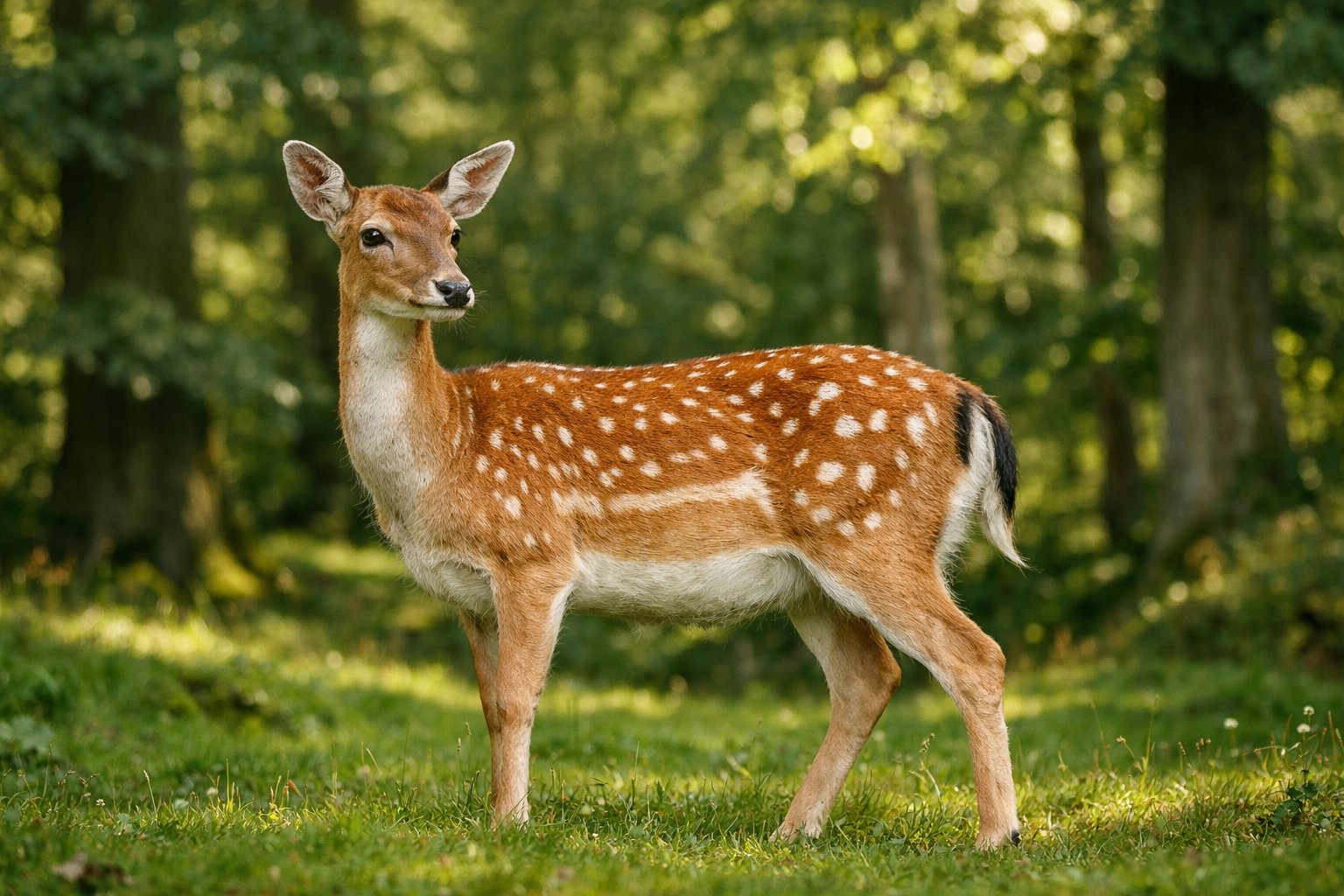
Fallow Deer (Dama dama)
Fallow deer come in different sizes and coat patterns. The “menil” type is spotted, and there’s also a darker, almost black phase.
Bucks have palmate, flattened antlers, which look pretty different from the red deer’s branching ones.
People introduced fallow deer centuries ago, and now they’re everywhere in parks, woods, and farmland, especially in England and Wales.
You’ll often find them in mixed woodland with open spaces.
They form big herds outside breeding season.
Does usually have just one fawn each year. Look for a white rump with a black border and a medium-sized body.
Sika Deer (Cervus nippon)
Sika deer originally come from East Asia, but now they’re wild in parts of Britain — especially in Scotland and Northern Ireland.
You’ll find them in conifer woods, heathland, and near moors.
Sika can be dark brown or spotted, depending on the time of year. Males grow antlers and make loud, high-pitched calls during the rut.
They sometimes crossbreed with red deer where their ranges meet.
Sika are adaptable and tend to be pretty secretive. Sometimes you’ll hear them before you see them.
They seem to prefer acidic soils and thicker cover than some other deer.
Reeves’ Muntjac (Muntiacus reevesi)
Muntjac are tiny, about the size of a big dog, and they have a hunched look. You’ll see them in southern and central England, often in woods, gardens, or hedgerows.
They have short antlers and little canine tusks. Males get territorial and call out all year.
Females can breed several times a year, so their numbers can really take off.
Muntjac mostly keep to themselves and like to stay hidden.
Their coat is fawn-brown, with a small face and a white underside. People often spot them darting across roads, and they keep spreading out from their original release spots.
Chinese Water Deer (Hydropotes inermis)
Chinese water deer are pretty small and, unlike some other deer, don’t have antlers. Instead, the males show off these noticeable, tusk-like upper canine teeth.
You’ll mostly spot them in eastern England’s wet lowlands, hanging out in reed beds or along river margins. They really seem to prefer wetlands, though you might also find them using rough grass or sticking close to woodland edges.
Bucks tend to get territorial, especially during the breeding season, and they can be surprisingly noisy when they’re worked up. Their coat’s a warm brown, and if you catch a glimpse of their short tail, you’ll notice it has a pale underside.
The species’ scientific name, inermis, actually means “unarmed.” That’s a nod to the fact that, well, these deer don’t have antlers at all.


