
Deer can hear you from hundreds of yards away—sometimes farther than you’d expect if the conditions are right. On calm, open ground, a deer might pick up footsteps in dry leaves from 200 to 400 yards away. If you drop something metal, that clang can travel up to half a mile.
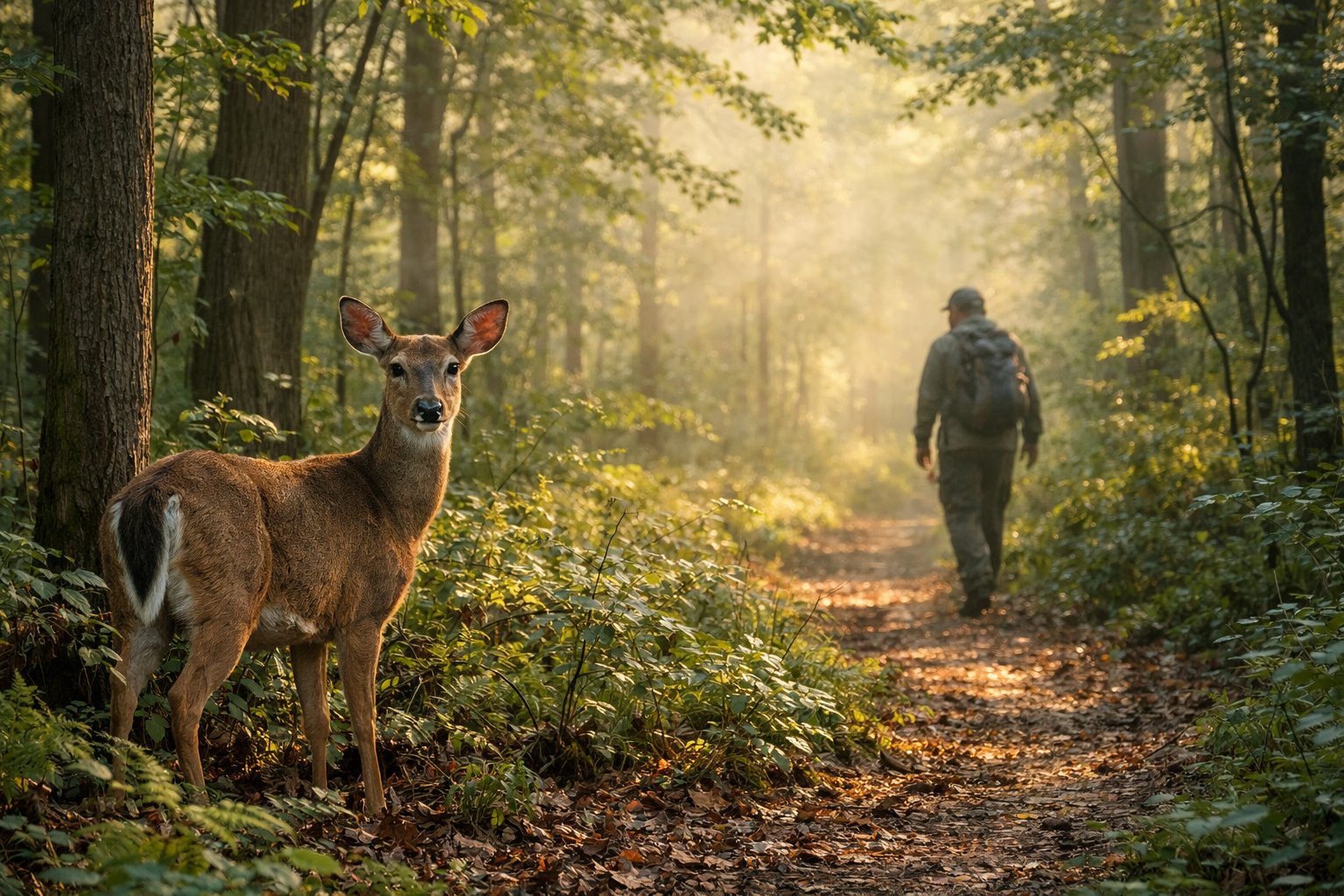
Try to walk softly and pay attention to how wind, terrain, or the crunch of leaves changes how far your sounds carry. Let’s get into what makes deer so good at picking up noises—and how you can use that to avoid getting busted.
How Far Can Deer Hear You Walking?
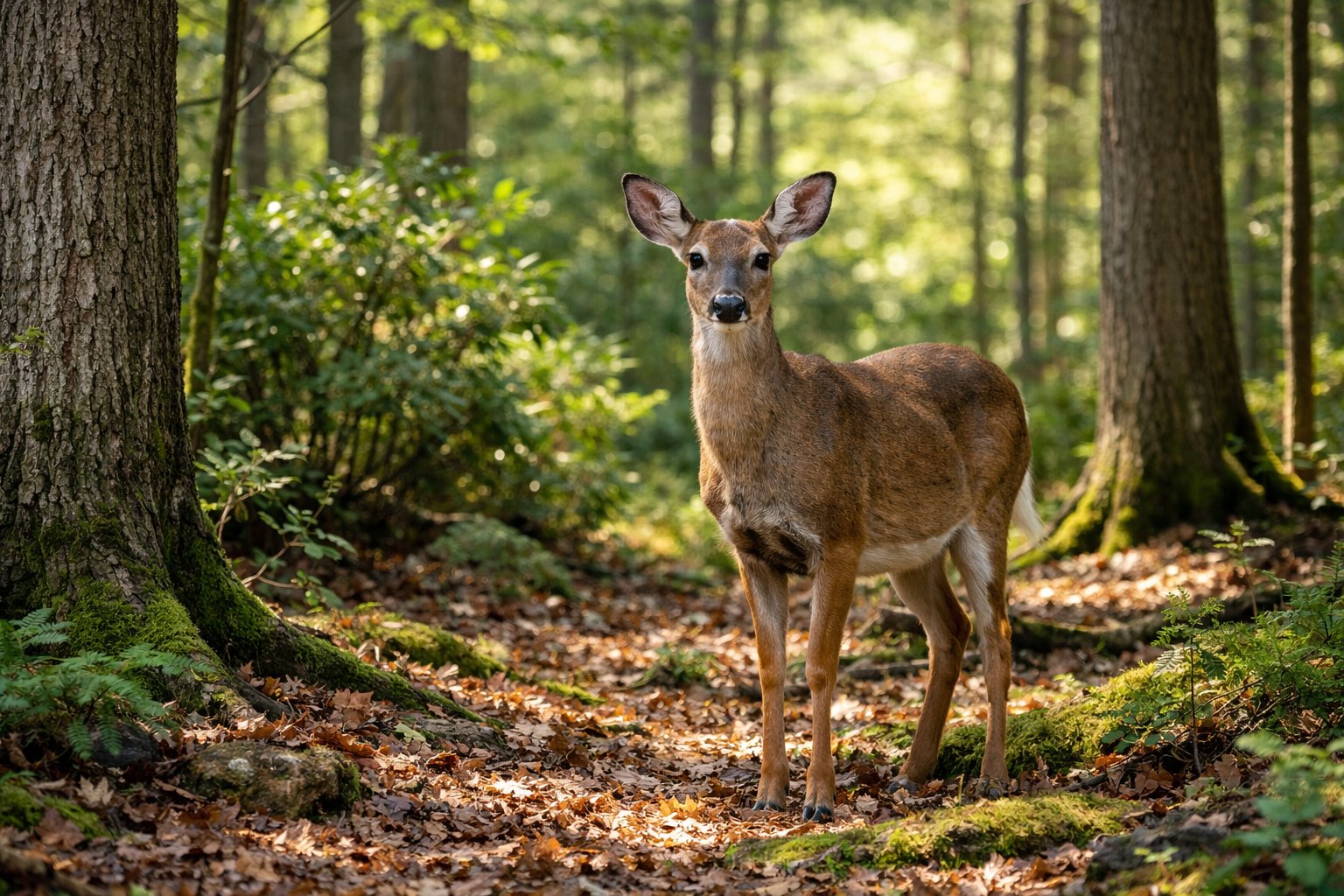
Deer can pick up even quiet footsteps from surprising distances. The way wind moves, the lay of the land, and what’s under your feet all affect how far your sounds travel.
Average Distance Deer Can Detect Footsteps
If you’re on open, calm ground, a whitetail might hear your soft steps from 300 to 500 yards away. Thick brush, steep hills, or a layer of soft leaves muffle noise and shrink that distance.
Step on dry leaves or snap a twig, and the deer might only notice you when you’re under 100 yards away. That’s still farther than most people expect.
If you stomp or run, your heavier steps send out different vibrations that don’t always travel as far, but they’re easier for deer to pinpoint. Metal gear noises—think clanking buckles—can carry shockingly far, so try to keep things quiet and secure.
Key Environmental Factors Affecting Hearing Range
Wind direction changes everything. When the wind blows from you toward a deer, your sounds travel farther, and they’ll have a better shot at picking you out. Walking downwind is always riskier for getting heard or smelled.
Vegetation and ground cover make a big difference. Sound moves farther in open fields. Thick brush, snow, or a soft layer of leaves will soak up noise and cut down the distance.
Cool, still air helps sound carry farther than warm, breezy air. Humidity and temperature both change how far your footsteps carry—something most folks forget.
Deer Hearing vs. Human Hearing
Deer pick up higher frequencies than humans ever will. Their ears catch sounds above our hearing range, so they’ll notice high-pitched noises you don’t even realize you’re making.
Humans hear best between 1,000 and 4,000 Hz. Deer? They hear up to 20,000 or even 30,000 Hz. That means they’re tuned in to little sounds you might never notice.
If you want to stay quiet, avoid crunching brittle leaves and keep anything that might rattle tucked away. Those sharp, high-pitched sounds are what deer notice first.
Sounds Deer Are Most Sensitive To
Sudden, high-frequency noises—like snapping twigs, a quick rustle, or a metal clink—catch a deer’s attention right away. Those sounds remind them of danger.
Low, steady noises like traffic or distant water usually fade into the background. Unexpected metal clangs or a burst of human voice, though, will send deer running fast.
Before you take a step, check your gear for anything loose and pick your path so you’re not stepping on noisy ground if you can help it.
The Science Behind Deer Hearing Abilities
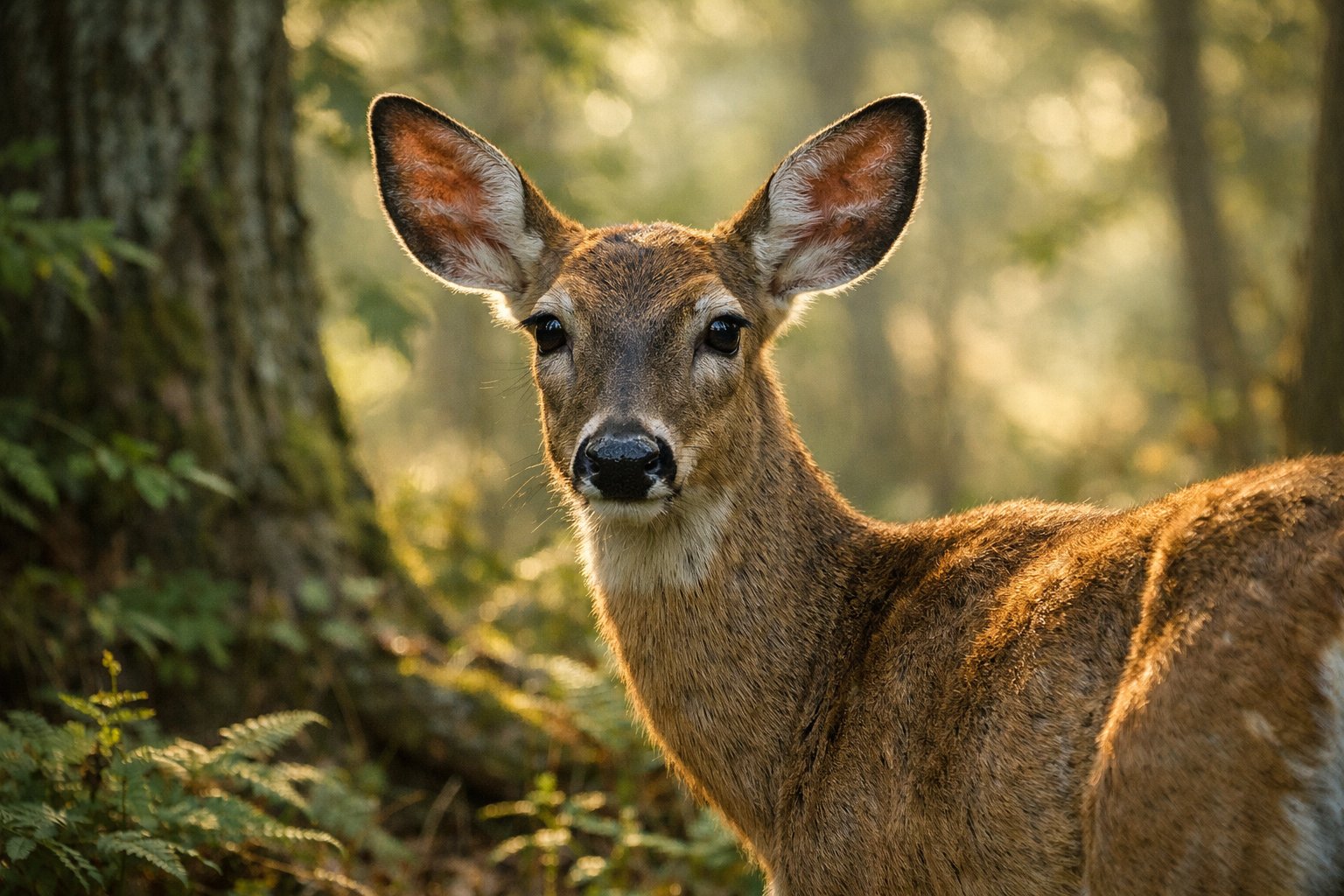
Deer rely on sharp hearing and quick ear movements to pick up sounds while you walk. Their anatomy and fast reflexes shape how they react to footsteps or voices.
Deer Ear Anatomy and Pinnae Function
Deer have big, mobile ears—called pinnae—that swivel independently. Each ear can turn to focus on a sound, so when you step on a twig, they can instantly figure out where you are.
The outer ear works like a funnel, grabbing sound and boosting higher frequencies. Muscles at the base let them move their ears in a flash, sometimes in less than a second.
When you walk, pay attention to where the deer’s ears point. If they turn toward you or pin back, the deer probably heard something. Hunters often freeze or change their path if they spot that behavior.
Frequency Range and Sensitivity
Deer hear higher frequencies way better than we do. That lets them pick up the faint crack of a leaf or the snap of a branch from farther away.
Low-frequency sounds, like human speech, don’t carry as well through forests. Wind, terrain, and what’s on the ground all change how far each sound travels. For example, dry leaves make high-frequency crunches louder, but fresh snow muffles everything.
Move slowly and watch out for high-pitched noises—like metal zippers or brittle sticks. Those are the sounds that’ll give you away first.
Deer Vocalizations and Auditory Processing
Deer talk to each other with grunts, bleats, and snorts. Bucks grunt during the rut, does bleat for their fawns, and snorts warn of danger. These calls fall right in the range where deer hear best.
If you cough, exhale sharply, or whisper, you might accidentally mimic an alarm sound. Deer pick up on that and go on high alert. They also learn from experience—deer near roads might ignore cars but still jump at the sound of a person talking or walking too close.
When you hear a deer vocalize, stop and watch. Their ears and head movements tell you how they’re processing what they hear. Sometimes, the best move is to freeze or quietly back away.
Camouflage, Movement, and Stealth Techniques
Visual camouflage can help you blend in, but honestly, it doesn’t do much to quiet your footsteps. Deer really depend on their hearing, so moving quietly actually matters more than picking the perfect camo pattern.
I usually go for quiet fabrics and soft-soled boots—those crunchy leaves and twigs can give you away fast. Take short, careful steps, and if you can, check where you’re about to put your foot before you commit.
Natural cover helps a ton. I use bushes, logs, or thick patches of grass to soften my sounds. If the wind keeps changing, I try to approach from downwind so deer won’t catch my scent or the sound of my breathing.
Skip the metal gear if you can—it always seems to jingle at the worst moment. Tighten straps and pick a pack that doesn’t squeak or rustle. When I have to cross a noisy patch, I stop a lot, try to breathe quietly, and give the deer time to settle down before I move again.
All these little choices make it a lot less likely a deer will pick up on you by sound.


