
It might surprise you, but the world’s smallest deer hides out in the thick forests of South America. Honestly, it almost looks more like a pocket-sized fawn than a grown deer. The tiniest deer on record? That’s the pudu—a quirky little genus with two species: northern and southern pudu.
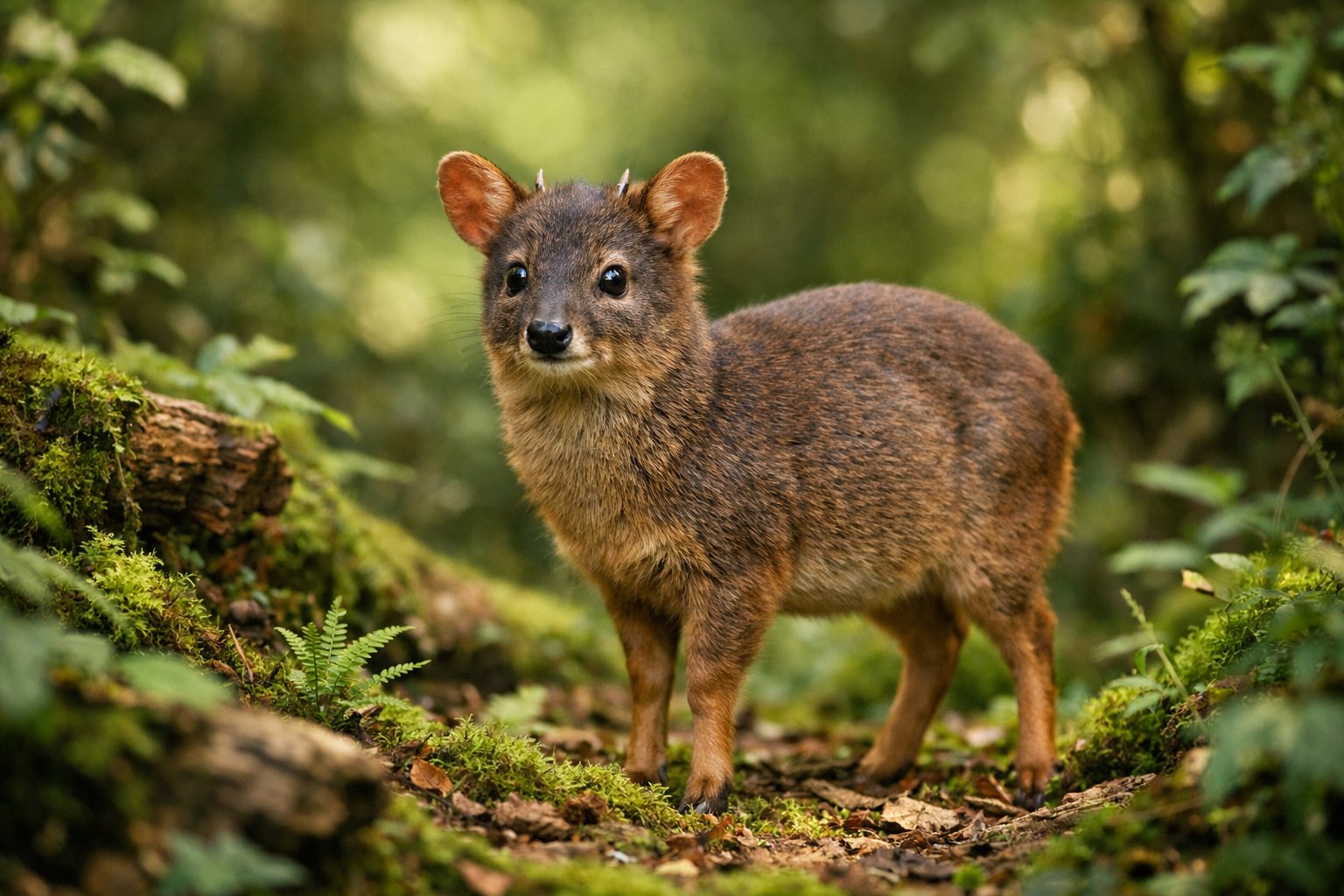
Let’s take a look at how these miniature deer move, eat, and dodge danger. People are actually pretty concerned about their future, too.
We’ll get into what makes pudus so unique and what folks are doing to protect them.
What Is the Smallest Known Deer in the World?

Meet the pudu. These two tiny South American deer species hold the record as the world’s smallest true deer.
They stand about as tall as a small dog and stick to the forests of the Andes and southern Chile.
Pudu: The Miniature Marvel of the Deer Family
Pudus really do look much smaller than your average deer. Adults only reach 32 to 44 cm (13–17 in) at the shoulder and weigh somewhere between 3.3 and 13 kg (7–30 lb), depending on which species you’re looking at.
They’ve got short legs, round ears, and a chunky body—almost like someone shrunk a regular deer and made it cuter.
Only the males grow antlers, and they’re not much—just short, backward-curving spikes. Their fur feels bristly and runs from brown to reddish-brown.
You’ll usually spot pudus in thick underbrush or bamboo patches, where their tiny bodies let them slip through tight spaces and stay out of sight.
Key details:
- Size: 32–44 cm tall
- Weight: 3.3–13 kg
- Antlers: short, spiked (males only)
- Habitat: temperate rainforests, dense undergrowth
Southern Pudu vs. Northern Pudu
There are actually two pudu species, and they’re not quite the same. The southern pudu (Pudu puda) lives in southern Chile and parts of southwest Argentina.
It’s a little bigger, usually 35–45 cm tall and up to about 13 kg. Its coat is often darker and thicker.
The northern pudu (Pudu mephistophiles) hangs out in Colombia, Ecuador, Peru, and Venezuela, sticking to higher elevations (2,000–4,000 m). It’s the smallest of them all, just 32–35 cm tall and weighing 3.3–6 kg.
The northern pudu’s coat is lighter, but its face is sometimes darker.
Status-wise:
- Southern pudu: Near Threatened
- Northern pudu: Data Deficient
How Pudu Compares to Other Small Deer
You might hear about other tiny deer, but pudus are the smallest true deer in the Cervidae family. Chevrotains (the so-called mouse-deer) are even smaller, but they don’t belong to the deer family at all.
Other small deer species? They’re usually both taller and heavier.
Quick comparison:
- Northern pudu: ~32–35 cm, 3.3–6 kg
- Southern pudu: ~35–45 cm, up to 13 kg
- Other small deer: usually over 45 cm and heavier
Pudus act differently, too. They tend to be solitary, secretive, and most active at dawn and dusk.
Their forest homes are thick with cover, which honestly helps them stay hidden and lets them snack on low plants.
If you want to dig deeper, you can check out the full pudu entry on Wikipedia.
Natural History and Conservation of the Pudu

Pudus live tucked away in cool, rainy forests and mountain areas. These tiny, shy deer have short antlers, reddish-brown coats, and actually help spread seeds in their habitats.
Let’s talk about where they live, what they look like, how they act, and the threats they’re up against.
Habitat and Geographic Distribution
Pudus roam South America, mostly across the Andes and in temperate forests. The northern pudu prefers high-elevation forests in Colombia, Ecuador, Peru, and some parts of Venezuela—usually between 2,000 and 4,000 meters.
The southern pudu sticks to Chile and Argentina, from the lowland Valdivian rainforests up into the Andean foothills.
They love thick understory: bamboo, mossy ground, and shrubby spots that keep them hidden. These places give pudus cover from predators and let them munch on leaves, shoots, and fallen fruit.
When roads, logging, or farmland break up their forests, pudus get stuck in smaller patches. That makes it harder for them to move safely and find new mates.
Physical Features and Adaptations
Pudus only stand about 30–35 cm at the shoulder and weigh between 3 and 13 kg, depending on the species and sex.
They’ve got chunky bodies, short legs, and round heads. Males grow little, backward-curving antlers—just about 6 cm long. Females don’t have noticeable antlers, which makes it easy to tell them apart.
Their reddish-brown to dark brown coat blends in with the fallen leaves and shadows. Pudus mostly come out at dawn and dusk, staying out of sight during the day to avoid predators like pumas, foxes, and big birds.
They use scent marks and soft calls to keep in touch or claim their patch of forest.
Life Cycle and Reproduction
Pudus breed during specific seasons, depending on where they live. Males mark their territory with scent and sometimes fight each other for a mate.
After mating, females carry their young for about 200 days and usually give birth to just one fawn.
Newborn pudu fawns are tiny and almost invisible among the undergrowth. Mothers hide them away for a few days, only coming back to feed.
Within weeks, fawns start nibbling on plants and soon get more active. Predators like foxes (including the Magellanic fox), pumas, and big raptors are a constant threat to young pudus.
Most pudus reach sexual maturity in one to two years, if they make it that far.
Conservation Status and Threats
Conservation status really depends on the species. The IUCN lists the northern pudu as Data Deficient, while the southern pudu faces pressures that push some populations toward Near Threatened or even local endangerment.
Habitat loss hits hard, mostly from deforestation, expanding farms, and new roads or buildings. Poaching, road kills, and invasive predators also put these tiny deer at risk, especially in places where their habitats are already chopped up.
People working on conservation focus on protecting forests and connecting them with corridors. They also keep researching to get a better sense of how many pudus are actually out there.
Local communities like the Mapuche can play a big role by helping protect patches of forest and finding ways to live alongside pudus. If you want to help, you could support expanding protected areas, restoring habitats, or backing programs that cut down on hunting and destruction.


