
You might think deer sleep like you do—one long stretch at night—but honestly, they don’t. Instead, deer take super short naps around the clock, adding up to maybe four or five hours total in a day, and often those naps last just seconds or a few minutes. That’s how they stay on their toes and safe.
If you want to spot deer or just understand their wild quirks, it helps to know how they sleep. Their pattern explains why they shift spots, sometimes keep their eyes open, and always search for a sheltered place to rest.
Deer only clock about 4–5 hours of sleep a day, but it’s all in quick, light bursts. That keeps them ready for anything.
Stick with me and you’ll see how these tiny naps shape where deer bed down, how fawns and rutting bucks behave differently, and what all this means if you’re watching or living near them.
How Long Do Deer Sleep and Their Unique Sleep Patterns
Deer don’t sleep in one go. Instead, they nap in short bursts, staying alert and spreading their rest across the whole day and night.
Let’s look at how long they usually sleep, why they nap so often, and what makes them change their routine.
Average Sleep Duration in Deer
Deer only get a few hours of real sleep in a 24-hour span. Most studies and field notes show about 2 to 5 hours total, but that’s broken up into many short naps.
Those naps can be just a few minutes or, if a deer feels safe, maybe up to 30 or 60 minutes.
Young fawns sleep more than adults in their first weeks. They need it for growth.
Bucks often sleep less during the rut because they’re busy traveling and chasing mates.
If predators aren’t around and cover is good, deer might rest a little longer.
Polyphasic and Fragmented Sleep Explained
Deer use a polyphasic sleep pattern, meaning they take lots of short naps both day and night. This fragmented sleep keeps them ready to run.
You’ll see deer switch between light dozing—sometimes even while standing—and deeper rest when they’re lying down.
Light sleep lets them keep their muscles ready so they can leap up fast. Deep sleep is rare and usually only happens in safe beds.
Their deeper rest includes short slow-wave and quick REM phases, but those are way shorter than human REM cycles.
This pattern fits their life as crepuscular animals—they’re most active at dawn and dusk and always on the lookout.
What Influences Deer Sleep Duration
Plenty of things change how long deer sleep: how many predators are around, the kind of cover they have, the season, and their age.
If predators lurk nearby, deer take even shorter naps and stick to thicker cover.
Open fields force them to rest for only a moment at a time and keep checking their surroundings.
Winter changes things too. When food is scarce and it’s cold, deer move and rest differently.
During the rut, bucks sleep less and travel more. Fawns sleep more, but still in short bursts, while their mothers hide them and come back to nurse.
Human noise and lights can also make deer sleep less and break up their naps even more.
How Deer Sleep: Behaviors, Locations, and Survival Strategies

Deer rest in short bursts, usually lying down somewhere with cover that lets them see, smell, and escape fast.
They stay lightly alert almost the whole time and change their beds depending on the season, weather, or if they sense danger.
Do Deer Sleep Standing Up or Lying Down?
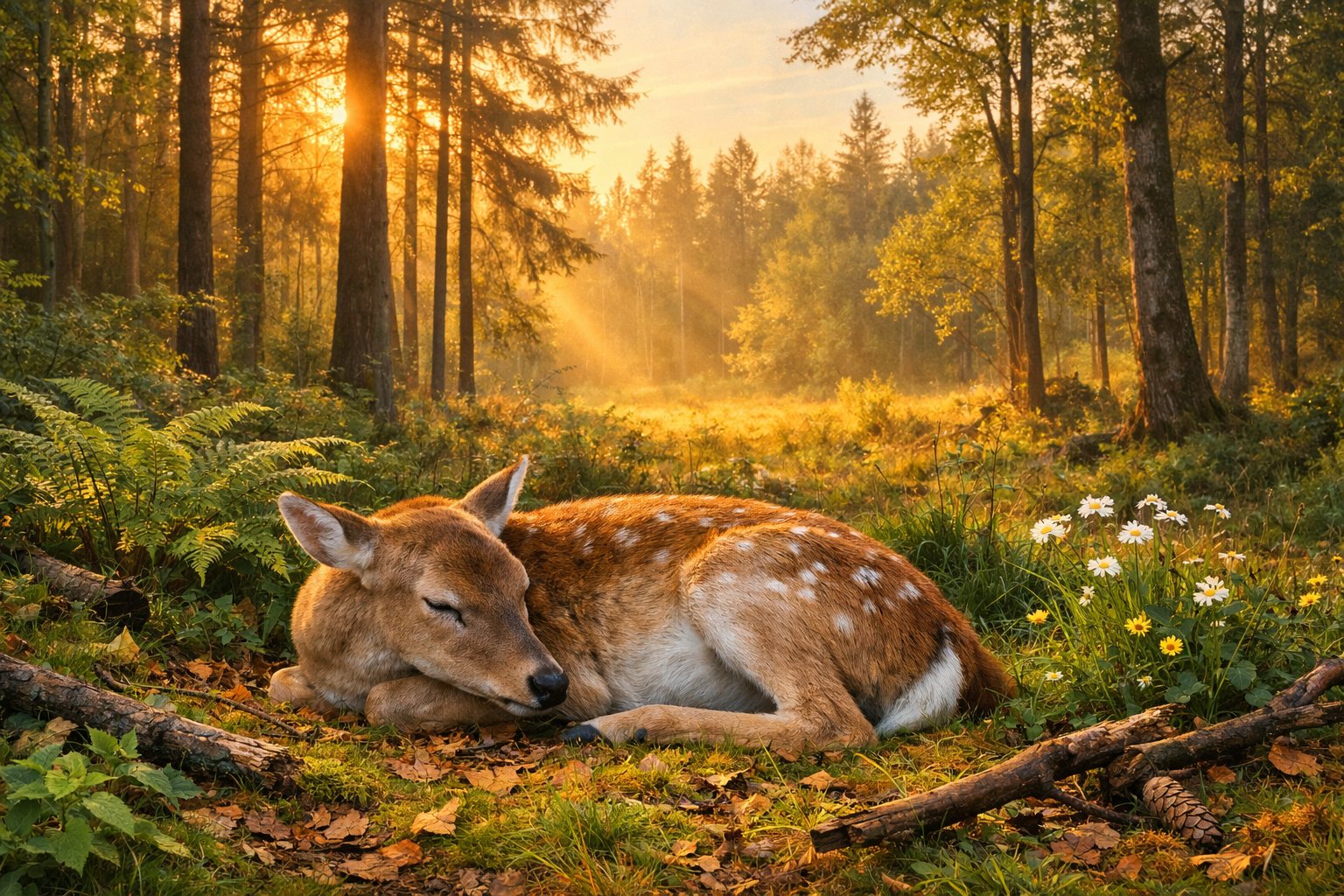
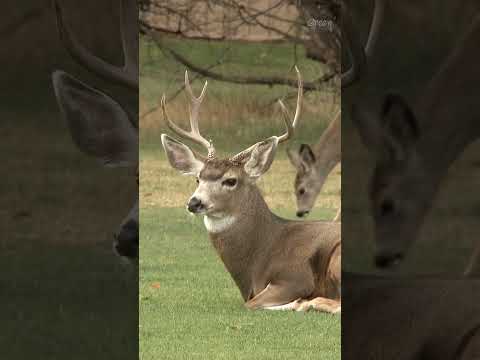
Most of the time, deer lie down to sleep. They tuck their legs under and often keep their head up, ready to sense anything.
Deep sleep only happens if they feel really secure, and even then, it lasts just 15–30 minutes.
Sometimes you’ll spot a deer standing still with its eyes half-closed. That’s just a quick doze or a moment of alert rest—not real sleep.
Deer can close their eyes during deep sleep, but they usually rest with ears moving and eyes open or half-open to keep track of what’s happening.
Newborn fawns lie perfectly still and look like they’re sleeping for hours, while their moms forage nearby.
Adult bucks and does both squeeze in micro-naps day and night, adding up to a few hours total.
Where Do Deer Sleep and Bedding Habits
Deer pick bedding spots that balance cover, a good view, and a quick escape route.
You’ll find their beds in tall grass, cedar or pine thickets, forest edges, hilltops, marsh islands, and along field borders near crops.
In winter, they like south-facing slopes and evergreens for warmth and to block the wind.
Look for oval depressions, flattened grass, small hoof prints, and droppings nearby. Deer often face into the wind to catch scents while they rest.
Bedding spots change with the seasons. In summer, they want dense brush for shade and to hide fawns.
Winter beds are all about staying warm and close to food.
Bedding near food saves energy and time. In places with hunting or lots of people, deer move their beds farther from trails and hide in thicker cover.
Predator Avoidance and Group Sleeping
Does sometimes form small groups to keep watch together. More eyes and ears mean they can spot coyotes, bobcats, or people faster.
Does with fawns might bed together or keep fawns close to thick cover for safety.
Bucks usually bed alone, probably to avoid competition and stay unpredictable.
Deer always choose beds with quick escape routes—little trails, ridges, or hedgerows—so they can take off in a straight line if needed.
On bright moonlit nights, deer hide in heavier cover to avoid being easy to spot.
Wind really matters. Deer face into it to catch predator scents.
They also change up their bedding spots often so predators can’t figure out their routine.
Differences in Sleep Among Types of Deer
White-tailed deer and mule deer both tend to sleep lightly, but they don’t pick the same spots. You’ll usually find white-tailed deer bedding down near forest edges or close to farm fields.
Mule deer, on the other hand, seem to prefer rougher ground—think ridges or open country with little brush for cover.
Moose take a different approach. They usually rest alone, finding dense wetlands or thick conifer stands to hide and stay warm.
Fawns do things their own way. They freeze and hide in tall grass, barely moving, while their mothers wander off to feed and then come back to nurse.
The size of the deer changes the look of their beds too. Bucks leave behind bigger, longer depressions than does or fawns ever could.
Seasons play a role as well. Some deer move deep into thick cover when hunting season starts, but others—especially in quieter areas—stick closer to food sources.


