
You can spot a deer and know right away it eats plants, but let’s get more specific. Deer mostly munch on leaves, shoots, fruits, nuts, and some grasses — they’ll always go for the most nutritious, tender bits they can find. That quick fact explains why they show up in certain yards, fields, and woods.
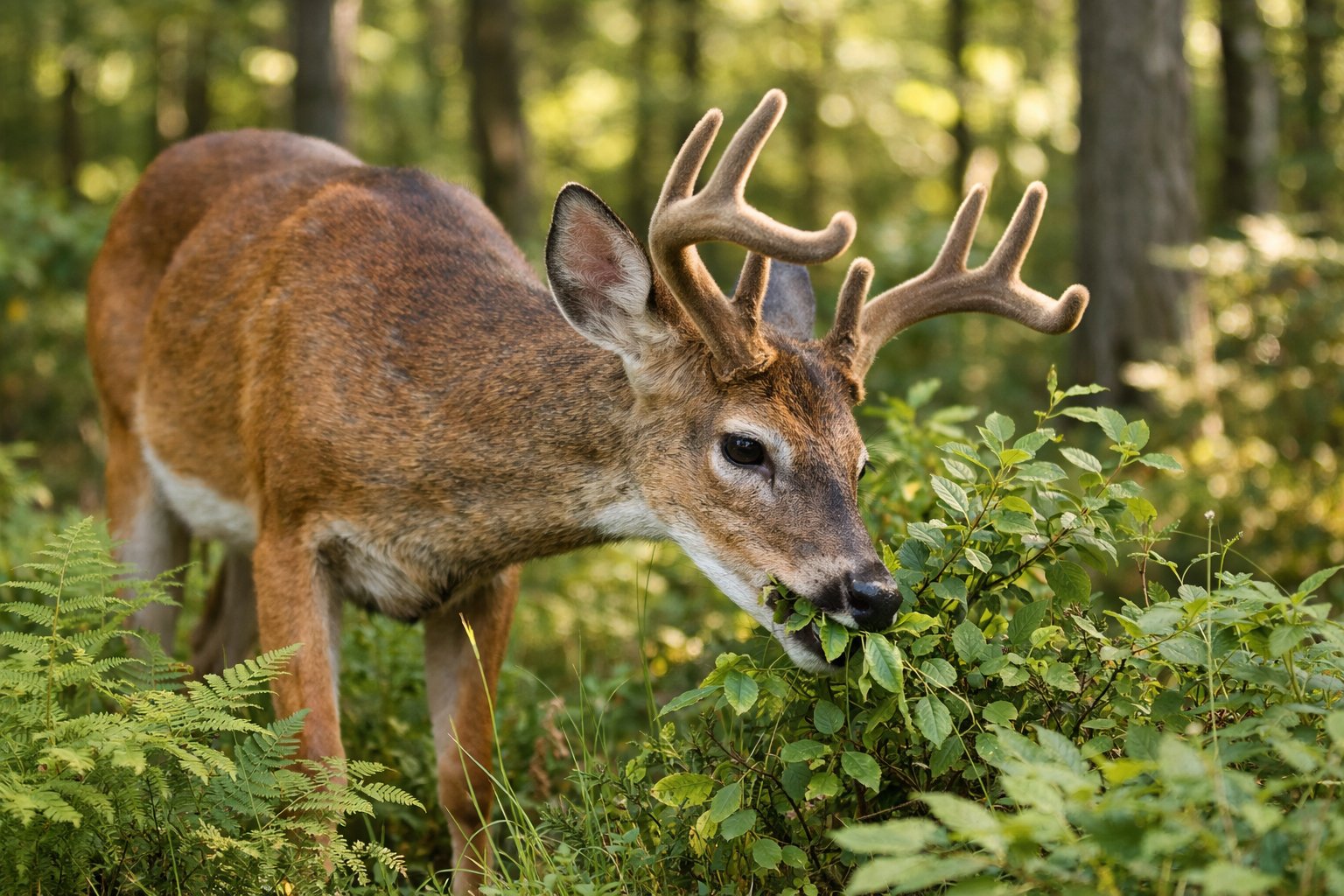
As you read on, you’ll see what makes those foods so valuable. You’ll also see how deer switch up their meals by season and location.
That info comes in handy if you’re trying to attract deer, keep them away, or just curious about what keeps them healthy.
Core Elements of the Deer Diet
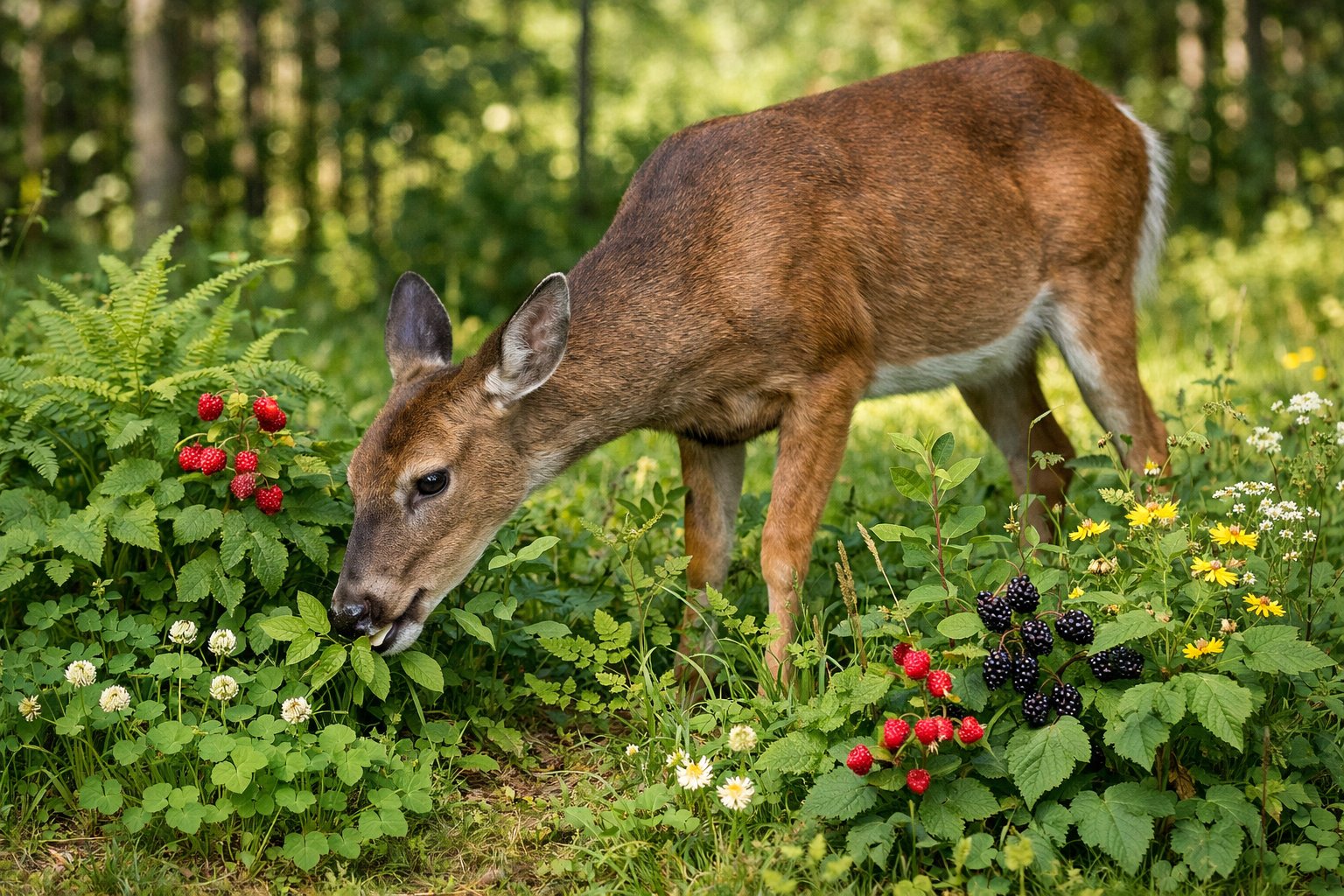
Deer eat a mix of woody plants, leafy greens, fruits, nuts, and sometimes farm crops. What they pick depends on the season, their needs, and what’s growing nearby.
Preferred Foods: Browse, Forbs, and Grasses
Browse is basically the leaves, twigs, and buds from shrubs and young trees. You’ll often catch deer nibbling on oak and maple saplings, sumac, or willow.
In winter, they really depend on browse since snow buries most low plants.
Forbs are broadleaf plants like clover, dandelions, and other weeds. Deer eat a lot of forbs in spring and summer for protein. If you plant white clover or alfalfa, you’ll boost their summer nutrition.
Grasses matter too, but mostly when they’re young and green. Pastures, hayfields, and roadside grasses give deer energy in spring and early summer.
By fall and winter, though, browse and mast become way more important than grasses.
Favorite Fruits and Nuts
Mast means the nuts and fruits deer use to pack on fat. Hard mast — like white oak acorns, beechnuts, hickory nuts, pecans, and chestnuts — delivers big calories in autumn.
You’ll probably spot deer hanging out under oak trees when acorns start dropping.
Soft mast includes apples, pears, persimmons, and berries like blackberries, raspberries, and elderberry. These fruits give deer sugars and vitamins in late summer and fall.
If you’ve got fruit trees or berry patches, you’ll see deer visiting pretty often.
Deer go for nuts and fruit that are easy to reach and digest. They especially love white oak acorns since they’re less bitter and help with fat-building.
Key Agricultural Crops and Food Plots
Corn and soybeans are big favorites for deer on farmland. Corn packs in calories during fall and winter.
Soybeans offer protein and tasty pods in late summer and fall.
Wheat, oats, and rye also pull in deer, especially as green shoots pop up in early spring. Cereal grains in a food plot give deer a green snack before trees leaf out.
If you plant clover, alfalfa, or legumes, you’ll give deer steady nutrition. Clover and alfalfa are loaded with protein and minerals, so deer show up from spring to fall.
Mix up your food plot species and planting times to keep deer fed longer and help with antler growth and fawn survival.
Seasonal and Regional Diet Adaptations
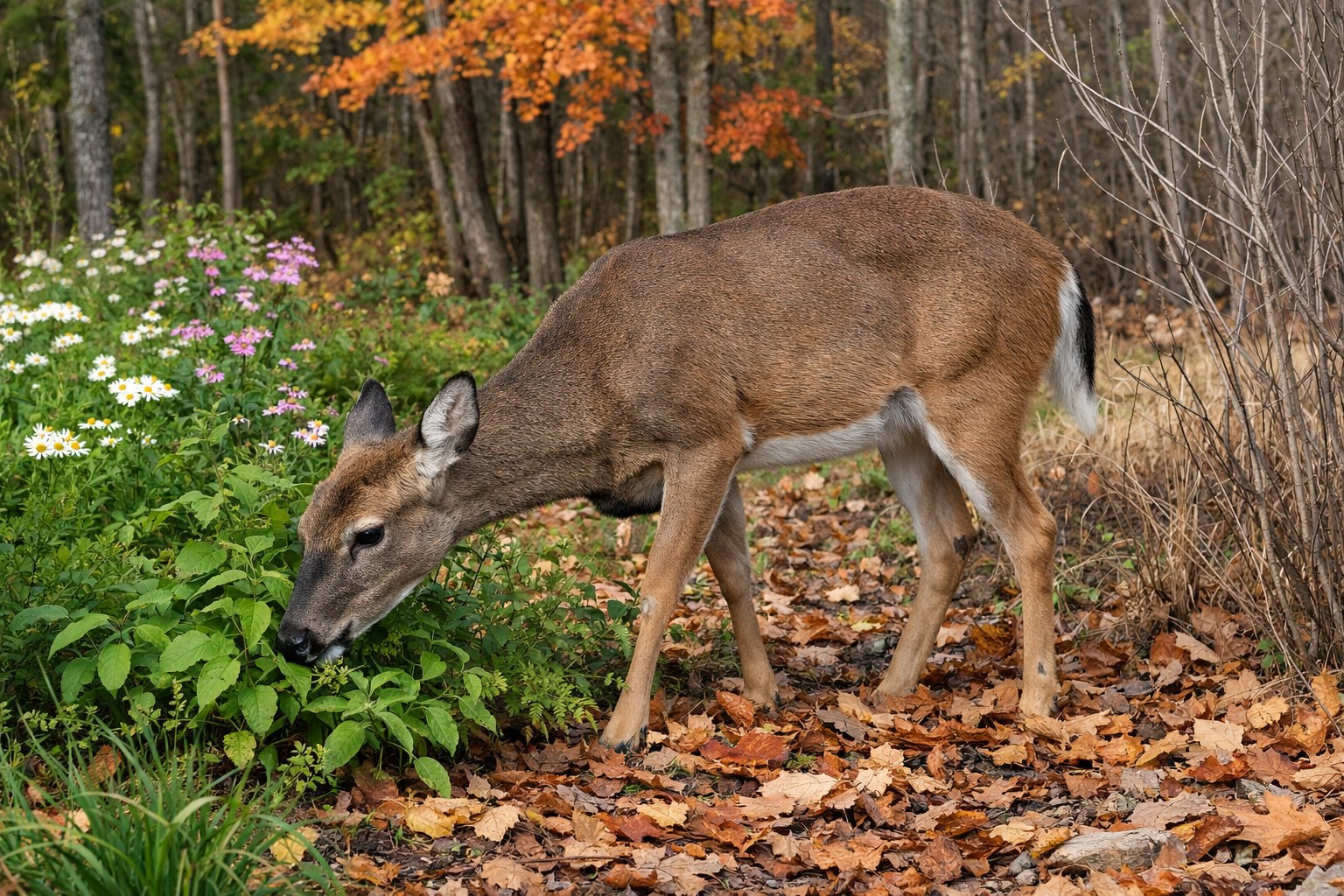
Deer switch up their diets as the seasons change and depending on where they live. In warm months, they go for tender green plants.
When it gets cold, they shift to woody browse and nuts. Local plants really shape what ends up on their menu.
Spring and Summer Feeding Habits
During spring and summer, deer look for high-protein, easy-to-digest foods. That helps fawns grow and lets does recover after winter.
You’ll catch them eating new leaves on willow, maple, ash, and dogwood saplings. They also nibble on shrubs and young oak shoots.
Forbs like chicory, goldenrod, asters, and pokeweed are high on their list since they’re leafy and soft.
Deer don’t mind raiding gardens, either. You might find them snacking on hostas, daylilies, tulips, tomatoes, sunflowers, and young brassicas.
In a lot of places, they prefer tender saplings and fresh shrub growth over older trees.
If you live near sagebrush or bitterbrush, deer add those shrubs to their diet, especially in drier spots.
In wetter, forested regions, white cedar and arborvitae give them both cover and occasional browse.
What deer eat depends a lot on local plants and how many deer are around. They might eat more crops, lawns, or wild plants depending on what’s available.
Fall and Winter Food Selection
In fall, deer start craving energy-packed foods. They need to build up fat for winter and fuel all that rutting activity. You’ll probably notice them hunting for mast—acorns from oaks and whatever other nuts they can find. If there’s a bumper crop, deer will pile into oak stands and chow down.
As leaves drop and soft plants fade away, deer turn to woody stuff. They nibble on maple twigs, willow, ash, dogwood, and the fresh tips of shrubs or saplings. When winter hits, white cedar and arborvitae suddenly matter a lot more since their leaves stick around.
In farm country or the suburbs, deer get creative. You might catch them munching on leftover pumpkins, turnips, beets, sweet potatoes, or even brassica crops left standing. Deep snow and whatever plants are around force deer to keep moving and grab whatever’s most filling and easy to reach.


