
If you hit a deer in the UK, pull over safely, switch on your hazard lights, and check if anyone’s hurt. If the animal is on or near the road, call the police right away.
Don’t go near an injured deer. It might seem obvious, but they’re unpredictable and can be dangerous. Let the police handle it—they’ll call specialists if needed.
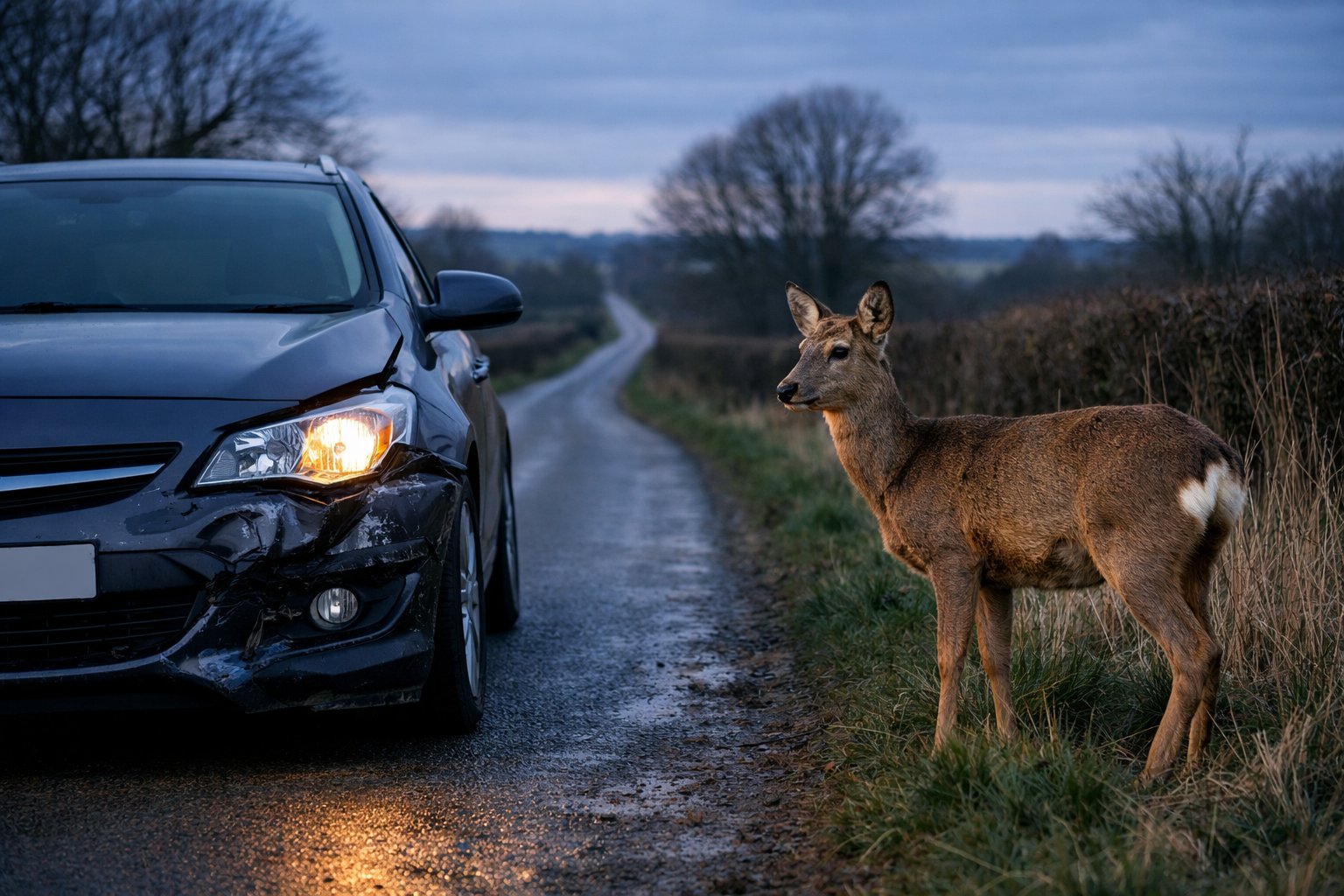
Check your car for damage, too. Let your insurer know, especially if you have comprehensive cover—those policies often pay out for animal collisions.
Let’s get into what you should do at the scene, how insurance works, and why calling the right people matters for your safety (and any claim you might need to make).
What to Do If You Hit a Deer in the UK

If you can stop safely, do it. Focus on keeping everyone safe first, then check your car and the animal, and call the right people so the scene doesn’t get worse.
Immediate Safety Steps
Pull over somewhere safe, away from traffic, as soon as you can. Turn on your hazard lights.
If you’ve got a warning triangle, set it up behind your car to alert other drivers. On a slope? Park with your wheels turned away from the road.
Keep everyone inside with seat belts on unless the car isn’t safe. Don’t stand in the carriageway.
If your car blocks traffic and you can move it, do that carefully. If the crash caused serious damage or a fuel leak, get everyone well away and call 999 for help.
Checking for Injuries and Using Hazard Lights
Check yourself and your passengers for injuries. Look for bleeding, dizziness, or pain.
If anyone needs urgent care, call 999 and ask for an ambulance. Keep your hazard lights on the whole time—those lights warn other drivers and help prevent further accidents.
If injuries are minor, stay at the car while you wait for help. Snap a few photos of the damage and the scene for your insurer.
Note the time, location, and any nearby road signs. It might seem like a hassle, but it’ll help later.
Dealing With an Injured Deer Safely
Don’t approach, touch, or try to move an injured deer. They’re big, stressed, and unpredictable.
An injured deer might lash out or bolt into traffic. If the animal is blocking the road but not moving, stay back and keep your hazard lights on.
Leave passengers in the car. Don’t try to feed or calm the deer.
If the police ask, contact wildlife rescue groups. The RSPCA or local wildlife teams can give advice.
The Deer Aware website lets you report deer road incidents and find tips on handling the situation safely.
How to Contact Authorities and Report the Incident
If the deer is on or near the carriageway, call 101 and report it to the police. They’ll send officers and contact specialists to help the animal.
Call 999 if anyone is seriously hurt or there’s immediate danger. Report the crash to your insurer as soon as you can.
If you have comprehensive cover, you might be able to claim for repairs. Keep your photos, any police reference, and witness details.
You can also report the incident to national schemes like Deer Aware or local records through the British Deer Society. Sharing info helps others avoid the same trouble spot.
Legal and Insurance Considerations

You need to stop safely, check for injuries, and report the scene if the deer or road is hazardous. Your insurance type and local laws decide if you need a police report and how a claim might affect your premiums.
Road Law and Reporting Obligations
If your car is in an accident that causes injury, death, or damage to another vehicle or property, you must stop. If the deer is blocking the road or someone is hurt, call the police—they’ll arrange to move the animal and record the incident.
You don’t have to report every deer strike to the police if no one is hurt and the deer has run off. Still, reporting helps public safety and makes an official record.
The AA suggests calling the police for deer on or near the road so specialists can remove the animal and cut the risk for others. Keep your hazard lights on and use a warning triangle if it’s safe.
Insurance Cover and Claims for Deer Collisions
Whether your insurance pays for repairs depends on your policy. Comprehensive policies usually cover animal collisions.
Third party only or third party, fire and theft policies generally don’t cover damage to your own car after hitting a deer. Contact your insurer quickly and follow their claims process.
Take photos of the damage and any blood or hair left by the deer if it ran off. Some insurers treat deer strikes as non-fault incidents, which might help with your premium, but check your policy and talk to your agent.
Progressive and State Farm both recommend keeping evidence and notifying your insurer even if you’re not sure you’ll claim.
Wildlife Protection: The Deer Act 1991
The Deer Act 1991 makes it illegal to hunt or take deer without permission in the UK. This law doesn’t stop you from reporting or moving an injured deer in an emergency, but you shouldn’t try to kill or dispatch the animal yourself.
If the deer is hurt and still alive, call the police or a wildlife rescue. The British Deer Society has advice on safe and legal handling, plus resources for reporting road casualties.
Don’t go near a large injured deer—it could react suddenly. Leave it to trained responders or police to arrange humane removal or care.
Responsibility and Liability After a Collision
You’re responsible for driving safely, and you need to take reasonable steps if you end up in a collision.
Liability for damage to people or property usually follows the normal road traffic rules. If you hit a deer and then cause another crash, you might end up liable for that extra damage.
If the deer runs off before you can check for damage, try to document the scene. Snap photos of blood, fur, or any marks on your vehicle.
Hang on to receipts for towing, repairs, or any medical treatment you get. Sometimes, a landowner or occupier might claim the deer belonged to them—though that’s pretty rare. If that happens, insurers and legal advisors usually sort out compensation disputes.
Need more info on reporting or insurance? Check out this practical advice on deer collisions and the law.


