
You’ll spot deer hanging around fallen fruit in the fall, and yep — deer eat apples when they find them. Apples taste good to deer, but too many can cause problems, especially if they pile up.
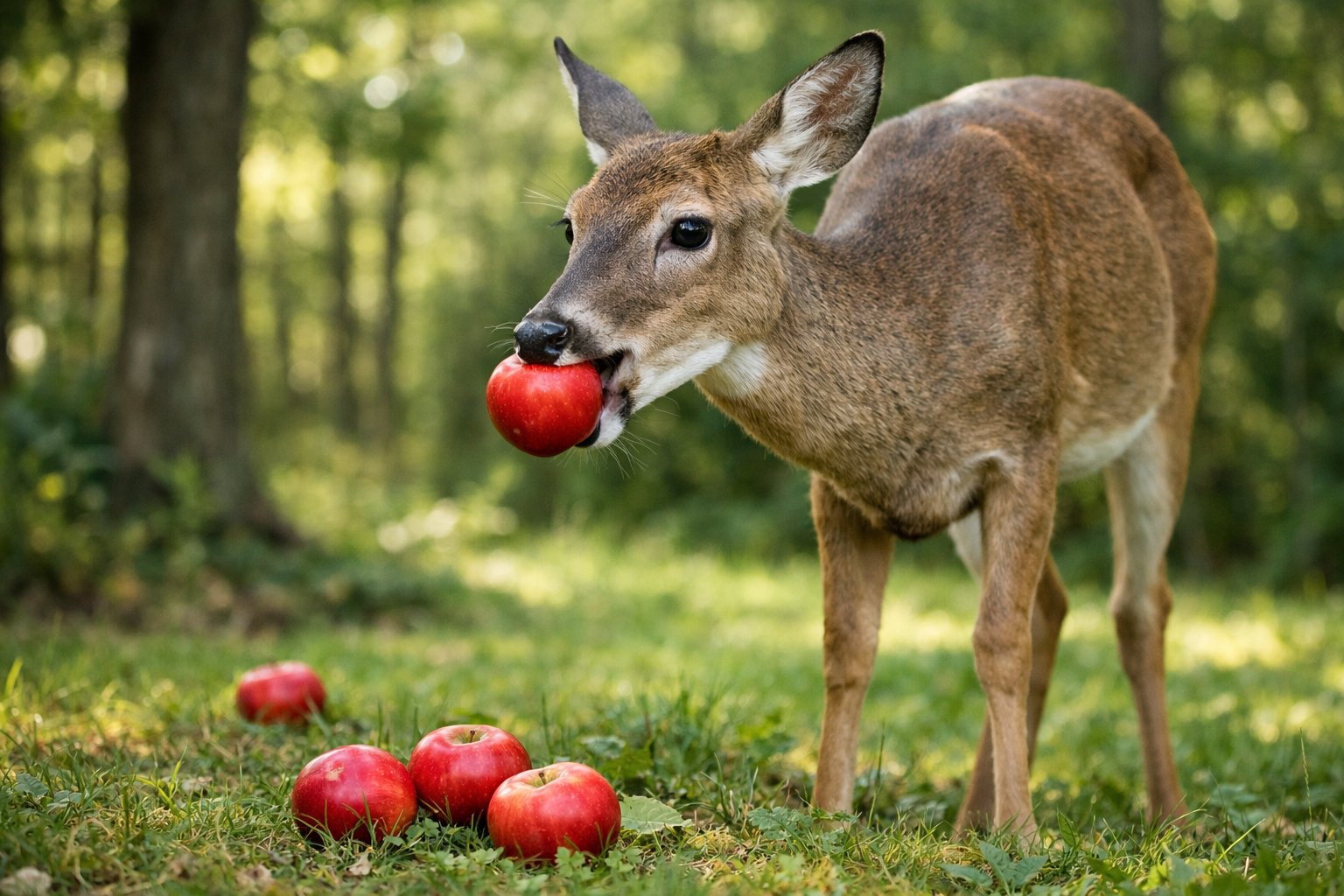
If you’re trying to attract deer or protect your apple trees, you probably want to know why deer go for apples, what risks whole fruit brings, and what safer options exist.
This post covers how apples affect deer health, their behavior, and even what happens around your yard.
Let’s get into when apples help, when they hurt, and what you can actually do to enjoy wildlife without creating a mess.
Do Deer Eat Apples and Why?

Deer eat apples because the fruit gives them quick energy, water, and a sweet snack when other food is scarce.
You’ll notice how they act around apples, how they find them, and which kinds they like best.
Deer Behavior Around Apples
Deer show up in orchards and at the edge of woods to get fallen apples. They usually browse quietly at dawn and dusk when people aren’t around.
Bucks, does, and fawns all join in, but their feeding changes with the season. In fall, deer eat more apples to build up fat for winter.
Deer often return to the same tree or spot under a tree again and again. When they clear small patches under trees, they’re marking feeding areas and leaving their scent.
In neighborhoods, deer that figure out where apples drop can get bold and hang close to houses. That can lead to car collisions or other problems with people.
If apples ferment on the ground, deer might still eat them. Sometimes they look a bit wobbly after.
Apples treated with pesticides aren’t great for deer either. Orchard fruit can mean higher chemical exposure compared to wild apples.
How Deer Find and Eat Apples
Deer mostly use their noses to find ripe or dropped apples, even from pretty far away if the air is still.
They’ll follow fence lines, trails, or hedges that lead to apple trees. Once they get close, they sniff out dropped fruit and sometimes nibble leaves or twigs nearby.
Deer eat whole apples or bite them into chunks with their bottom teeth and tongue. They usually go for the soft part first and sometimes leave the core or half-eaten fruit behind.
When winter hits and there’s not much else to eat, deer reach for low limbs or dig through snow to get at apples.
You can see signs of feeding pretty easily: half-eaten apples, bite marks, or piles of crushed fruit under trees. Noticing these clues helps you know if deer are using your yard or orchard.
Favorite Apple Varieties for Deer
Deer like sweeter, softer apples because they’re easier to chew and taste better. Types like Fuji, Gala, and Honeycrisp seem to draw them in more than tart apples.
Bruised or overripe apples on the ground are especially tempting. Tart apples, like Granny Smith, get eaten too but usually only if nothing sweeter is left.
Wild crabapples attract deer because they’re everywhere and drop early. In orchards, how you manage trees matters.
Fencing or netting keeps deer out, but if you let fruit pile up, you’ll probably attract more deer.
If you don’t want deer munching your apples, pick up fallen fruit fast and use fencing or repellents on the sweeter varieties.
If you want to attract deer to a certain spot, place a few untreated, fresh apples away from roads and houses.
Feeding Apples to Deer: Benefits, Risks, and Alternatives

Apples give deer fast energy but can also cause health or behavior issues if given too often. It’s worth thinking about whether short-term attraction is worth the long-term risks.
You might want to try safer ways to help local deer.
Nutritional Value of Apples for Deer
Apples give deer simple sugars, water, and a few vitamins for a quick energy boost. One apple can help a thin deer in late winter or a nursing doe needing extra calories.
But deer are built for eating high-fiber plants, not sugary fruit. Apples are low in fiber and high in sugar, so they really should be just an occasional treat.
If you do offer apple pieces, cut them small to avoid choking and take out the cores and seeds.
Health Risks and Chronic Wasting Disease
If deer suddenly eat a lot of apples, their digestion can get messed up. Too much sugar can cause rumen acidosis, dehydration, and even serious illness a few days later.
Whole apples can also choke deer or block their digestive tract.
Feeding deer in one spot means they gather close together, which spreads disease and causes stress. That’s a big deal with things like chronic wasting disease (CWD).
Wildlife agencies warn that feeding or baiting deer can help diseases like CWD spread faster. Some places even ban feeding deer for this reason, so check your local rules before you try.
Responsible Ways to Manage Deer and Apples
Don’t leave piles of apples where deer can crowd around. Compost extra apples or bury them so deer can’t reach them.
If you want to watch deer, plant native shrubs like oak, dogwood, or willow instead of leaving out fruit.
If you absolutely have to offer food for a short time, keep these tips in mind:
- Give only small amounts and stop right away if deer seem sick.
- Cut apples into quarters and remove the cores and seeds.
- Space out feeding spots to keep deer from bunching up.
Repellents and fencing work too if you want to protect your garden without feeding the deer.
Other Fruits Deer May Eat
Deer will eat a lot of different fruits if they get the chance. Pears, strawberries, oranges, and bananas usually end up on their menu.
But these fruits come with sugar-related risks too. If you offer them too often, you might change how deer look for food in the wild.
Some fruits can be even trickier. Citrus fruits tend to be too acidic for regular feeding, and banana peels might cause gut problems because they can get compacted inside.
So, it’s best to give fruit only rarely and in small amounts. Try to stick with native plants and clean water—those really help deer stay healthy and wild.
If you’re curious about the risks or want more details, check out these resources: The Institute for Environmental Research has info about feeding apples to deer and disease concerns (https://iere.org/is-it-ok-to-feed-apples-to-deer/). Science Insights also explains how deer digest whole apples and the risks involved (https://scienceinsights.org/can-deer-eat-whole-apples-the-risks-explained/).


