
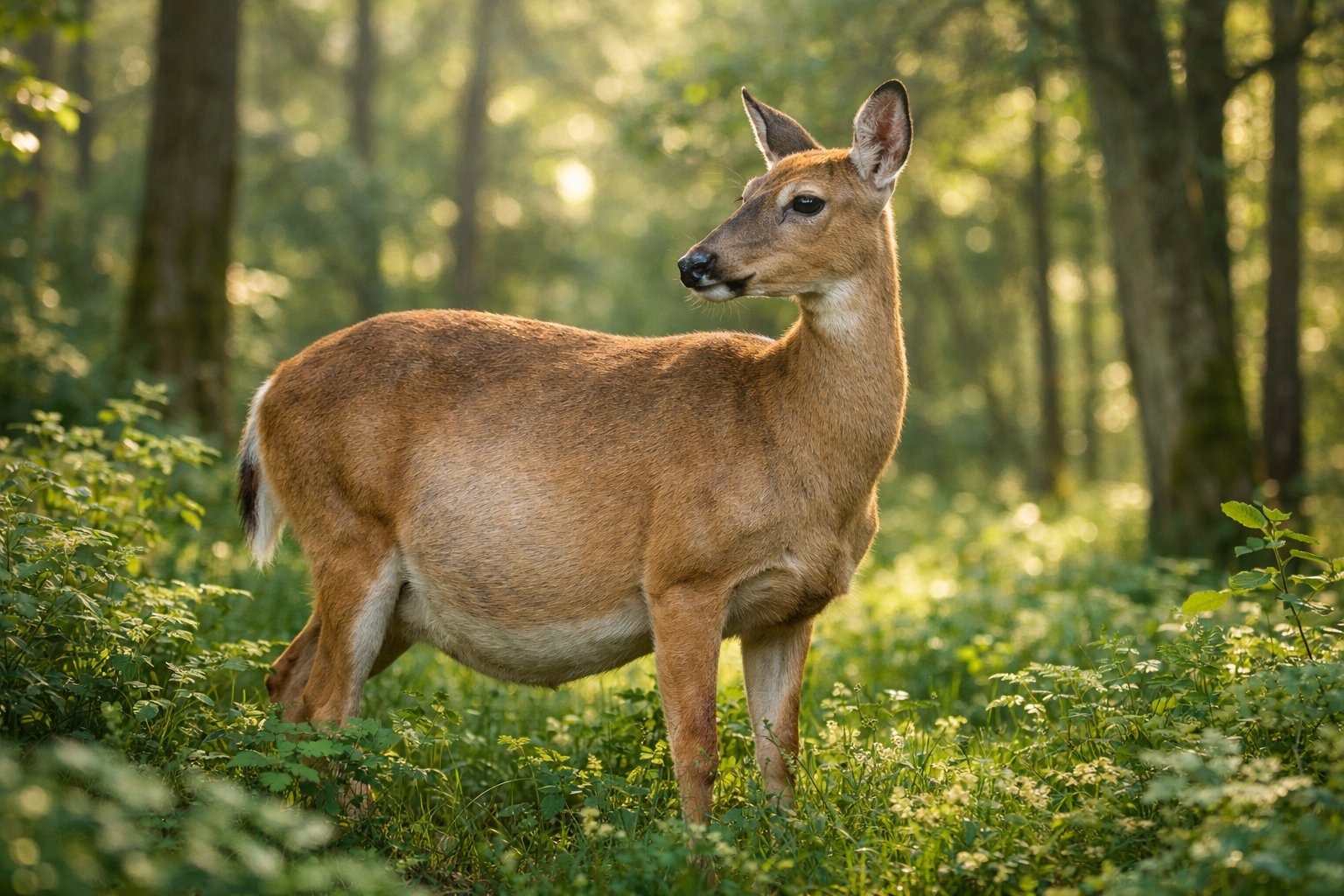
Let’s cut to the chase: most common deer—like white-tailed and mule deer—stay pregnant for about 200 days. That’s roughly six and a half months, give or take.
This timing usually means fawns show up in late spring, right when food and cover are at their best.
So, what does that number really mean? Why does it matter?
We’ll break down gestation, the big stages of pregnancy, and how season and health can nudge the timeline a bit.
Stick with me to see how mating, fetal growth, and the busy spring baby boom all connect—and how it shapes a fawn’s odds of making it.
How Long Is a Deer Pregnant? Gestation Period Explained

Deer usually stay pregnant for about six to eight months. Nature lines up breeding and birth so fawns arrive when spring food and cover peak.
Different species have their own gestation ranges. Seasonal cues push most births into late spring or early summer.
Average Gestation Period for Different Deer Species
White-tailed deer carry fawns for about 193–205 days. Mule deer average around 190–200 days.
Both are all over North America. They fall pretty close to that ~200-day mark.
Bigger deer, like elk (wapiti), stay pregnant longer—think 240–265 days. Moose pregnancies last about 230–250 days.
Reindeer and red deer fall somewhere in between, usually around 200–240 days. Population and latitude can shift things a bit. Fallow deer often gestate about 230 days, but there’s some wiggle room.
If you know when deer breed, you can predict when fawns will show up by adding the average gestation. That’s handy for wildlife managers and anyone trying to keep does and fawns safe and undisturbed.
Factors Affecting Duration of Deer Pregnancy
Nutrition plays a big role in fetal growth, but it doesn’t really change the species’ basic gestation length. If a doe doesn’t eat well, she might have a smaller fawn or delay implantation a bit, but the overall timeline barely budges.
Age comes into play too. Yearling does usually have just one fawn and sometimes the timing’s a little different than with older does.
Health and stress affect pregnancy success. In rough conditions, a doe might lose the pregnancy late or abort.
Latitude and day length mostly control breeding timing, not gestation. Human disturbance, disease, and parasites can lower fawn survival even if gestation stays normal.
Wildlife managers keep an eye on doe health and habitat to help boost healthy pregnancies and fawn survival.
Seasonal Timing: Rut, Fawning Season, and Fawn Survival
The rut—the main mating season—kicks off as days get shorter. In northern North America, most deer rut in October or November.
With a ~200-day gestation, white-tailed and mule deer usually give birth in late May or June.
Elk and moose might rut earlier or later, depending on where they live. Their longer pregnancies still put births in early summer, when food and cover are at their best.
This timing means newborns face gentler weather and plenty of plants to munch on.
Fawn survival depends a lot on timing and cover. If a doe breeds late, her fawn might hit winter as a weak youngster.
Risk from predators, poor cover, and low nutrition can all cut survival. You can help by protecting fawning areas and keeping things quiet during spring.
Stages and Biology of Deer Pregnancy
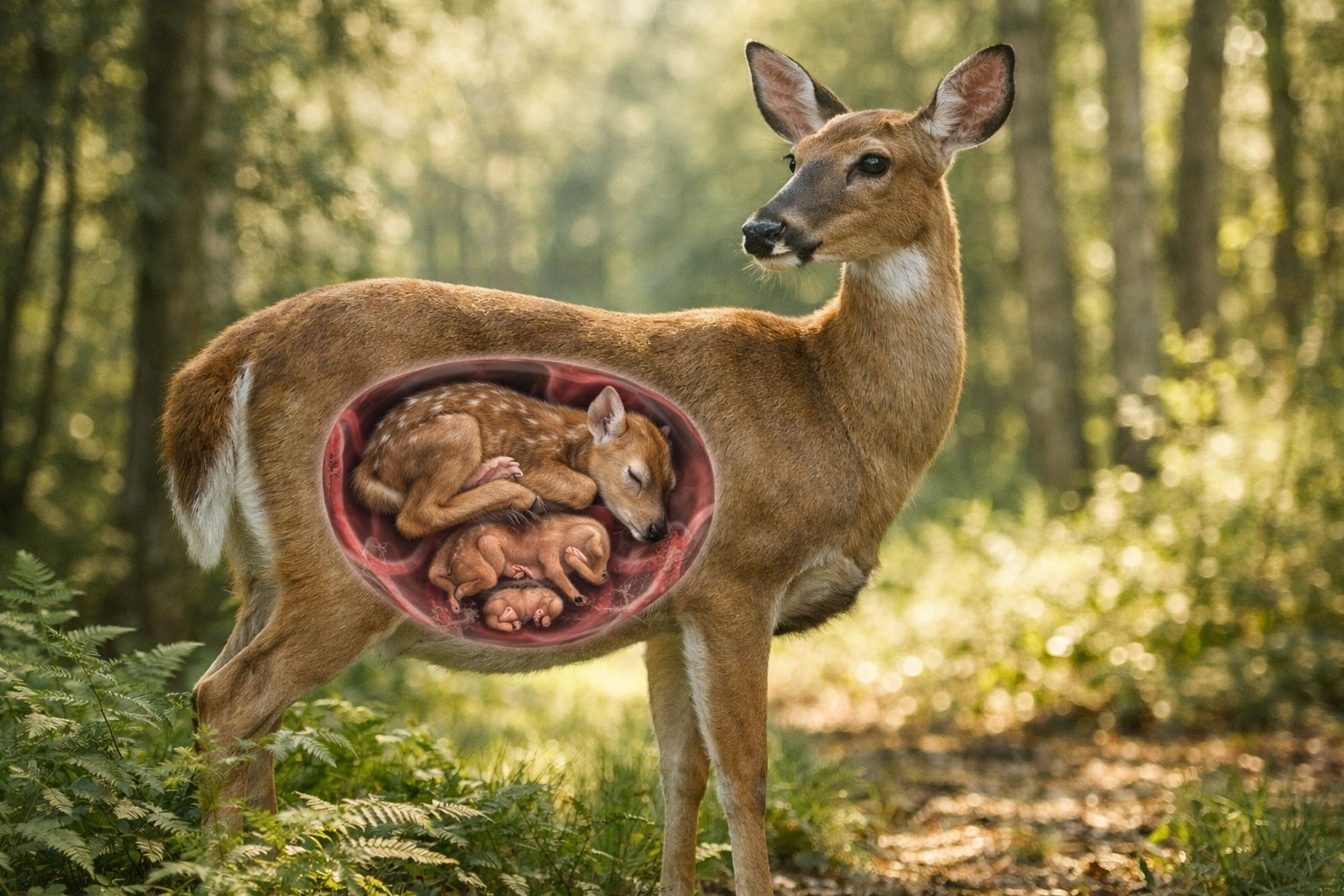
Let’s walk through how a doe goes from mating to raising fawns.
We’ll talk hormones, when embryos pause, how the blastocyst grows, and what the mother actually does during birth and those first days of care.
Deer Reproductive Cycle and Hormonal Changes
You can track a doe’s cycle by watching hormones and seasons. For most deer, shorter fall days trigger the rut.
More melatonin from those short days boosts GnRH, which then bumps up LH and FSH. Those hormones spark ovulation and estrus.
Estrus sticks around a few days. If a doe doesn’t conceive, she might cycle every 18–30 days.
When mating works, the doe forms a corpus luteum that pumps out progesterone. That hormone keeps the uterine lining in place and blocks more estrus.
A doe’s body condition shapes her hormone response. Well-fed does ovulate more reliably and get pregnant more often. Young yearlings might cycle, but they usually have just one fawn. Mature does tend to have twins.
Embryonic Diapause and Delayed Implantation
Some deer delay implantation, so the embryo pauses as a tiny blastocyst before it attaches to the uterus.
After fertilization, the embryo divides and floats free for days or weeks. In species or populations with diapause, the blastocyst just waits until the right seasonal or hormonal signals kick in.
The length of this pause depends on species and latitude. This trick helps time fawn birth for spring, which boosts survival when food and cover improve.
When progesterone rises and the uterus is ready, the blastocyst finally implants and starts growing fast.
Fetal Growth, Blastocyst, and Fawn Development
Once the blastocyst implants, it becomes an embryo, then a fetus. Organs and bones start to form.
Fetal growth picks up speed in the last trimester. That’s when you see major weight gain, plus muscle and fat stores building up.
For North American deer, gestation runs about 190–210 days. The timing of implantation sets up fawning for May or June in northern areas.
A doe’s nutrition in late pregnancy really affects birth weight and fawn strength. Well-fed does have heavier, tougher fawns.
Litter size depends on age and health—yearlings usually have one fawn, while older does often have twins.
Fawns show up with spotted coats and strong hiding instincts. Those first weeks are all about staying hidden, which helps them dodge predators.
Birth Process and Maternal Care
Most fawns arrive in thick cover, usually at dawn or dusk. The whole labor process tends to go pretty fast—sometimes less than an hour from the first contractions to delivery.
You’ll probably spot the doe sneaking off on her own, settling down quietly to keep predators from noticing her. Right after birth, the doe gets to work: she cleans her fawn, severs and eats the placenta, and keeps licking her newborn to help it start breathing.
Fawns usually manage to stand and nurse within just a few hours. For the first week or two, the little one hides out alone, while the doe slips back several times a day to feed it.
The doe’s milk packs a punch with fat and antibodies, giving the fawn a fighting chance. If predators show up or the weather turns rough, she’ll move her fawn to a safer spot.
If you want to help fawns survive, keep your dogs leashed and steer clear of fawning areas in spring.


