
Maybe you’ve seen that viral video of a deer munching on a snake and thought, “Wait, do deer really eat snakes?” Surprisingly, yes — deer will sometimes snack on snakes or even other animals, especially when they’re craving extra minerals or protein.
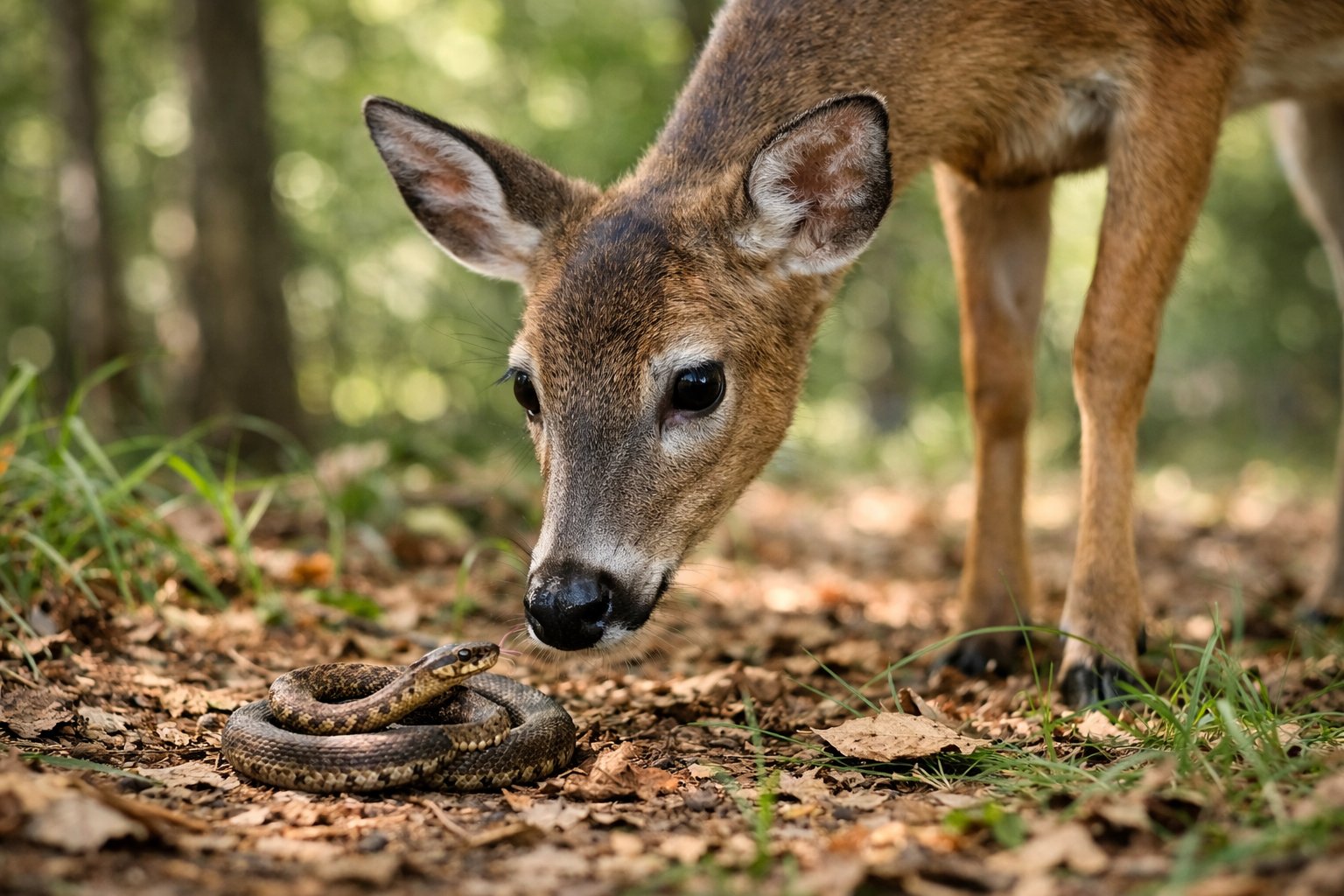
Let’s talk about why deer do this, how they deal with snakes, and what it means for both animals.
I’ll walk you through real examples and some straightforward science that explains why a plant-eater like a deer would ever go after meat.
You’ll also see which deer and snake situations make these strange meals more likely, so you’ll know what to look for next time you’re out in the woods.
Why and How Deer Eat Snakes

Deer usually stick to plants, but sometimes they switch things up when they need minerals, protein, or just an easy bite.
You might catch a deer eating a snake because it’s scavenging, needs nutrition, is stressed, or is just plain curious.
Opportunistic Feeding and Scavenging
Deer grab a quick snack when they find a carcass or easy protein.
If you watch deer near roads or trails, you might spot one nibbling on a dead snake or some other animal remains.
They don’t chase live animals like predators do.
Instead, they browse for plants and might eat animal matter they stumble upon, like a snake that got run over or left behind by something else.
People have filmed this in places like Texas, where a whitetail deer chewed on a snake it found.
Deer can eat small amounts of meat or bone, especially if it’s soft or already dead.
Scavenging gives them fast nutrients, but it doesn’t really change their mainly plant-based diet.
Nutritional Deficiencies and Dietary Needs
Sometimes deer eat snakes because they need more calcium, phosphorus, or protein.
This happens most when they’re growing antlers, pregnant, or nursing fawns.
Plants just don’t have a ton of those minerals in one place.
Snakes, eggs, and little carcasses pack more minerals than leaves do.
If you’re managing land for deer, try putting out mineral licks or planting a mix of forage to help with this.
Groups like the National Deer Association say these weird eating habits often come from the deer’s body needing something it can’t get from plants alone.
Survival Instincts and Food Scarcity
When food gets scarce, deer broaden their menu to survive.
During drought, deep snow, or after habitat loss, you might see deer trying new foods, including small animals or eggs.
It’s not really hunting — more like desperate sampling of whatever’s available.
You’ll notice more odd feeding when plants aren’t growing well or when competition is tough.
Deer instincts kick in and push them to grab whatever nutrients they can, which might mean eating baby birds, rabbits, eggs, or snakes if they’re easy to reach.
Curious and Accidental Consumption
Sometimes deer just get curious or make mistakes.
A deer rooting around in the roadside brush might accidentally pick up a live snake while pulling up plants.
Or maybe it nudges an egg or small carcass and decides to taste it.
These one-off moments sometimes get caught on video and go viral, like those clips from Trey Reinhart and others.
Curiosity doesn’t turn deer into predators.
Most deer just go back to eating plants after one weird bite.
Deer and Snake Species: Interactions and Risks

You’ll mostly see these run-ins where deer and snakes share woods, fields, or marshy edges.
Small snakes and slow movers don’t pose much danger, but bigger or venomous snakes can be risky for deer—and for people out hunting or working the land.
Types of Snakes Deer May Encounter
Deer often cross paths with small, nonvenomous snakes like garter snakes and rat snakes.
These snakes hang out in grassy spots, brush piles, and near logs—basically, all the places deer like to bed down or feed.
Garter snakes are skinny and out during the day.
Rat snakes climb trees or hide in stone walls, so you might see deer near them while foraging.
Bigger snakes, like bull snakes or king snakes, show up less often, but they use the same habitats.
If your land has rock piles, old logs, or thick ground cover, you’ll probably have more snakes—and more chances for deer to find them.
Venomous Versus Nonvenomous Snakes
Nonvenomous snakes like garter and rat snakes rarely hurt deer, even if a deer swallows or bumps into one.
They’re small, and a deer’s digestive system doesn’t handle them well, so these moments are usually just accidents.
Venomous snakes — like copperheads and rattlesnakes (especially the timber rattlesnake) — are a different story.
A bite on the nose, mouth, or leg can cause swelling, pain, or even infection in deer.
How bad it gets depends on the snake’s size, how strong the venom is, and where the deer got bitten.
If you manage land, it helps to keep thick brush cleared out, since rattlesnakes love to hide there.
That way, you lower the risk for deer and for anyone walking through those areas.
Defensive Behaviors and Unusual Incidents
Snakes usually defend themselves by striking, coiling up, or blending into their surroundings. If a deer steps on or near a snake, the startled snake might strike fast.
Deer might stomp or flick their heads in response. This sometimes kills or injures smaller snakes, but it won’t always stop a quick, venomous bite.
Sometimes, people report deer eating tiny snakes or scavenging snake carcasses. These stories are rare and usually involve small, harmless species.
If you’re a hunter or land manager, it’s smart to watch for signs of snake activity. Look for things like rattling, shed skins, or nests, especially during spring and summer when snakes seem to show up everywhere.


