
You might spot an impala and wonder if it’s a deer. Turns out, it’s not. An impala is actually an antelope, not a deer, and it sits in the Bovidae family along with cattle, goats, and sheep. That’s a big deal—it shapes everything from their horns to how they act and survive. If you care about animal evolution, movement, or predator survival, this difference is worth knowing.
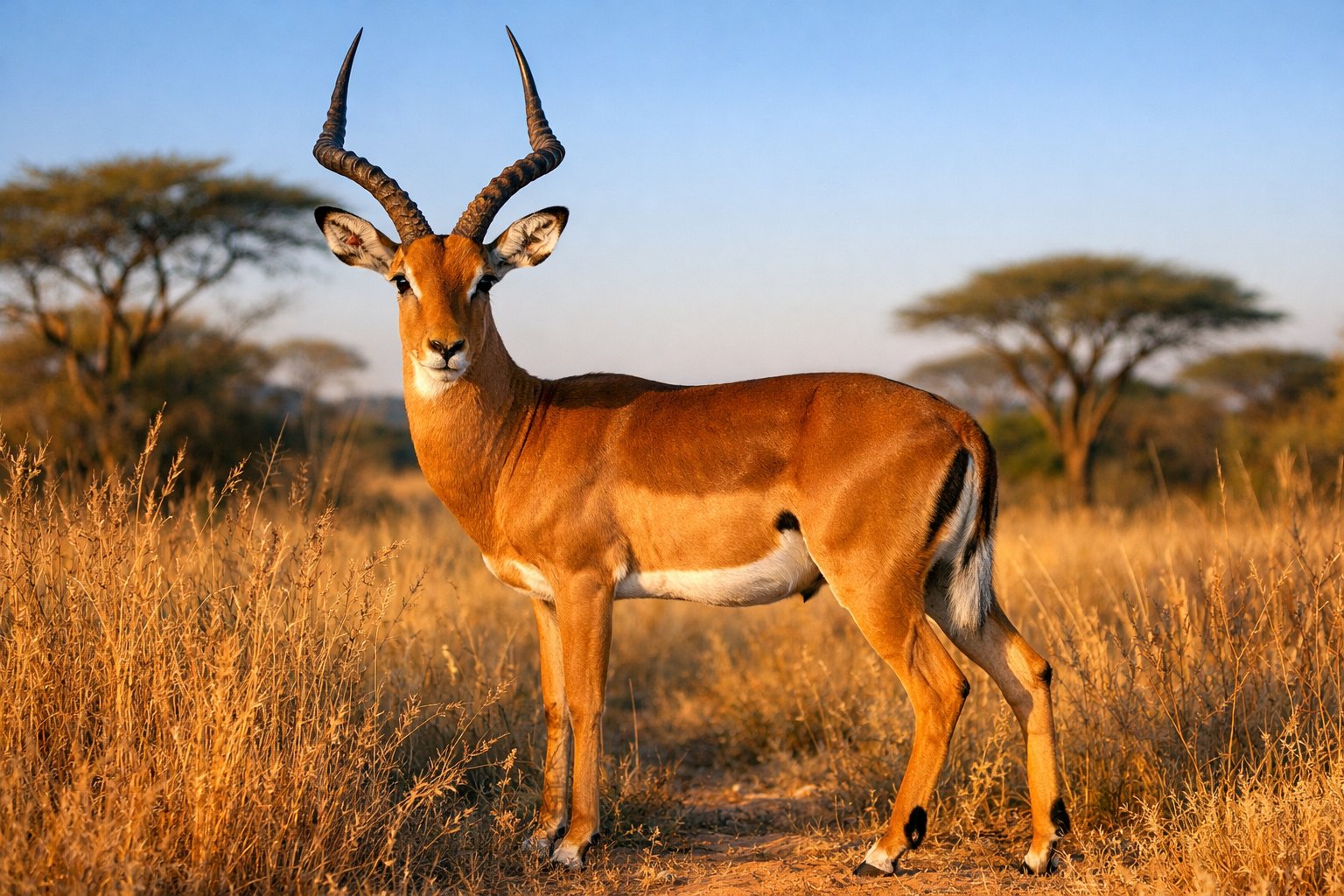
Let’s break down how classification, physical features, and lifestyle set impalas apart from deer. You’ll see clear differences in their horns, habitats, diets, and the impala’s wild social and anti-predator moves that help it thrive in Africa.
Impala vs Deer: Classification and Key Differences

Impalas are antelopes in the Bovidae family. They have different skulls, teeth, and horns than true deer. Deer belong to the Cervidae family and usually grow and shed antlers every year.
Taxonomy and Scientific Classification
Both animals sit in Mammalia and the order Artiodactyla, but they split at the family level. Impalas land in the Bovidae family and the single-species genus Aepyceros (Aepyceros melampus). That makes them closer to gazelles and hartebeest than to deer.
Deer fall under Cervidae. This family covers a bunch of species, like white-tailed deer, moose, elk, and roe deer. Males usually grow antlers made of bone, which they shed and regrow each year.
You’ll see the differences right away in their scientific names and groupings. Call the impala “Aepyceros melampus” if you want to be specific. Use Bovidae for antelopes and Cervidae for deer when talking about broader traits.
Antelope and Deer Family Differences
You’ll notice Bovidae and Cervidae have some pretty distinct physical and biological features. Bovids (impalas included) grow permanent horns with a bony core and a keratin sheath. Only male impalas have those curved, ridged horns, and they don’t shed them.
Cervidae males, on the other hand, grow antlers made of bone and shed them every year. Antlers are usually branched and come back seasonally.
Bovids use scent glands and have different social systems. Impalas use glands on their forehead and hindlegs during the rut. Deer have their own scent-marking tricks, like preorbital or pedal glands. Their teeth differ, too—many bovids have a lower dental pad that helps them graze and browse.
Evolutionary History of Impalas and Deer
Both groups trace back to Artiodactyla, but they branch off differently. Bovidae (the impala’s family) spread out into all sorts of grazing and browsing species in Africa and Eurasia. The impala’s lineage is old among bovids and sits in its own tribe, Aepycerotini. That gives them unique skills, like their long leaps and mixed feeding habits.
Cervidae evolved on a separate path, creating lots of deer species for forests, tundra, and grasslands. Antlers in deer connect to mating and defense, while bovid horns help with fighting and identification. Fossil and genetic research puts impalas firmly with other bovids, not with deer, so treat them as antelope.
Just to recap: impala = Aepyceros melampus (Bovidae); deer = various genera within Cervidae. If you want to dig deeper, check the impala Wikipedia page.
Unique Biology and Lifestyle of the Impala

Let’s look at how impalas look, where they live, how they act in herds, and what keeps them alive on the African savanna. These things really set impalas apart from deer and show how they fit into their world.
Physical Characteristics and Distinguishing Features
Male impalas grow lyre-shaped horns, sometimes reaching 45–92 cm. Those horns curve outward and up. Females don’t have horns. The ridges near the horn base help territorial males fight for harems during breeding.
Impalas are medium-sized, reddish-brown antelopes with white underparts and a black stripe on the tail and rump. The black-faced impala subspecies has darker facial markings and looks a bit bigger than the common impala. You’ll notice a metatarsal gland on the lower hind leg—it releases scent for marking and communication.
Impalas have long legs and a slender build, making them super agile. They can leap up to 3 meters high and 10 meters long to escape predators like cheetahs, leopards, lions, wild dogs, hyenas, and even pythons. Unlike deer, impalas are in the Bovidae family and the tribe Aepycerotini.
Habitat and Geographic Distribution
Impalas live all over southern and eastern Africa. You’ll find them in places like South Africa, Zimbabwe, Kenya, and Tanzania. They like the spots between woodlands and open grasslands, where they can find both cover and food.
They stick to savannas, light woodlands, and riverine forests. When the rains come, herds move into open grasslands to eat fresh grass. In the dry season, they browse on shrubs and trees in the woodlands. The black-faced impala prefers drier southwestern areas and special habitats.
Impalas adapt to different habitats. This flexibility lets them find a variety of foods and avoid competing too much with other grazers. Where they live also affects herd size and how likely they are to run into predators.
Social Behavior and Herd Structure
Impalas form mixed female herds with young, bachelor herds for non-territorial males, and groups led by territorial males with small harems. During the rut, territorial males defend their patch and gather females to mate.
Bachelor herds give younger or weaker males a safe place to hang out and learn the ropes. Territorial males mark their turf with dung, metatarsal gland scent, and horn displays. You’ll sometimes see intense male fights with horns, but they rarely get seriously hurt.
Females create strong social bonds and help keep watch for danger. Herds can get huge in the rainy season, sometimes with hundreds of impalas. Living in groups helps them graze better and spot predators, but it also makes them tempting targets for hunters like wild dogs and hyenas.
Adaptations for Survival in the African Savanna
Impala count on speed, leaping, and a knack for blending in just to make it through the day. Their long, powerful legs launch them into wild, twisting jumps when cheetahs or leopards get too close.
Their coats? They match the dry grasses and those woodland shadows almost perfectly. It’s honestly impressive how well they disappear.
These antelopes don’t stick to one menu. When the rains come, they munch on grasses, but in the dry months, they switch to shrubs and forbs. Mixing it up like this helps them avoid fighting over food and lets them survive when the savanna gets unpredictable.
The metatarsal gland plays a role in their social lives—it helps with signaling, marking out territory, and even coordinating when to mate.
Impala like to hang out near the edges of habitats, right where grasslands meet woodlands. This way, they can dash into the trees for cover but still get plenty to eat in the open.
They’re not loners, either. By keeping an eye out together, they spot threats like lions, leopards, hyenas, or even pythons before it’s too late.


