
You might expect the tiniest deer to be about the size of a rabbit, right? Well, that title actually goes to the pudu—a deer from South America that’s so small, it honestly looks like it shouldn’t exist.
The pudu stands just 13–17 inches tall at the shoulder. It’s officially the smallest true deer in the world.

You’ll spot this little deer hiding out in dense forests and bamboo thickets, slipping through spaces where bigger deer just can’t go. If you’re curious, stick around—let’s see how pudus live, what they eat, and why people worry about their future.
Pudu: The Smallest Deer Species
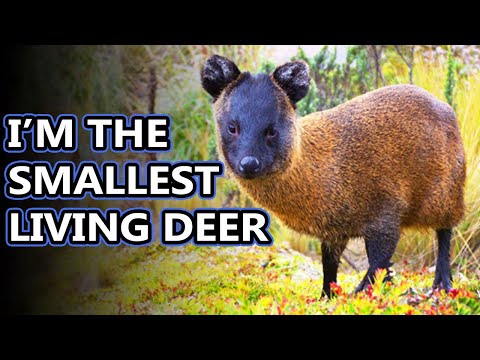
Pudus are the smallest members of the deer family. They live in South American mountains and forests.
Let’s see what sets them apart, just how tiny they are, and how the southern pudu differs from its northern cousin.
What Makes Pudus Unique
Pudus stand out because they’re so small but still look like classic deer, antlers and all. You’ll notice they move quietly through thick brush, squeezing between ferns and bamboo with those short legs and compact bodies.
Instead of running for miles, they prefer to hide. They munch on low plants, leaves, and fruit rather than grazing out in the open.
Their habits and range are different from other deer. Pudus stick to cool, wet forests in the Andes and southern temperate zones.
Depending on where they live, you might notice their coats look a little different, or they act more skittish if there are lots of predators around. Their small size means females usually have just one or two fawns and keep them hidden in sheltered spots.
Physical Characteristics and Size
Pudus only reach about 32–45 cm (13–18 in) at the shoulder. Adults weigh somewhere between 3 and 6 kg (7–13 lb), which is incredibly light for a deer.
Males grow short, simple antlers—usually just 6–15 cm long. Antler shape changes a bit depending on age and species.
Their coats are dense and range from reddish-brown to grey or plain brown. Sometimes you’ll spot faint spots or stripes.
They have rounded ears and big eyes that help them see in dim forest light. Their short necks and chunky bodies really give off that “mini deer” vibe.
But don’t be fooled—they’re real deer, not chevrotains or some other tiny hoofed animal.
Southern Pudu vs Northern Pudu
The southern pudu (Pudu puda) and the northern pudu (Pudu mephistophiles) aren’t exactly the same. The southern pudu lives in Chile and Argentina’s temperate forests and tends to be a bit bigger.
The northern pudu hangs out in high Andean forests from Colombia to Ecuador, usually at higher elevations.
Northern pudus are generally smaller, and some folks say they’re the tiniest deer of all. Southern pudus have darker, thicker coats to deal with colder weather. Both species have small antlers in males, but the northern pudu’s antlers are usually shorter and more curved.
Where you are really determines which pudu you’ll come across.
If you want to dig deeper, check out this detailed northern pudu entry for more on their classification and range.
Habitat, Behavior, and Conservation

Pudus make their homes in cool, wet forests along the Andes and in the southern temperate coastal areas. They hide out in thick brush and bamboo, nibbling on leaves and shoots.
Unfortunately, they face threats from habitat loss, dogs, and hunting.
Native Range and Forest Habitat
You’ll find pudus in certain parts of South America. The southern pudu lives in Chile and Argentina, while the northern pudu sticks to Colombia, Ecuador, Peru, and Venezuela.
They prefer temperate rainforests and cloud forests along Andean slopes, plus some low coastal woods. Dense underbrush, bamboo, and tangled vines offer plenty of cover from predators and people.
Typical habitat features include:
- Low, thick plants near the ground for feeding and hiding.
- Wet climates with lots of rain or cloud cover.
- Elevation: southern pudus live from sea level up to about 2,000 m, while northern pudus go from 2,000 to 4,000 m.
These forests burst with biodiversity, but they’re shrinking. Logging, farming, and clearing land for livestock keep eating away at the pudu’s safe spaces.
Social Behavior and Adaptations
Pudus mostly live alone and keep small territories. You’ll spot their dung piles and scent marks if you look closely.
They’re crepuscular, so you’ll see them most often at dawn or dusk. Pudus stay cautious and rely on camouflage and stillness to avoid foxes, owls, and wild cats.
If something startles them, they might freeze, bark, or dart off in a zigzag to escape.
Key adaptations include:
- Small size and low profile to weave through thick plants.
- Strong hind legs for jumping and climbing.
- Males grow short, backward-curving antlers. Females don’t have antlers.
- Big facial glands and scent marking let them communicate without getting too close.
Breeding happens with the seasons. Females usually give birth to just one or two fawns, each weighing under 1 kg.
If you’re lucky, you might spot a fawn hiding quietly for days while its mother forages nearby.
Conservation Status and Threats
The IUCN Red List puts the southern pudu in the near threatened category. The northern pudu? Well, honestly, there just isn’t enough data. If you’re trying to protect pudus, you’ll run into some big challenges: logging and agriculture keep chewing up their habitat, hunters target them, and domestic dogs sometimes attack.
When people clear forests, they split up pudu populations. That isolation shrinks their gene pool. Poachers and human activity also chip away at their numbers.
You can actually do a few things to help:
- Push for more protected areas and better park enforcement in Chile and Argentina.
- Support captive-breeding and reintroduction projects—some universities and zoos already run these.
- Help control feral and domestic dogs around forest edges.
- Back reforestation and habitat corridors to link up broken patches of forest.
If you want to dig deeper into where pudus live, check out the detailed species overview on Wikipedia’s Pudu page (Pudu – Wikipedia).


