
You probably know the short answer: a female deer is usually called a doe. Most people use “doe” for many female deer, but some species get different names like hind or cow depending on their size and type.
Let’s figure out which name fits which species and how to spot the difference by size, antler presence, and local naming. That way, you’ll find it easier to identify a deer in the field and talk about them the right way.
Keep going for examples of does, hinds, and cows, plus some quick tips for telling these females apart in the wild.
What Is a Female Deer Called?

Let’s talk about the common names people use for female deer and why those words change depending on the species. The three main names are short, specific, and usually connected to the deer’s size or type.
The Meaning of Doe
Most often, people call a female deer a doe. Use “doe” for medium and small species like white-tailed deer, roe deer, and muntjac.
The word comes from Old English and has stuck around as a general term for female animals in a few groups, not just deer.
When you call a female deer a doe, you’re saying it’s an adult and probably doesn’t have big antlers.
You’ll also see “doe” in phrases like “doe and fawn,” where fawn means the young one. That keeps things clear when you’re talking about behavior, hunting, or deer family groups.
Understanding Hind and Cow
People use “hind” for certain bigger species’ females, especially red deer and sika deer. Call a mature red deer female a hind, usually once she’s two years old or more.
The male’s called a stag, so the pair goes together in those species.
For very large deer, like elk (wapiti), moose, and caribou, people call the female a “cow.” The male’s a bull in those cases.
If you want a quick rule: use hind for mature red-type deer and cow for the biggest deer.
Using the right word helps you talk about size, age, and social roles in the deer family or when reading field notes.
Why Names Differ by Species
Names change because deer species come in all sizes, behave differently, and people in different regions have their own traditions.
You’ll see “doe” used a lot for smaller deer or in places where one word fits many species.
“Hind” and “cow” show up thanks to old customs and match the species’ size and the male’s name (stag or bull).
Wildlife experts and scientists stick to these distinctions so things stay clear.
Field guides, hunting rules, and park signs usually use the species-specific name to be precise about age, gender, or legal stuff.
That makes it easier to follow local guidelines and understand reports.
Female Deer Names by Species and How to Identify Them
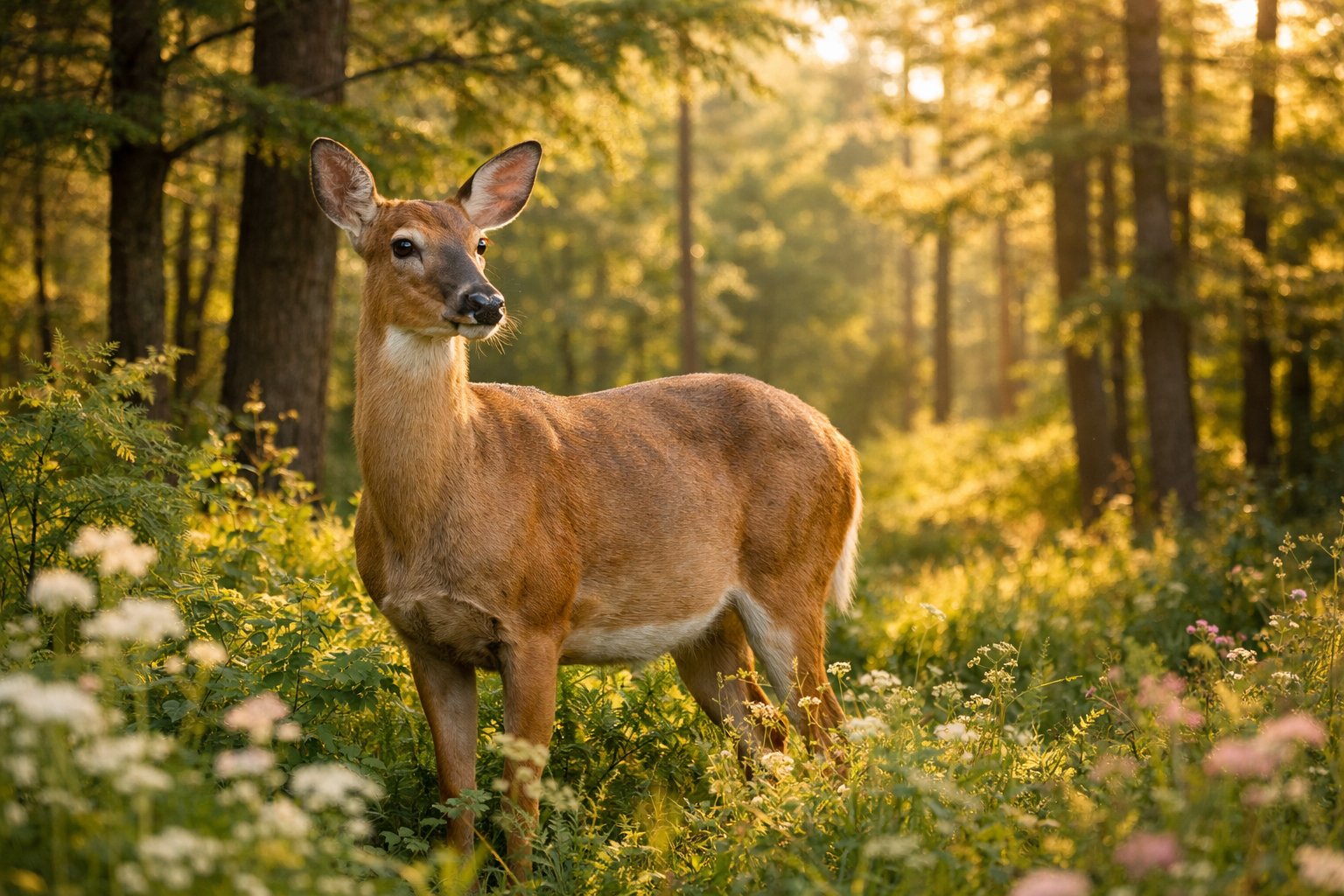
You’ll notice that female deer names depend on size and species.
Look at appearance, antler presence, and regional words to pick the right name.
Doe: White-Tailed, Roe, Fallow, Mule, Muntjac, and More
A “doe” usually means female white-tailed, mule, roe, fallow, muntjac, or similar medium or small deer.
White-tailed does have a white underside to their tail and don’t grow antlers.
You can spot a doe by her smaller body and the lack of antlers during breeding season.
Roe does are compact with short faces and a reddish coat in summer.
Fallow does can be spotted, dark, or light, and they’re medium-sized with broader bodies than roe.
Mule deer does have big, mule-like ears and a black-tipped tail.
Muntjac does are tiny, often alone, and keep a compact shape. Sometimes, you’ll hear them bark.
Chinese water deer females don’t have antlers and show a rounded shape; people sometimes call them does too.
When you try to pick out a doe in a group, look for body size, tail shape, ear size, and the lack of antler bumps or visible antlers.
Hind: Red Deer and Sika Deer
“Hind” means a mature female red deer and often female sika deer.
Female red deer (hinds) are bigger than does, with a long, deep body and a tawny coat that gets darker as they age.
You can spot a hind in a group by her size and the way she stands—taller and more solid than smaller deer.
Sika hinds are smaller than red hinds and have spotted coats in summer.
Female sika rarely have antlers and keep a graceful neck and face.
In both red and sika deer, the male is a stag.
If you see a large female with a sturdy build and signs of age, “hind” probably fits better than “doe.”
Cow: Elk, Moose, Caribou, and Reindeer
People call the bigger cervids “cows”—female elk (wapiti), moose, caribou, and reindeer.
Female elk cows are big, with long legs and a pale rump patch.
They move in herds and usually keep their calves close.
Moose cows are the largest female deer species.
Look for a big shoulder hump, long legs, and a wide muzzle. They never have antlers.
Caribou and reindeer cows are a bit different because females can grow antlers, especially in winter.
If you see antlers on a female late in the season, it’s probably a caribou or reindeer cow.
Using “cow” lets you show the animal’s large size and species group when “doe” or “hind” just doesn’t sound right.
Differences Between Female and Male Deer
You usually spot the difference by looking at antlers, but honestly, it depends on the species.
Most of the time, males—bucks, stags, or bulls—grow antlers while females don’t. Bucks and stags drop and regrow their antlers every year, and during rut, you’ll notice their necks look thicker.
Moose, elk, and many bigger deer use the names bulls or stags for the males. You can often tell a male’s age by his antlers: yearlings have small ones, and older guys show off larger, branched antlers.
But there are some oddballs. Caribou (or reindeer) females can actually have antlers, and Chinese water deer males might not have big ones at all.
If you’re not sure, pay attention to body size or behavior, like who’s leading calves or tending a group, and consider the season too.


