
Ever spot a tiny fawn curled up in the tall grass and wonder how long it’ll stick with its mom? Most baby deer hang close to their mothers for about a year. During that time, they learn to eat, hide, and survive before heading out on their own.
For many species—especially white-tailed deer—that first year really matters for bonding and learning.
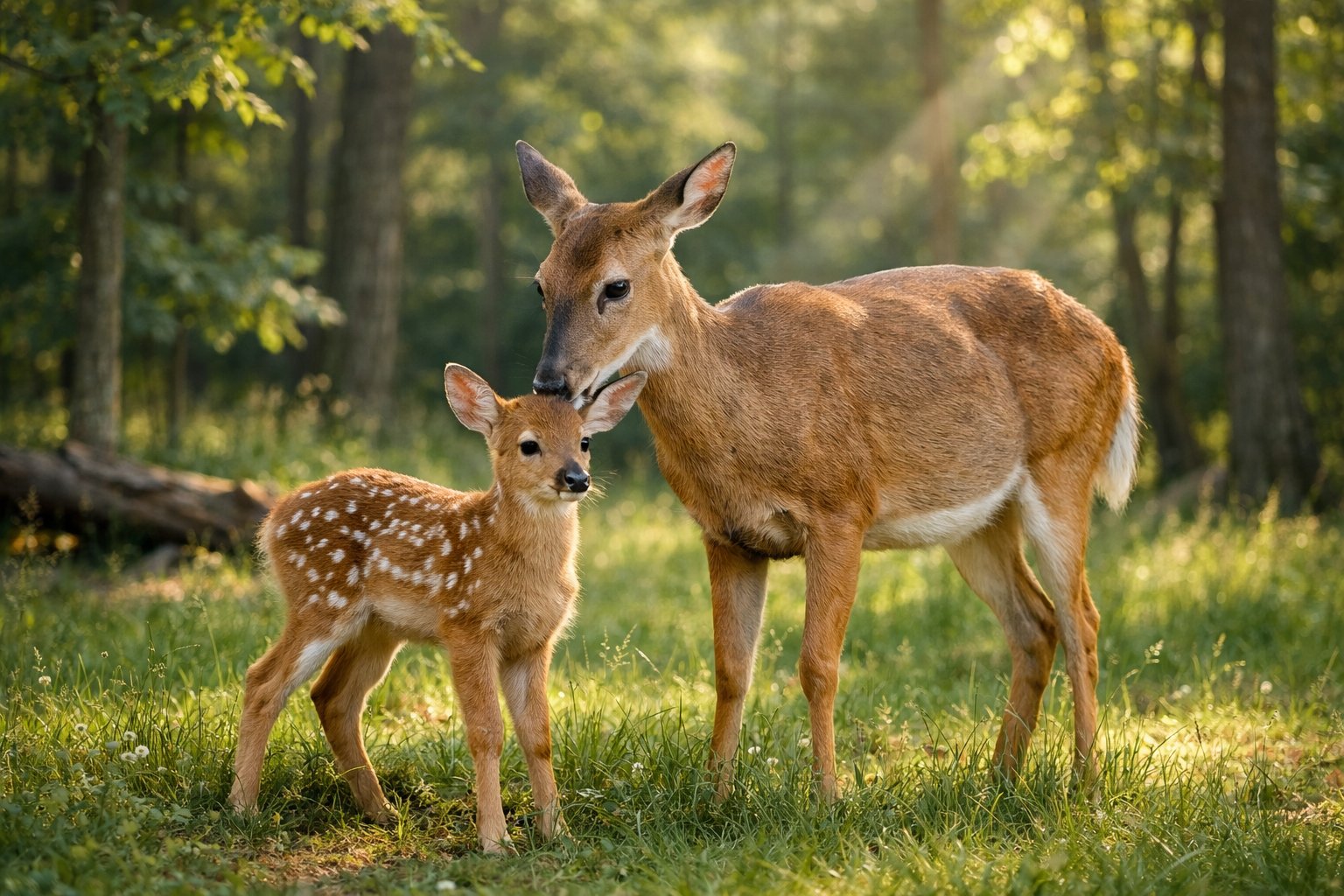
Let’s walk through how mother deer care for their fawns, when nursing winds down, and how young deer grow through each stage. I’ll also cover how to tell if a fawn actually needs help and what to expect as it starts to become independent.
How Long Do Baby Deer Stay With Their Mothers?

Here’s what you’ll find: how long fawns depend on their mother, when they start eating plants, and how things shift depending on sex and species. I’ll get into the basics on nursing, weaning, and when young deer finally leave the doe.
Typical Length of Mother-Fawn Bond
Most white-tailed deer fawns stick with their mother for about a year. The doe nurses, protects, and teaches the fawn until the next birthing season rolls around.
In places with two fawning peaks or lots of food, that bond might last a bit longer or wrap up sooner.
Early life’s pretty intense. The fawn hides and nurses for the first few weeks, then starts tagging along with the doe to learn how to browse. By 10 to 16 weeks, the fawn mainly eats plants, though sometimes it’ll still nurse.
Local climate, predators, and food all play into how long a doe keeps her young nearby.
Timelines and Key Milestones for Fawns
- Birth to 2 weeks: Fawns hide alone while the doe returns just to nurse. They put on weight and build up muscle.
- 2 to 8 weeks: Fawns start nibbling plants and follow the doe more often. They figure out safe places to eat.
- 10 to 16 weeks: Most fawns wean; milk isn’t a big deal anymore.
- 6 to 12 months: Fawns grow up, start going solo, and might join up with other deer.
You might notice male fawns tend to wander farther by fall, while females usually stick closer to where they were born. If winter’s rough or food is scarce, fawns might separate from their moms sooner.
Want more details for white-tailed deer? Check out this guide: how long white-tailed fawns stay with their mother.
Differences Between Male and Female Fawns
Male and female fawns take different paths after that first year. Males usually strike out on their own, looking for new territory and avoiding inbreeding. They often leave in the fall or the next spring.
Females, though, tend to stick closer to their mother’s range. Sometimes they form little family groups or just stay near the herd. That helps them learn local food sources and how to dodge predators.
If you see a fawn hanging with a doe past one year, it’s probably female. A lone yearling wandering off? Most likely a male.
Stages of Development and Maternal Care

Let’s break down how a doe protects and teaches her fawn from day one until it’s ready to leave. These next sections cover hiding, nursing, learning to eat plants, and eventually moving on.
Early Weeks: Dependence and Camouflage
When a fawn is born, it can’t walk far or keep up with the herd. The mother hides it in tall grass or brush, only coming back to nurse.
She keeps these nursing visits short, just a few times a day. That way, she feeds the fawn but doesn’t draw attention from predators.
The fawn’s spotted coat and barely-there scent help it stay hidden. You’ll see the white spots blend into the sunlight, and the fawn won’t move if you get close.
This hiding phase usually lasts several weeks, until the fawn can run and follow the doe.
If you stumble on a quiet, still fawn, don’t touch it. Odds are, the mother’s nearby and will come back. Only call wildlife rehab if the fawn’s injured, crying nonstop, or clearly abandoned.
Learning Survival Skills and Weaning
As the fawn grows, it starts following the doe during the day instead of hiding. You might catch it nibbling on leaves and grass but still sneaking a bit of milk.
Weaning kicks off around 8 to 10 weeks, but some fawns might nurse occasionally for a few months.
During this stage, the doe shows the fawn what to eat and how to move through cover. You might spot moments where the fawn learns to bolt when startled or picks out a safe spot to bed down.
These lessons matter—a lot—for survival and dodging predators.
By four to six months, the fawn eats mostly plants. Its spots fade, and it bulks up for cold weather and avoiding danger.
Factors Affecting Duration With Mother
How long a fawn stays with its mother depends on species, sex, and where it lives. White-tailed fawns usually stick with their doe for about six months to a year.
Males tend to leave earlier and roam farther than females.
If the habitat’s rich, fawns grow faster and wean sooner. Tough weather or lots of predators might slow things down, so the fawn stays close longer.
Human activity and urban edges can also change how does behave, sometimes forcing earlier separation.
When a doe gets pregnant again, she’ll often push the yearlings away to make room for new fawns. That usually triggers dispersal as the next birthing season gets close.
Dispersal and Independence
Most deer start to disperse when they’re about 10 to 12 months old. Males tend to strike out more often and travel much farther—sometimes for miles—as they look for new places to live and avoid inbreeding.
Females usually stick closer to where their mothers live, and their ranges can even overlap a bit.
You’ll notice a deer has become independent when it stops nursing and eats only plants. At that point, young deer have to figure out shelter, bedding spots, and safe paths all by themselves.
If you come across a yearling wandering alone that seems thin or hurt, it’s best to reach out to a licensed wildlife rehabilitator. Don’t try to help on your own.
For more details about white-tailed deer timelines and how mothers care for their fawns, check out this white-tailed fawn care guide.


