
Ever notice all those apples scattered under trees and wonder if deer actually munch on them? Yep — deer do eat apples, but how you give them matters a lot for their health and safety.
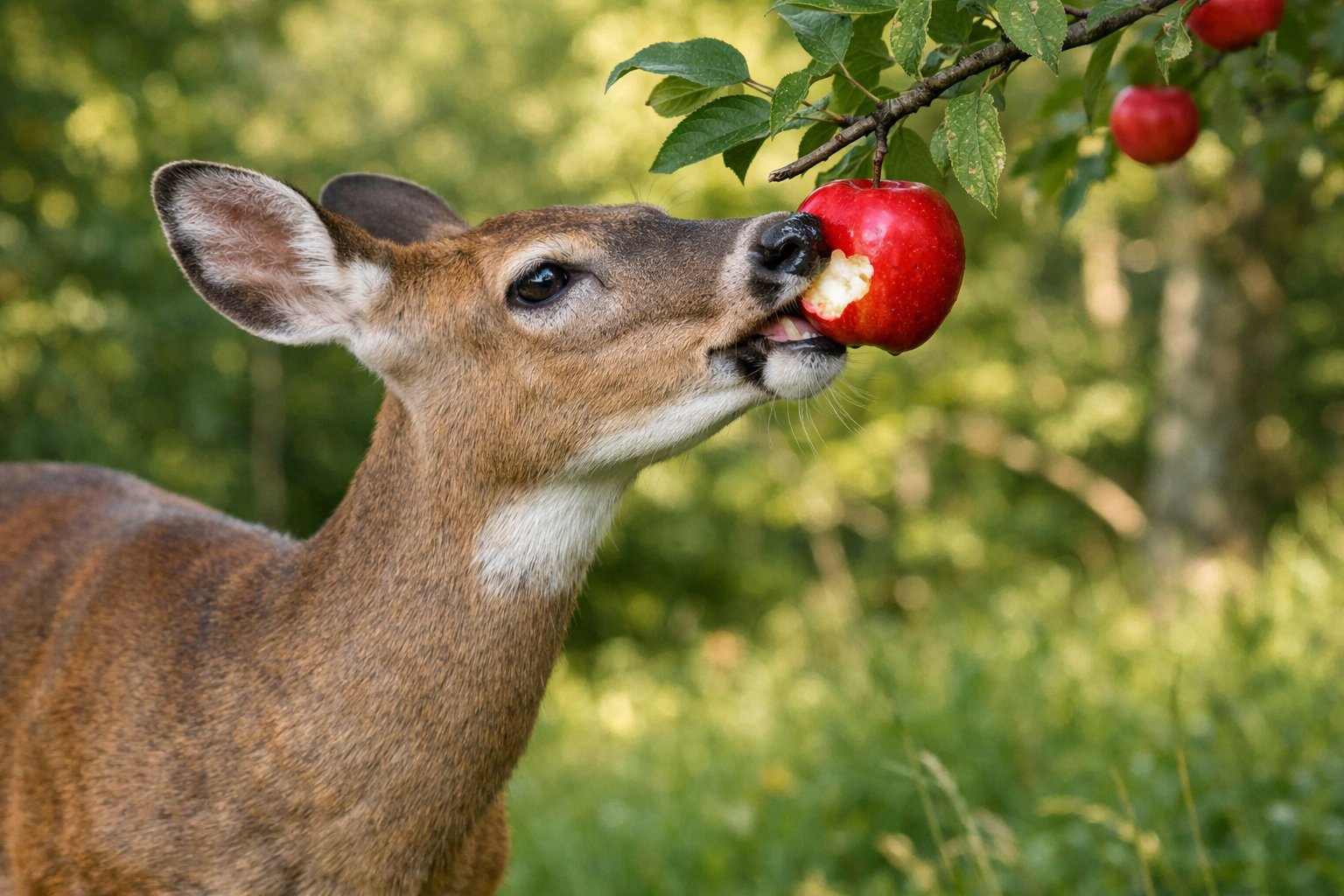
Maybe you want to attract deer, or maybe you’re just trying to save your orchard. Either way, let’s look at what deer usually eat in the wild and what risks apples can bring if you feed them directly.
You’ll get some tips on safer practices, why whole apples can cause problems, and how to help deer without putting them in harm’s way.
Do Deer Eat Apples in the Wild?

Deer love to eat apples they find on the ground or hanging from low branches. You’ll spot this most often where apple trees grow near woods, orchards, or even farms.
When Deer Eat Apples
Deer mainly eat apples from late summer through winter.
As apples ripen and drop, or storms knock them down, deer take advantage—especially when food gets scarce. In late fall, you’ll see deer gobbling up apples to pack on energy before winter hits.
During winter, when browse is tough to find, any fruit left becomes even more important. Fallen apples give deer a quick calorie boost.
If you live near an orchard, you might notice deer sneaking in at night to feast. They usually go for the soft, overripe, or bruised fruit first since it’s easier to chew.
Sometimes, deer eat whole apples if there’s a lot on the ground.
Why Deer Are Attracted to Apples
Apples have sugar, water, and energy—three things deer really want. Sweet, soft fruit is tasty and gives quick calories.
The smell of fermented or even rotten apples can pull deer in from pretty far away, especially when food is scarce.
Apples are easy to reach when they fall. Deer usually pick low-hanging fruit, but if that’s not possible, they’ll settle for what’s on the ground.
In orchards and yards, apples turn into a free buffet, which can definitely change how deer move around your property.
Role of Apples in Deer Diet
Apples aren’t a staple for deer, just a nice supplement. Deer actually need browse, grasses, forbs, and mast like acorns for full nutrition.
Apples give them energy and moisture, but they don’t have all the nutrients deer get from their regular diet.
If you feed deer apples on purpose, you might cause some issues. It can change their natural foraging habits, bring more deer to your yard, and even raise the risk of disease.
If you find apples in your yard, expect deer to eat them opportunistically, not as a main food source.
- Apples eaten: mostly fallen, soft, or overripe
- Typical use: calorie boost and water source
- Nutrition: energy-rich but incomplete compared to browse and mast
If you want to dig deeper into deer and fruit behavior, check out why deer eat apples in orchards and wild areas at The Institute for Environmental Research.
Feeding Apples to Deer: Health Effects and Best Practices

Apples give deer a quick burst of energy, but they don’t have the proteins and fats deer really need.
Feeding can shift deer behavior, increase disease risk, and even damage trees if you don’t keep things in check.
Nutritional Value of Apples for Deer
Apples provide simple sugars and water, so deer get a fast energy jolt and some hydration.
A single apple barely has any protein or fat, so it can’t replace the browse, forbs, and mast deer need for antler growth, muscle, and surviving winter.
You should only treat apples as a rare treat, not as a main food. Wild deer depend on a mix of leaves, shoots, acorns, and grasses for fiber and healthy rumen microbes.
Too many apples throw off that balance and could leave deer undernourished over time.
If you do offer fruit, pick firmer varieties and cut bigger apples in half so deer can eat them more easily.
Don’t let apples rot on the ground—mold and pathogens can pop up fast.
Potential Risks of Feeding Apples
If deer suddenly eat a bunch of apples, they can get ruminal acidosis. Their rumen microbes shift fast when high-sugar food shows up, which leads to too much lactic acid, diarrhea, bad digestive upset, and sometimes even death.
Feeding apples draws deer into groups, which raises the risk of spreading diseases like Chronic Wasting Disease (CWD) through saliva, feces, or contaminated feed spots.
If you feed deer regularly, they might lose their natural fear of people and get into more car accidents near roads.
Apple cores and seeds have a little amygdalin, which can release cyanide in high doses. It’s not a big risk if deer eat apples occasionally, but big piles of cores could be trouble. Keep feedings small and not too often.
Safe Ways to Offer Apples
If you decide to give apples, keep it to small amounts and only do it when natural forage is really scarce.
Scatter single apples or halves over a wide area. That way, deer don’t bunch up in one spot.
Don’t make piles on the ground and avoid feeding near property edges or roads.
Check the area daily for sick deer. If you spot diarrhea, weakness, or lots of deer hanging around, stop feeding right away.
Stick with firm, whole fruit instead of sugary waste or juice. Clean up any uneaten apples within a day or two to cut down on mold and rodents.
Follow local rules—many places actually ban supplemental feeding to stop diseases from spreading.
How to Protect Apple Trees from Deer
If you want to give your young apple trees a fighting chance, start with sturdy barriers. I’d go with 6–8 foot deer fencing or tree cages—deer are surprisingly persistent.
Wrap the trunks with spiral guards. That’ll help stop deer from rubbing and stripping the bark, especially in fall and winter.
Try deer repellents that use bitter flavors or strong scents. Just remember to reapply after it rains, or you’ll be wasting your time. I like to switch up the products each season, since deer seem to get wise to the same old smell.
You can plant less-palatable apple varieties or toss in some companion shrubs. That way, your trees don’t stand out as an all-you-can-eat buffet.
Pick up fallen fruit under the trees as soon as you see it, and harvest ripe apples quickly. Leaving fruit around is basically an open invitation for deer to come back.
If you’ve got a big orchard, maybe look into motion-activated lights or sprinklers. Those can surprise deer at night and make them think twice about visiting.


