
You might think deer just disappear when the sun goes down, but that’s not quite true. Deer can’t see in pitch-black darkness, but in low light, their eyes pick up more light and movement than yours do. That’s why they’re so good at moving around at dusk or when you’re out with a flashlight.
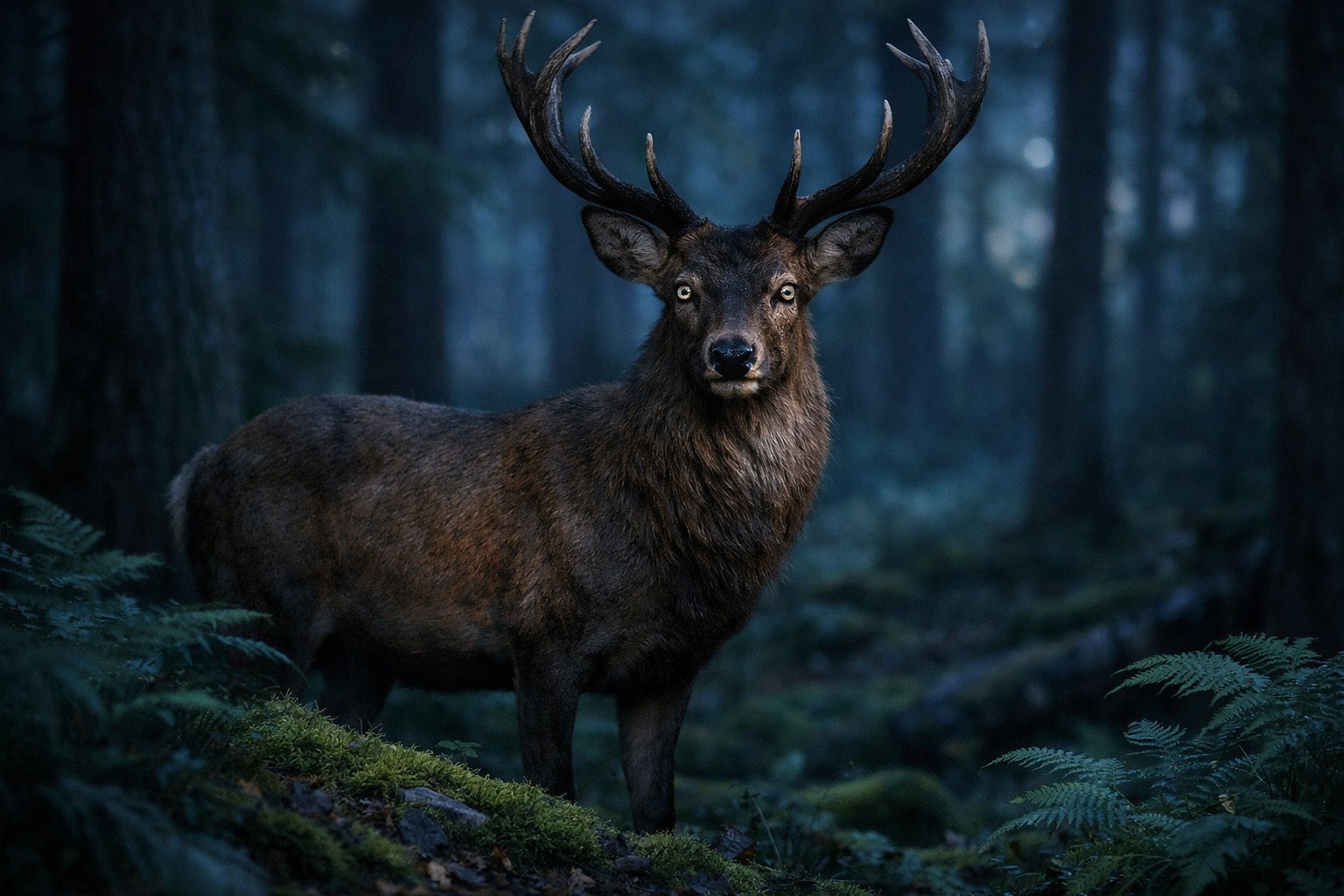
Let’s talk about how deer eyes actually work. They don’t really care about color after dark, but they notice motion fast—sometimes way faster than you expect.
This matters if you’re hiking, setting up a camera, or just curious about what’s creeping around at night. Even tiny movements or a stray beam of light can grab a deer’s attention before you realize it.
Deer Vision in the Dark: How It Works

Deer eyes use special structures and cell types to boost brightness and pick up movement at night. Let’s dig into what makes their vision so different from yours.
Night Vision vs. Human Vision
You see the world in color and sharp detail during the day because your eyes rely on three types of cones. Deer only have two types, so colors aren’t as important to them.
They mostly see shades of gray when it’s dim out. That means they focus on movement and contrast over color.
At night, you start to rely on rod cells instead of cones. Deer have way more rods than you do. Those rods help them spot faint light and quick motion.
So, when you’re stumbling around at dusk, deer can already pick up on things moving in the shadows.
Their eyes don’t see small details as well as yours in daylight. Deer trade some sharpness for better sensitivity, so they notice shapes and movement from farther away, but not the little stuff.
Key Eye Structures: Tapetum Lucidum and Rod Cells
Deer have a tapetum lucidum behind their retina. That’s the shiny layer that bounces light back through their eyes, making them glow when you shine a light at them.
This layer gives their rod cells another shot at catching any stray light. It’s pretty clever, honestly.
Rod cells fill most of the deer’s retina. These rods pick up low light and movement, but they don’t see color.
You use cones for detail and color, but deer count on rods for seeing at night and catching motion. The tapetum and all those rods together crank up their low-light vision.
These features help deer move around in twilight and under the moon. They can spot you before you spot them if you’re not careful.
But, they still can’t see in total darkness—no animal can do that.
Low-Light Vision Capabilities
Deer can spot shapes and movement in dim light at distances that might surprise you. Under starlight or at dusk, they navigate and find food with little trouble.
Research and hunters both say deer can move across fields and dodge stuff even hundreds of yards away, depending on how bright it is.
They’re much better at picking out movement and contrast than details. You might see a deer’s silhouette, but you won’t make out its spots or fur pattern.
A bright moon lets deer see farther, while city lights can help and sometimes confuse them by throwing weird shadows.
When your headlights catch their eyes, that glow tells you their eyes are reflecting light. It also means the deer notices that light too—sometimes enough to bolt before you get close.
Limitations of Deer Vision at Night
Deer can’t see anything in complete darkness. If there’s no light, their rod cells just don’t work.
Their night vision isn’t great for detail or color. They struggle to pick out small objects or subtle signs, especially compared to your daytime vision.
If you shine a bright light or your headlights sweep over a deer, it might freeze or run. That glare can blind or confuse them for a moment.
Their depth perception isn’t as sharp at night either. Judging distances quickly gets harder for them after dark.
Deer don’t just rely on their eyes once the sun sets. Their hearing and sense of smell take over.
So, if you think darkness alone will hide you, remember—they might hear or smell you before they ever see you.
Deer Nighttime Perception and Behavior

Deer depend on movement, a wide field of view, and basic color vision to stay safe and find food at night. Their eyes focus on picking up faint light and quick movement, not the finer details.
Motion Detection and Field of View
Deer can pick up motion in low light better than you can. They have more rod cells and that reflective tapetum lucidum, which makes sudden movement hard to miss.
If you want to avoid spooking a deer, move slowly and hold still when you can.
Whitetails and similar deer have eyes on the sides of their heads. That gives them almost 300 degrees of vision.
They don’t see well right in front of them, though. Their binocular zone is small, so judging depth up close is tricky.
If you’re sneaking up or just watching, try to stay where background movement is low and move with care.
How Far Can Deer See in the Dark
Deer don’t see crisp details far away in the dark, but they still catch movement from hundreds of yards away on a bright night.
Moon phase, weather, and brush all change how far they can see. On clear nights, they might notice you moving at 200 or even 300 yards.
If you use binoculars, you’ll probably spot deer first when there’s enough light. But deer can still catch sudden moves or flashes of light fast.
Wear dull colors and skip shiny gear if you want to blend in at a distance.
Color and Depth Perception
Deer only have two types of cone cells, so they see blues and yellows best. Reds and greens kind of blur together for them.
That’s why blaze orange looks boring to a deer and stands out to humans. Hunters use it for safety, not camouflage.
Since their eyes are on the sides, deer don’t have much overlap in what both eyes see. That makes depth perception up close a bit rough.
Deer might pause at something new because they can’t tell how far away it is. If you move slowly and let them get used to you, they’ll be less likely to run.
If you’re into wildlife watching, approach quietly and avoid colors that pop in the deer’s color range. It’s not just about hiding—sometimes it’s about not looking weird to a deer.
Impact on Deer Behavior and Interactions
Deer really pay attention to motion and do best in low light, so they tend to feed around dawn and dusk. The rest of the time, they move with a lot more caution.
You’ll probably spot more of them crossing open spaces when there’s not much traffic. When bright lights suddenly hit, like headlights, deer often freeze up instead of running off right away.
They rely on hearing and smell just as much as sight. Your scent and the sounds you make can be just as important as whether they can see you.
If you’re watching them with binoculars, it helps to stay quiet and try to keep downwind. Both hunters and wildlife watchers can get better results by picking up on these habits.
Try to move less, blend in with your surroundings, and use natural cover. That way, you’re less likely to spook the deer.


