
Spotting a deer out on a walk can feel both surprising and oddly peaceful. Take a breath, stay still, and give the animal some space. If it looks nervous, back away slowly—this helps keep everyone safe.
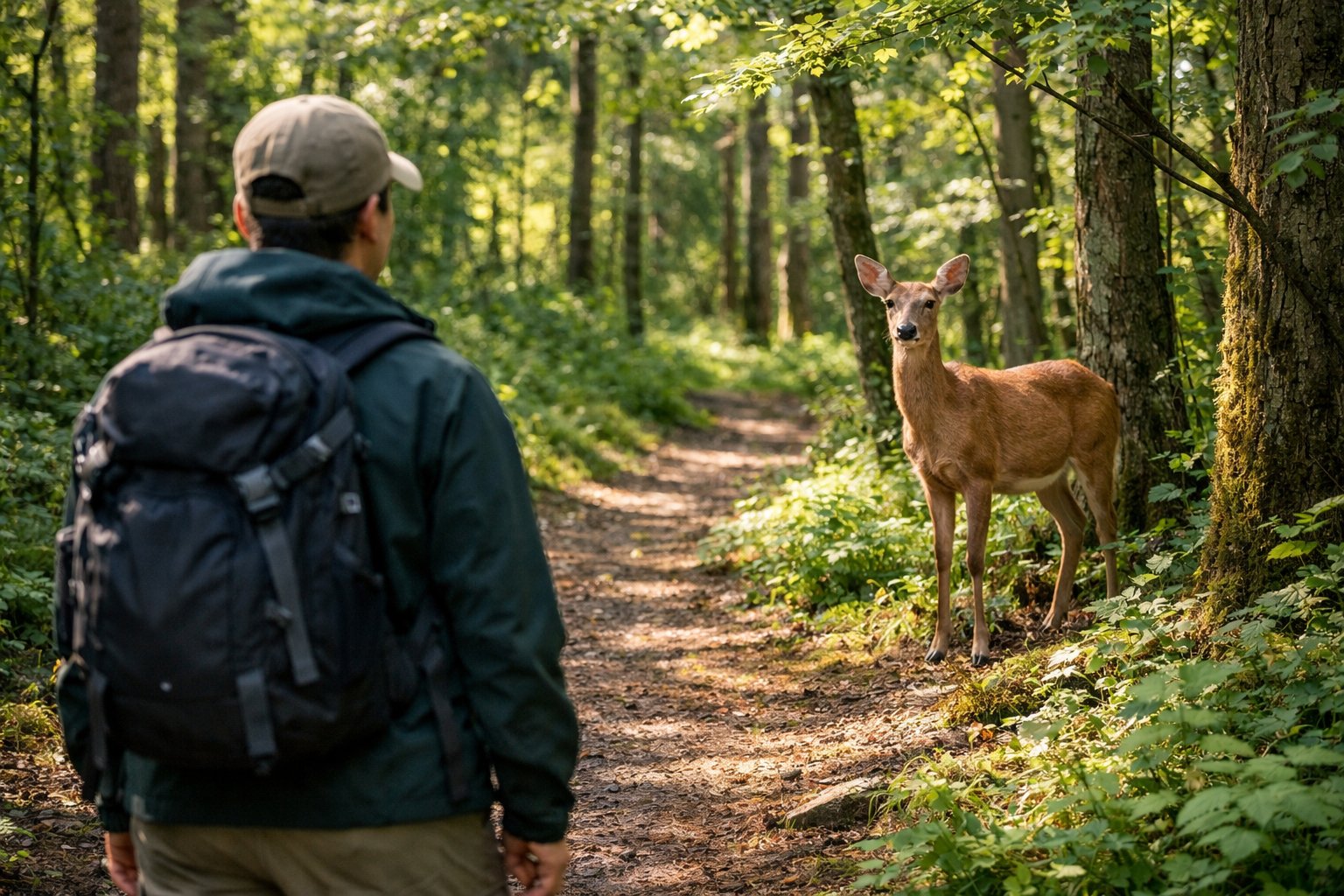
If the deer seems relaxed, just keep your distance and move away slowly. If it looks agitated, stop, stay calm, and give it more space until it wanders off.
Sometimes, you’ll need extra caution—like during rutting season or if you see a mother with fawns. Understanding deer body language helps you act confidently on the trail.
What to Do When You See a Deer While Walking
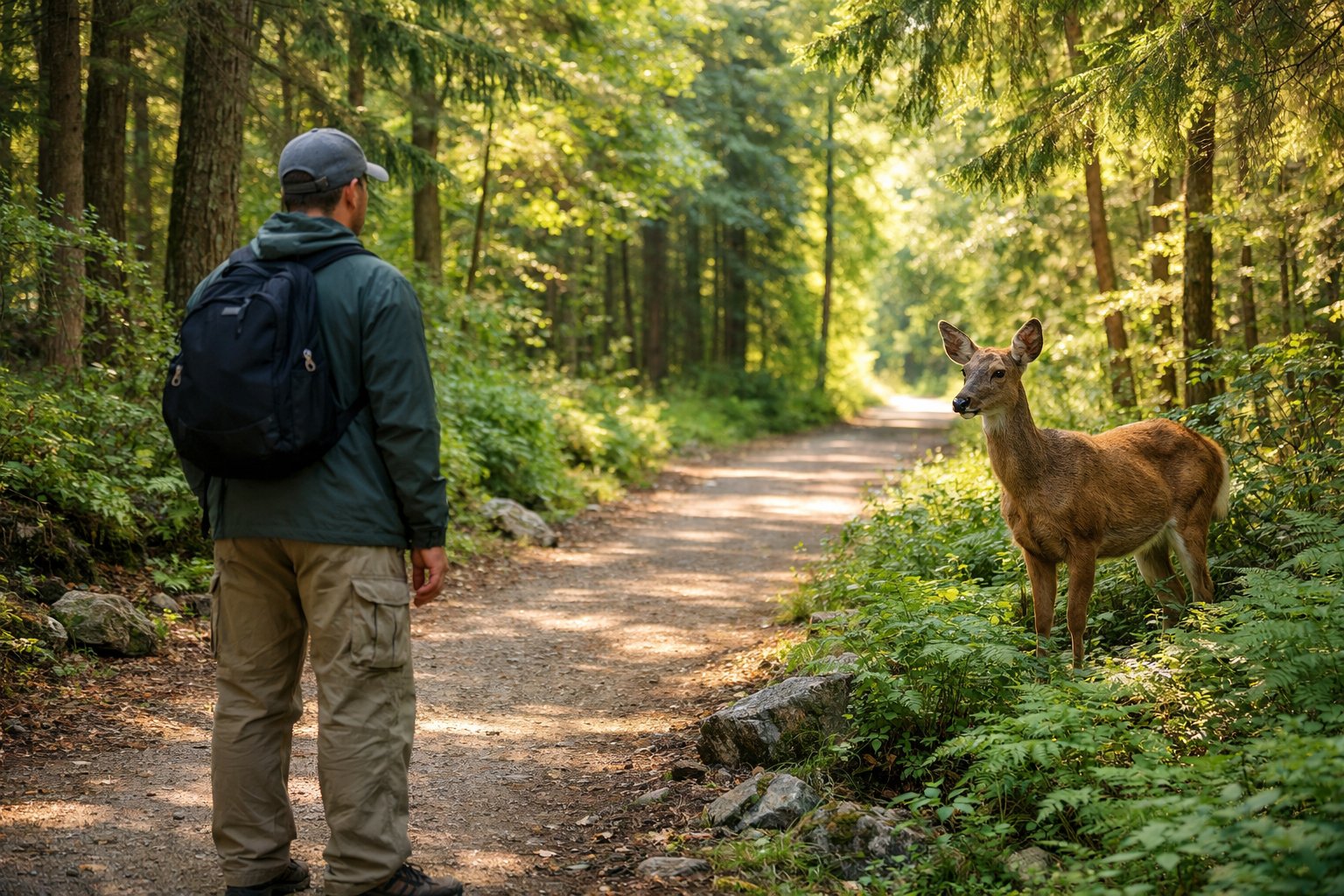
Stop and stay calm. Give the deer room to move away.
Focus on quiet, slow movements that keep you safe and help the deer feel unthreatened.
Remain Calm and Still
Freeze as soon as you spot the deer. Sudden moves or loud noises might startle it, so stand quietly with your hands at your sides.
Breathe slowly, and only speak in a soft voice if you really need to. Watch its body language. If its ears point forward and its head stays down, you’re probably not a concern.
But if it raises its head, stares, or snorts, you’ve caught its attention. Just hold your position until it relaxes or moves away.
Keep pets leashed and children close. Dogs or running kids could make a deer defensive.
If the deer stands very close and you feel uneasy, it’s time to start increasing the distance between you.
Give the Deer Plenty of Space
Put as much distance as you can between you and the deer, but don’t turn your back. Aim for at least 25 yards (about 23 meters) if you can.
Open ground or a clear path lets the deer choose to leave. Use trees, rocks, or a wide trail as cover while you back up.
Obstacles help the deer feel less cornered and lower the risk of a charge.
If you spot a doe with fawns, give even more space. Mothers can get aggressive to protect their young.
Back away down the trail, watching the deer until you’re safely out of its zone.
Avoid Eye Contact and Sudden Movements
Don’t stare directly at the deer. Direct eye contact can feel threatening to animals, including deer.
Try to look with soft eyes or use your peripheral vision to keep tabs on it. If you need to move, do it slowly.
Take one step at a time, pause, and keep your hands visible. Quick or jerky actions might trigger a defensive or flight response.
Turn off electronic devices and avoid camera flashes. Bright lights and sudden noises can spook a deer and make it act unpredictably.
Back Away Slowly if Needed
If the deer starts stomping, snorting, or flattening its ears, it’s agitated. Start backing away slowly.
Keep facing the deer, but don’t lock eyes. Step backward on solid ground.
If the deer moves toward you, find a safe spot behind a tree or large object. Never run—running can trigger a chase.
If a deer charges, put a solid barrier between you and the animal.
If you notice a deer acting injured, sick, or just way too aggressive, let park staff or wildlife authorities know. They can handle situations that go beyond your average wildlife encounter.
Special Safety Considerations During Deer Encounters
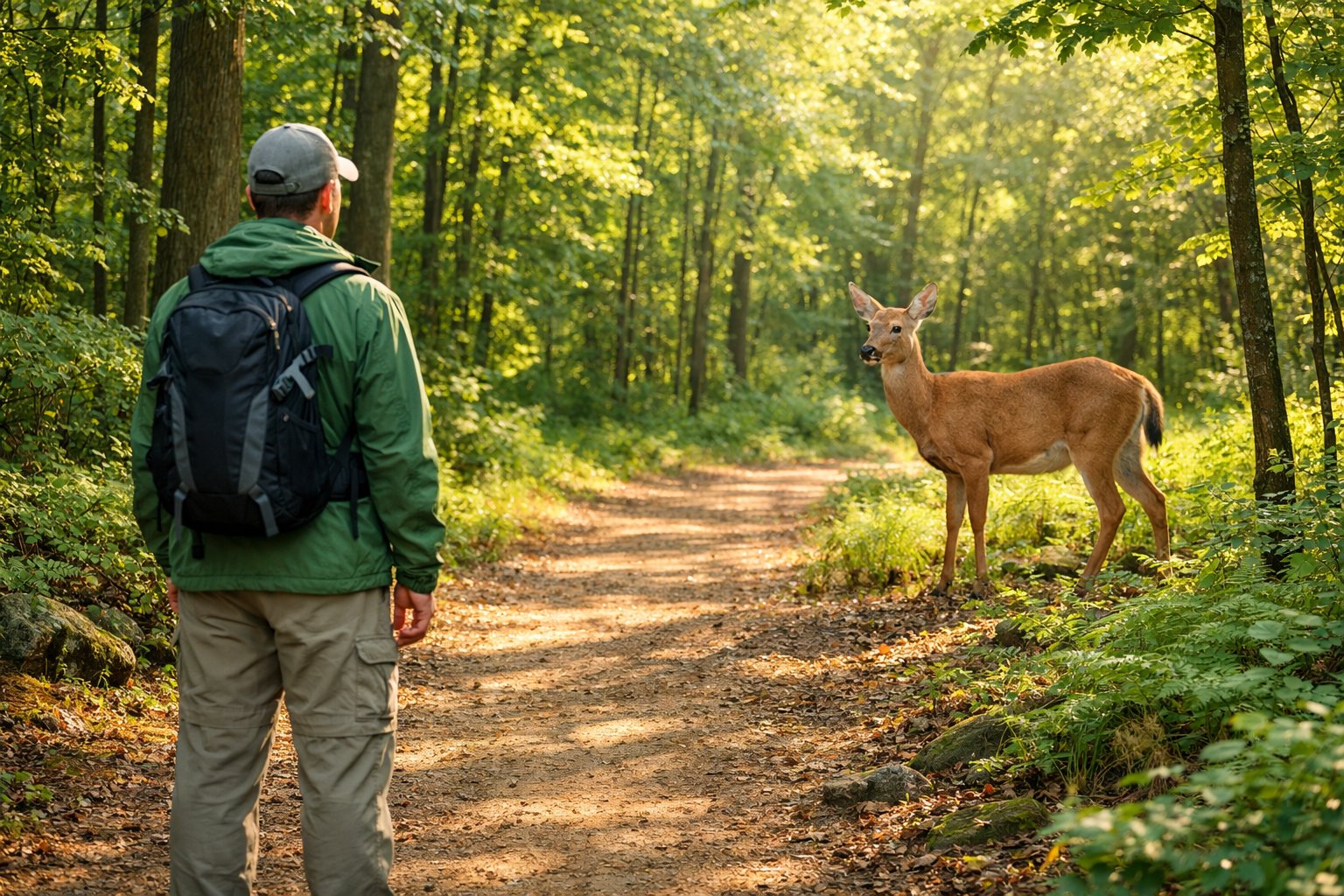
Give deer lots of space, move slowly, and watch their body language. Stay calm, skip sudden moves, and be ready to change your route if the animal looks stressed or aggressive.
Deer with Fawns and Protective Does
Does get fiercely protective of their fawns. If you spot a doe with young, stop and put distance between you and them.
Back away slowly on a steady path. Don’t run or shout. A mother might stomp or bluff-charge if she thinks her fawn’s in danger.
Don’t ever try to touch or pick up a fawn. Fawns often lie still while mom feeds, and if you approach, the doe could come back and act aggressively.
If you think the fawn’s injured, keep pets leashed and call a local wildlife hotline or wildlife rehabilitation center for advice.
Carry a loud whistle—like a Luxogear survival whistle—just in case a doe comes too close. Only use it to create distance, not to scare or attract deer for fun.
Aggressive Bucks and Mating Season
Bucks act more aggressive during the rut, which is deer mating season. In fall, expect bucks to act territorial and unpredictable.
They might lower their head and show off their antlers before charging. If you see a buck, give it at least 50 yards when you can.
If a buck follows you or stares with tense posture, put a tree or even a car between you and it. Don’t try to get close for a photo or to feed it.
Feeding deer removes their natural fear and can make them more aggressive.
If you live or hike where deer are common during rut, wear bright clothes and make some noise so you don’t surprise them.
Carry a safety whistle or bear spray for emergencies, but only use spray if a deer actually charges and there’s no barrier.
How to Respond to an Approaching or Charging Deer
If a deer starts coming toward you, stop and hold your ground. Speak in a low, calm voice and slowly move away at an angle.
Don’t turn your back or run—running can make the deer chase you. If a deer charges, try to put a big object between you and it. Trees, boulders, or even a parked car work.
If you can’t find cover, drop to your side and protect your head and neck with your arms. This helps reduce injuries from hooves or antlers.
Once the deer leaves, move away carefully and get help if you’re hurt.
Sometimes, a whistle or loud noise can stop a charge. Use a survival whistle to startle the deer or get attention, but don’t use it to provoke.
If you carry bear spray, only use it at close range if the deer is clearly aggressive and you can’t get behind a barrier.
What to Do If You Encounter an Injured or Sick Deer
Stay back if you spot an injured or sick deer. These animals might react in ways you wouldn’t expect—they could bite, kick, or even charge if they feel threatened.
Don’t try to touch, feed, or move the deer. Honestly, it’s not worth the risk to you or the animal.
Call your local animal control, park staff, or a wildlife rehabilitation center. Make sure you share clear details about where you found the deer.
Keep your dog on a leash and ask others to stay away too. If you can, mark the location from a distance so responders can find it easily.
If the deer’s in immediate danger—like if it wandered onto a road—try to warn others and stand back behind a safe barrier. Don’t try to give first aid or move the deer yourself.
Let the trained folks handle it. They’ve got the gear and legal permissions to help out white-tailed deer or any other species, and honestly, that’s for the best.


