
People toss around the word “doe” a lot, but honestly, the name for a female deer can change with species and size. Most folks call a female deer a doe, but for larger species, you’ll hear names like hind or cow, depending on the type.
Why do certain species get different names? Well, it comes down to traits like antlers and body size. Knowing when to say doe, hind, or cow actually helps you spot and identify different deer in the wild.
Female Deer Names and Terminology
Let’s look at the names people use for adult female deer, and how those change with species or size. The terms tie directly to the deer family you mean, and they pair up with the usual male and young names too.
Doe: The Most Common Name
People call adult female deer a “doe” in most small and medium species. You’ll use this for white-tailed deer, mule deer, roe deer, fallow deer, muntjac, and others like them.
If you see a county sign or a field guide mentioning does, it’s almost always referring to these types. Does don’t usually have antlers, and they’re smaller than cows or hinds.
You might also hear “doe fawn” for young females before they mature. In hunting talk and wildlife guides, “doe” is the default female label unless someone specifies the species.
Hind and Cow: Species-Specific Terms
People use “hind” for adult females of some bigger Old World species, like red deer and sika deer. If you watch European wildlife shows or read about red deer in parks, you’ll spot “hind” paired with “stag.”
Hinds are bigger than does, and usually have one calf per year. For the really big deer—elk, moose, and reindeer—folks use “cow” for the females, since the males are called bulls.
Female reindeer stand out because they often grow antlers too. When you hear about moose cows or elk cows, expect talk about calves, not fawns.
Comparison With Male and Young Deer
Deer names come in pairs: doe with buck, hind with stag, cow with bull. The young get names to match: fawn is common for does and bucks, while “calf” goes with cows and bulls (like elk, moose, and caribou).
Here’s a quick cheat sheet:
- Doe ↔ Buck; young = fawn
- Hind ↔ Stag; young = calf or fawn (depends on region)
- Cow ↔ Bull; young = calf
When you’re out in the field trying to figure out who’s who, matching the adult term to the male one helps you avoid mix-ups.
Antler Characteristics in Female Deer
Most female deer don’t grow antlers, so if you spot antlers, you’re probably looking at a male—at least in species like white-tailed deer and red deer.
But there are exceptions. Female reindeer and caribou often have antlers, and sometimes, due to hormone quirks, a doe might have them too.
If you see a female-sized deer with antlers, check the species. Reindeer cows have smaller, oddly shaped antlers compared to bulls. Antlers change behavior, too—males use them for fights during rut, but females usually rely on hooves and kicks to protect their fawns.
Female Deer by Species and Key Traits

You’ll notice three main naming patterns: “doe” for the smaller and medium species, “hind” for some big Eurasian deer, and “cow” for the giants. Size, antlers, and whether the young are called calves or fawns—these details really matter when you want to get it right.
White-Tailed Deer, Mule Deer, and Roe Deer
These North American and Eurasian deer all use “doe” for adult females.
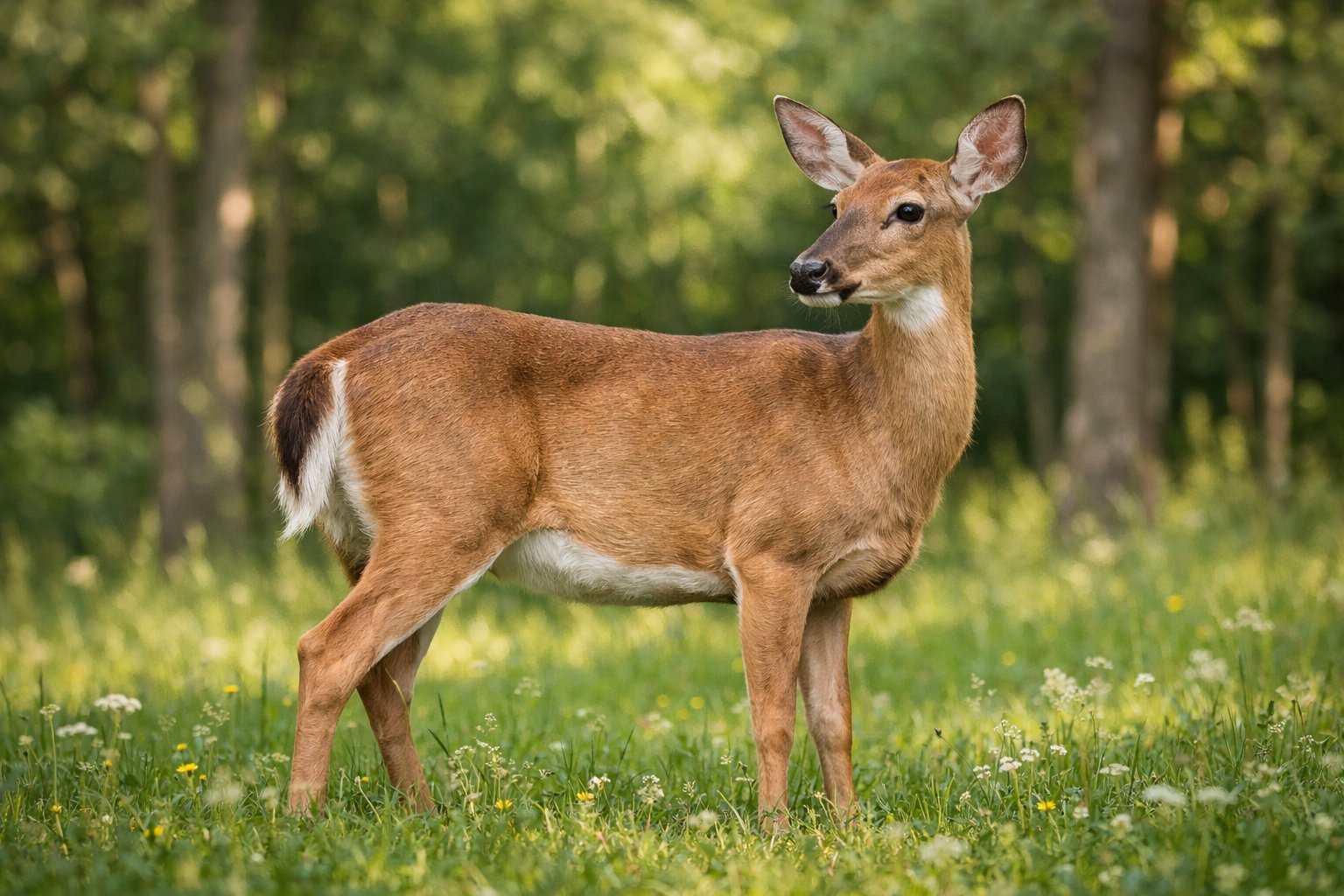
White-tailed doe: super common in the Americas. She’s slim, has a reddish-brown summer coat, and a white belly. She usually raises one or two fawns each year, and she doesn’t have antlers.
Mule deer doe: lives in western North America. She has big ears and a forked tail, and she often hangs out with her kids in small groups.
European roe deer doe: smaller and stockier than the others. Sometimes people call the young a “kid.” Roe does are quick and like woodlands and field edges.
Key things to remember:
- Doe = adult female for these species.
- No antlers (unless you get a rare oddball).
- Young are usually fawns or kids (roe).
Red Deer and Sika Deer
For these bigger Eurasian species, people use “hind” for the adult female.
Red deer hind: big-bodied, long-legged, and one of the largest in Europe and Asia. She usually gives birth to a single calf and hangs out in matriarchal groups with other hinds. Hinds don’t grow antlers.
Sika deer hind: smaller than red deer but still gets called a hind. Sika live in woods and their coat can be spotted or dark, depending on the subspecies.
A couple of behavior notes:
- Hinds form social groups led by older females.
- The young are called calves, not fawns.
- “Hind” is your word if you want to be precise.
Elk, Moose, and Caribou (Reindeer)
The biggest deer—elk, moose, and caribou—use “cow” for adult females.
Elk (wapiti) cow: found in North America and some parts of Asia. These cows are big and give birth to calves that can weigh quite a bit.
Moose cow: the largest of all deer. She’s tall, heavy, and rarely has antlers. She usually raises one hefty calf.
Caribou (reindeer) cow: both sexes can have antlers. Cows keep smaller antlers through winter, and they use them for digging up food and defending themselves.
A few important points:
- “Cow” means you’re talking about a really big deer species with a bull as the male.
- Babies are calves.
- Antlers? Depends on the species—caribou cows often have them.
Other Notable Species: Fallow, Muntjac, and Water Deer
You’ll find these species have a mix of names and quirks worth knowing.
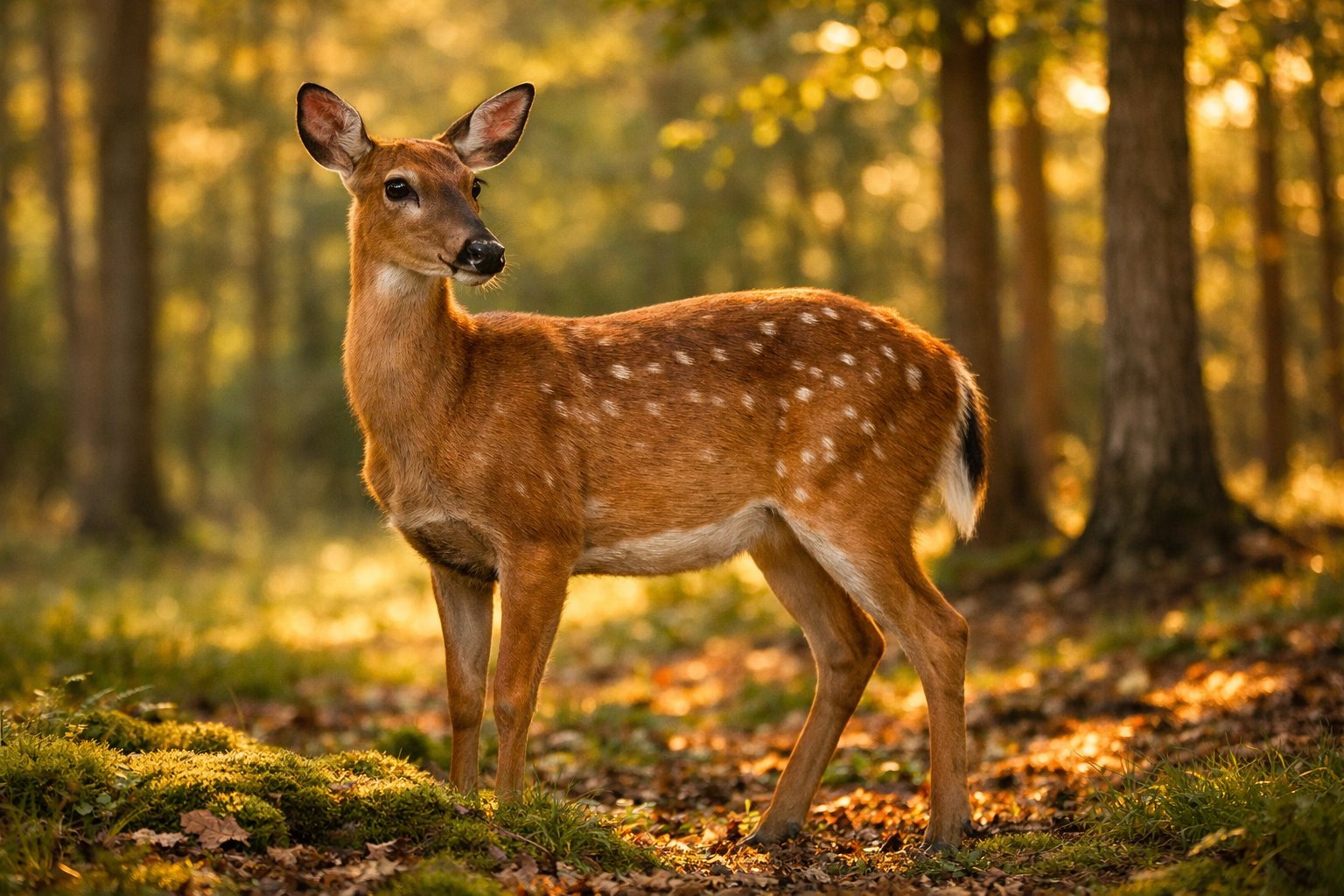
People usually call a female fallow deer a doe. She’s medium-sized, often sports a spotted coat, and you’ll spot her in parks or managed herds.
Fallow does hang out in social groups and never grow antlers. That’s just how they are.
A muntjac doe—sometimes folks call her a barking deer—is incredibly small. She usually keeps to herself or sticks with just one companion.
Chinese water deer females go by doe as well. Unlike others, both males and females don’t have large antlers.
Water deer stay pretty small and seem to love wet, marshy places.
Quick comparison:
- Fallow = doe, spotted coat, social.
- Muntjac = doe, tiny, solitary.
- Water deer = doe, small, adapted to wetlands.


