
You’ll spot deer near dawn and dusk, but they wander through the night too, especially when something pushes them to. Deer don’t stay awake all night, but they often travel and feed after dark—mostly in quiet, low-light places or where daytime feels risky.
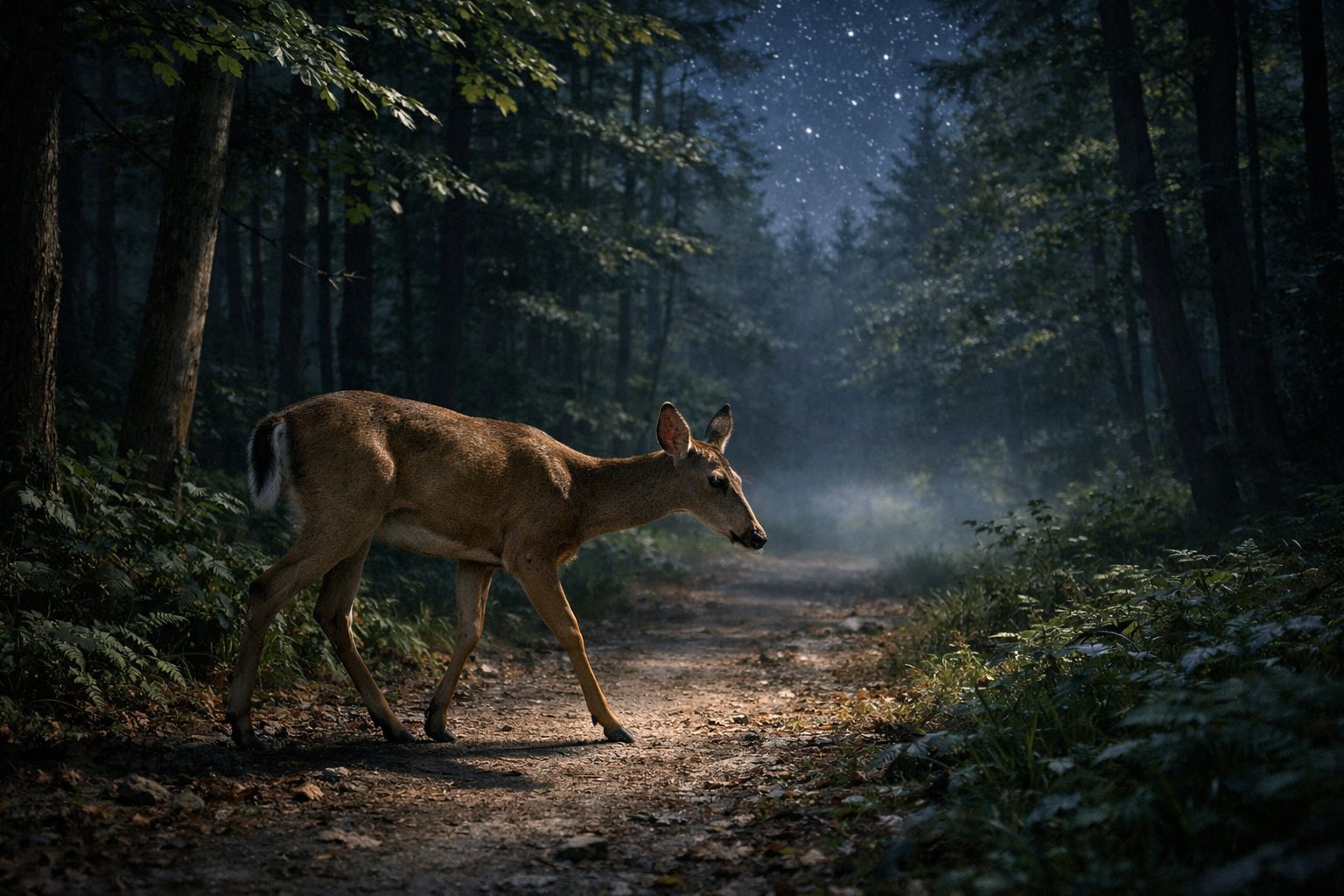
Let’s get into what actually drives their night movement. Safety, food, weather, and human pressure all play a part.
Their patterns shift with the seasons and even from place to place.
If you’re curious when deer might show up near your yard, I’ll break down what to look for.
Deer Activity Patterns After Dark

Deer usually move when they’ve got the best shot at eating and staying safe. You’ll notice peaks at low light, and sometimes bursts of movement during the night depending on food, weather, and predators.
Crepuscular vs. Nocturnal Behavior
Most deer are crepuscular—meaning they get active at dawn and dusk. So, you’ll see a lot of movement in the hour before sunrise and right after sunset.
This timing helps deer feed while dodging daytime predators and people.
But some deer flip to more nocturnal habits. In towns or places with lots of daytime disturbance, they might wait until late at night to move.
Older bucks, especially during the rut, sometimes wander at odd hours chasing does.
- Crepuscular: most movement at twilight.
- Nocturnal shift: happens more in urban spots or where predators aren’t as common.
- Both mule deer and white-tailed deer do this, but the timing can change by region.
Typical Nighttime Activities
At night, deer mostly look for food. You’ll find them browsing leaves, twigs, grasses, fruits, and acorns.
They travel between bedding and feeding spots, often sticking to the same trails.
During the rut, bucks search for mates at night, which bumps up their movement and, unfortunately, the risk of road collisions.
Does with fawns usually stick to thicker cover and take shorter trips to keep the little ones safe after dark.
Trail cameras and fresh tracks can tip you off to when deer visit your yard or field. If you check camera timestamps, you’ll usually see spikes at twilight and a few more later at night.
What Influences Night Movements
Food availability really drives how much deer move at night. If food gets scarce, they’ll keep foraging deeper into the night.
Weather matters too. Deer move more when it’s mild and tend to avoid strong wind or heavy rain.
Predators and people push deer to change their patterns. In places with coyotes or lots of daytime activity, deer become more nocturnal to dodge trouble.
Lights and noise from development can mess with their timing.
When people feed deer or change landscaping, deer might show up more or stick around longer than you’d like.
You can cut down on visits by removing easy snacks and setting up barriers or motion-activated deterrents.
Seasonal and Lunar Impacts
Seasons shake up how much deer move at night. During the rut in fall, bucks travel more at night looking for does.
In winter, when food’s tough to find, all deer might forage longer—including deep into the night.
Moonlight makes a difference. On bright nights, deer see better and feel safer, so you’ll spot more movement.
Very dark nights or heavy snow slow them down or keep them close to reliable food.
Spring and summer bring plenty to eat, so deer usually take shorter feeding trips at night.
Why Deer Walk Around at Night: Key Drivers

Deer move at night for a few clear reasons: to dodge danger, to find food when it’s cooler or quieter, and to get through areas with lots of people.
These drivers shape when and where you’ll see deer after dark.
Predators and Avoidance Strategies
Deer often switch to nighttime activity to avoid predators like coyotes, wolves, mountain lions, and bobcats.
You’ll see them use thicker cover and stick close to escape routes at night.
Their eyes reflect light thanks to a tapetum lucidum, which helps them see in the dark but also makes them easy to spot with headlights or trail cams.
When predators get active during the day or at dusk, deer move more in the darkest hours.
Bucks and does use dense woods or steep ground for protection.
Wildlife managers watch these patterns with trail cameras so they can adjust hunting seasons or predator control.
Impact of Human Activity and Urbanization
People change deer timing more than you might expect. Hunting, busy roads, and noisy recreation all push deer to travel at night.
In suburbs and broken-up habitats, deer use roads and green corridors after dark when there aren’t as many people around.
You’ll notice deer stepping into yards or food plots at night where daytime human activity is high.
Wildlife managers respond with things like timed hunting, deer-resistant landscaping, and public education to cut down on car crashes.
Habitat fragmentation squeezes deer into narrow travel paths. Nighttime movement helps them cross busy places without bumping into people.
Food, Weather, and Other Environmental Factors
Food availability, temperature, and the season really change how deer move at night.
When the weather gets hot, deer usually rest in the shade during the day. At night, when it finally cools off, they’ll come out to browse.
You might spot them slipping into fields, orchards, or even gardens after sunset, searching for tender shoots and crops.
If there isn’t much natural browse around, deer will travel farther at night to find something decent to eat.
Heavy rain or snow can push deer to move during just a few short windows at night. They don’t sleep all at once—they take quick naps, then get up to feed again, sometimes several times through the night.
People who plant deer-resistant species or set up repellents can make deer pick different spots to feed after dark.


