
You’ve probably seen those glowing eyes in your headlights and wondered just how well deer actually see at night. Deer definitely see in the dark better than we do; their eyes grab way more light and spot movement from farther away, even if they don’t catch every detail or color. This really matters if you’re hiking at dusk, driving back roads, or just hoping to see wildlife after sunset.
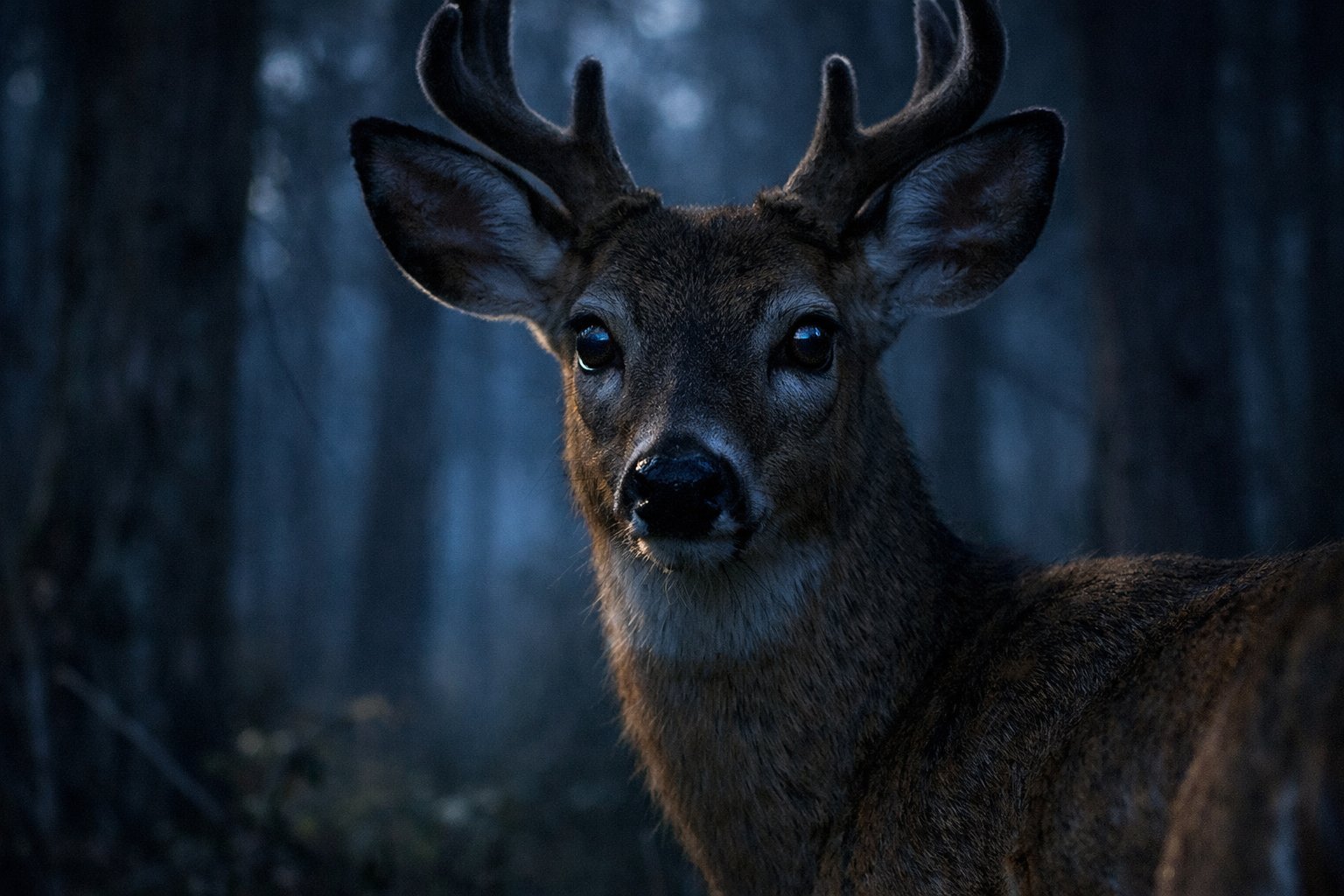
Let’s break down how deer eyes handle low light, how far they pick up movement, and what that means for their behavior and for you. I’ll keep things practical, so you can actually use this info—whether you’re out for a walk or just curious why deer act so jumpy at night.
How Deer See in the Dark

Deer rely on a few physical tricks to spot shapes, catch movement, and see in the dark. Their eye structure, a special reflective layer, and the mix of photoreceptor cells all help them see in low light, but they do miss out on color and sharpness.
Night Vision Adaptations in Deer
Deer pupils open up wide to let in more light than ours do. This means their retinas soak up every bit of available light, so you’ll see deer moving around confidently at dawn and dusk.
Their eyes sit on the sides of their heads, giving them a massive field of view—almost 300 degrees. That’s why they pick up threats from all over without even turning their heads.
Deer don’t get the sharpest vision. They trade off detail for sensitivity, so things look a bit blurrier to them, but they’ll spot small movements instantly. That’s a huge help for dodging predators or people when it’s too dark to see much else.
Role of the Tapetum Lucidum in Low-Light Vision
Behind the retina, deer have a tapetum lucidum—a reflective layer that bounces light back through the retina. This gives rod cells a second chance to catch any stray light, making their night vision way better.
When you shine a light at them, that’s what makes their eyes glow. The color of the glow changes with species and angle, but the real magic is in how much extra light they grab—not some magical “see-in-the-dark” superpower.
The tapetum does make things a bit fuzzier since the light scatters on its way back. So if you’re trying to spot a deer at night, just know they’ll notice you moving before they make out any details.
Rod and Cone Cells: Light Sensitivity and Color Vision
Deer retinas are packed with rod cells, which work great in low light. Rods don’t pick up color, but they’re super sensitive to brightness and motion. That’s why deer can see so well in dim conditions and spot movement across a field.
Cones handle color, but deer don’t have nearly as many as we do. Their dichromatic vision lets them see blues and greens, but reds just don’t stand out. So if you’re picking clothes or lights, know that red is pretty much invisible to deer.
Because rods love sensitivity and cones love color, deer vision changes with the light. In daylight, they get a bit more detail and some color, but in low light, it’s mostly gray shades and motion that stand out.
Deer Vision in Practice: Distance, Detail, and Behavior

Deer count on sight that favors dim light and movement, not crisp detail. Here’s what that means for how far they spot things at night and how their wide field of view helps them stay alert.
How Far Can Deer See in the Dark
Deer outdo us at dawn, dusk, and night because their eyes have tons of rods and that tapetum lucidum. In low light, they can catch movement and shapes from a few hundred feet away, though it really depends on the moon, weather, and what’s in the way.
Their visual sharpness doesn’t match ours. Experts estimate deer vision lands around 20/40 to 20/100, so details you see at 100 feet might need to be 20–40 feet away for a deer to notice. If you’re using binoculars, remember deer will spot your movement way before they see your face.
Motion Detection and Wide Field of View
Deer eyes sit far apart, giving them about a 310-degree field of view. That lets a whitetail catch tiny movements from nearly any direction, no head turn required.
Their vision is all about movement and contrast. Even a twig snapping or someone shifting their weight can make them bolt. If you’re hunting or just watching, move slowly—deer care more about motion and light changes than color. Staying still and moving deliberately really helps.
Impact of Depth Perception and Binocular Vision
Deer don’t get much binocular vision—just a small patch in front where both eyes overlap. That gives them some depth perception up close, but they can’t judge fine distances like humans do.
When a deer puts its head down to feed, it actually rotates its eyes a bit. This helps level out the horizon and gives them a touch more binocular overlap, so they pick up better depth cues.
So, it’s pretty easy for a deer to misjudge distances if you’re more than a few dozen feet away. They’ll often spot you before you think you’re close enough, and might suddenly freeze or bolt.
If you’re using binoculars, keep in mind deer don’t see the world the same way. They react mostly to movement or sudden changes, not the exact distance to a threat.


