
You can usually spot an angry deer by the way it acts—think stomping, snorting, staring you down, bristling fur, flattened ears, or even lowering its head like it’s about to charge.
If you notice these signs, try to stay calm and slowly put some space between you and the deer. These signals almost always mean the animal feels threatened or is being protective.
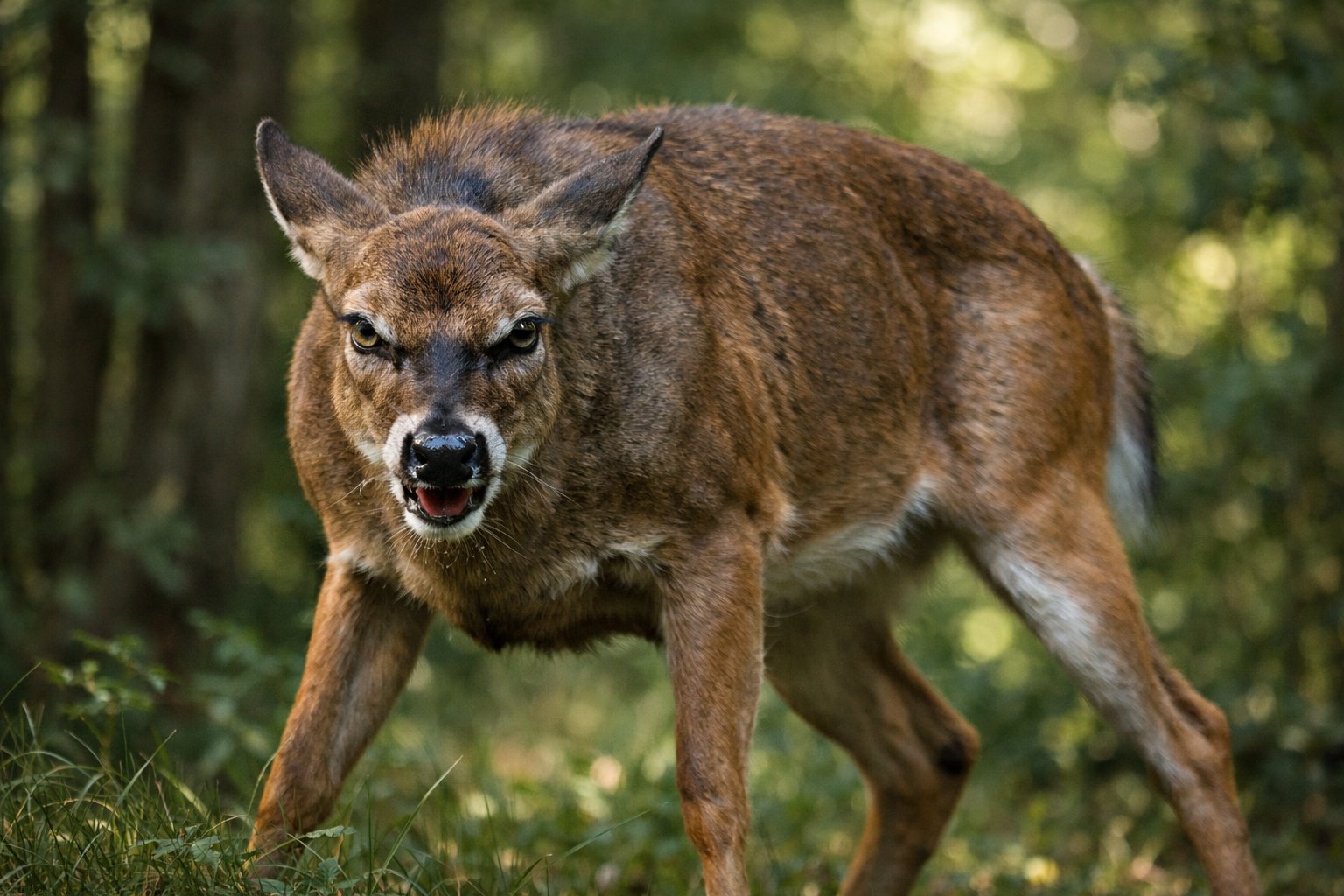
Wild deer use body language before things get physical.
Noticing those cues can keep you safe and help you sidestep a nasty run-in.
Once you get a feel for what sets deer off and when they’re most likely to act up, you’ll probably feel a lot more at ease seeing them in your yard, on trails, or in parks.
This is especially true during the rut or when there are fawns around.
How Deer Express Anger and Aggression

Deer show their mood using posture, sounds, and movement.
Watch their ears, tail, head, and listen for noises—they all tell a story.
Warning Signs in Deer Body Language
Start with the ears and eyes.
If a deer pins its ears back or flattens them, it’s feeling threatened and might get more aggressive.
A hard, fixed stare means the deer is sizing you up as a possible threat.
Tail and fur matter too—a raised tail or hair standing up along the neck and back (that’s called piloerection) makes the deer look bigger and signals it’s on high alert.
Sometimes, a deer keeps turning its head to keep you in view—flank-watching—which just means it’s getting tense.
Stomping and snorting? Those are big red flags.
Stomping is a clear “back off” warning.
A sharp snort or that snort-wheeze sound is even more serious and usually means the deer is ready to stand its ground.
It’s good to learn these cues so you can give the animal space before things escalate.
If you see pinned ears, a hard stare, and stomping all at once, that’s a much stronger warning than just one sign alone.
Physical Displays of Aggression
After all the warnings, if a deer feels trapped, it’ll move to physical actions.
It might paw at the ground, charge, or swing its antlers or hooves.
Charges are quick and sudden, usually after the deer lowers its head with antlers pointed right at you.
Both does and bucks kick—forward or backward—and that can seriously hurt a person or a dog that gets too close.
Bucks use antlers to jab or rake, especially when fighting other males.
Those antlers are both a warning and a weapon.
Aggressive deer make more noise, too.
You might hear grunts, harsh bleats, or that signature snort-wheeze as they move in.
If you spot a deer with its head down, ears pinned, and fur raised, that’s your cue to leave fast and put something—like a tree or car—between you and the animal.
Never run toward it or try to corner it.
Differences Between Bucks and Does
Bucks (the males) usually show aggression by displaying their antlers and fighting for dominance.
During the rut, bucks drop their heads, lock antlers, and push each other around.
You’ll notice more real fights between bucks than does.
Bucks also grunt and thrash at bushes or trees to show off.
Does (the females) get aggressive to protect their fawns.
A doe will stomp, snort, or sometimes charge if she thinks you’re a threat to her young.
Her kicks aren’t about showing off—they’re all about keeping her fawn safe.
Behavior really depends on the species and situation.
Whitetail bucks get bolder during mating season.
In winter, does can be the boss in groups and get pushy at feeding spots.
If you see a doe with fawns, treat her as the most likely to go on the offensive if you get too close.
Give her space, always.
When Deer Attack: Recognizing Real Danger
Most of the time, deer just give warnings and don’t actually attack.
But things get serious if a deer charges head-on, aims its antlers at you, or kicks over and over.
If you see it moving toward you with its head down and antlers pointed your way, that’s real trouble.
Deer that feel trapped—maybe against a fence or surprised at close range—are way more likely to fight.
A snort-wheeze as it moves closer is a sign it’s ready to defend itself.
Your best bet is to create distance and put a solid object between you and the deer.
If you’ve got a pet, call it back right away.
Don’t turn your back and run through thick trees, because a charging deer might lose sight of you and that could get messy.
If the deer actually makes contact, protect your head and neck and try to move out of the way of its antlers or hooves.
It’s not fun, but it’s better than getting caught off guard.
Triggers and Seasons for Deer Aggression

Deer get aggressive for a few big reasons: hormones, protecting babies, feeling trapped, or fighting over food and space.
Knowing when each of these triggers is most likely can help you understand why deer act up around people.
The Rut: Mating Season Challenges
During the rut (usually October–November for whitetails), bucks are pumped full of testosterone and totally focused on finding does.
You’ll see them chasing females, fighting with other males, and sometimes ignoring their usual escape instincts.
Antler locking and charging happen a lot, and these fights can leave deer unpredictable—especially near trails or fields.
If you’re hunting during the rut, expect more deer moving at dawn and dusk and a bigger risk of running into aggressive bucks.
Bucks follow scent trails and check scrapes, so your scent really matters.
Hunters often change their tactics to avoid close calls with rutting bucks.
Protective Does and Fawning Season
Spring and early summer bring out the mama bear in does.
If you get near a bedded fawn or end up between a doe and her baby, she’ll stomp, lower her head, or even charge to make you leave.
Fawns stay hidden and quiet, so sometimes you don’t even know they’re there until the doe reacts.
Keep dogs leashed and give extra space in areas where you know fawns might be hiding.
If you spot a fawn by itself, leave it alone—the mother almost always comes back.
Wildlife experts recommend staying at least 50–100 feet away to keep stress low and avoid triggering a defensive attack.
Human and Predator Interaction
Deer react to threats from people and predators by freezing, running, or fighting if they can’t get away.
You’ll notice more aggressive signals if a deer feels boxed in, like between a road and a fence or when dogs corner it.
Urban deer that get used to people can act either bold or skittish, and sometimes they just surprise you if startled.
Predators like coyotes or loose dogs make deer group up, run, or defend fawns if they have to.
As you walk through deer territory, keep an eye out for flattened ears, stomping, or a tail flagging up—those are signs the deer’s getting worked up.
If you see those, just back away calmly and give the animal plenty of space.
Feeding and Territorial Stress
Feeding deer really changes how they act. When deer start depending on handouts or food plots, they often lose their natural fear of people.
You might see them pushing, snapping, or even chasing each other when there’s high-value food around. Competition gets pretty intense at these feeding sites.
Territorial stress goes up, too, especially if there are too many deer in a small area—think little woodlots or cramped suburban yards.
It’s best not to feed deer. Doing so raises the risk of disease and encourages them to come closer than they should.
If you’re managing land for deer or keeping up food plots for hunting, try spacing out feeders and keeping an eye on how many deer show up. That helps cut down on fights and injuries.
Hunters and land managers should stick to local rules and follow the National Deer Association’s recommendations for food plots and herd health.


